Is Jade Plant Toxic to Cats and Dogs?
Jade plant is toxic to both cats and dogs. All parts of the plant, including the leaves and stems, can make your pet sick if eaten.
The exact toxin in jade plant (Crassula ovata) is still unknown. What we do know from veterinary cases is that it causes vomiting, lethargy and incoordination in pets.
Below you will find the symptoms to watch for, how serious jade poisoning is, when to call a vet, and two pet-safe plants that give you a similar look.
The short answer
- Jade plant is toxic to cats and dogs.
- The specific toxin has not been identified, but the effects are well documented.
- Common symptoms are vomiting, lethargy and incoordination, sometimes called a drunken walk.
- Most cases are mild to moderate, but severe signs need a vet right away.
- Pet-safe lookalikes include haworthia and, with a caveat, elephant bush.
The verdict
Yes, jade plant is toxic to cats and dogs
Jade plant is one of the most common houseplants in the US, thanks to its thick, glossy leaves and easy care. It is also known as money plant or lucky plant.
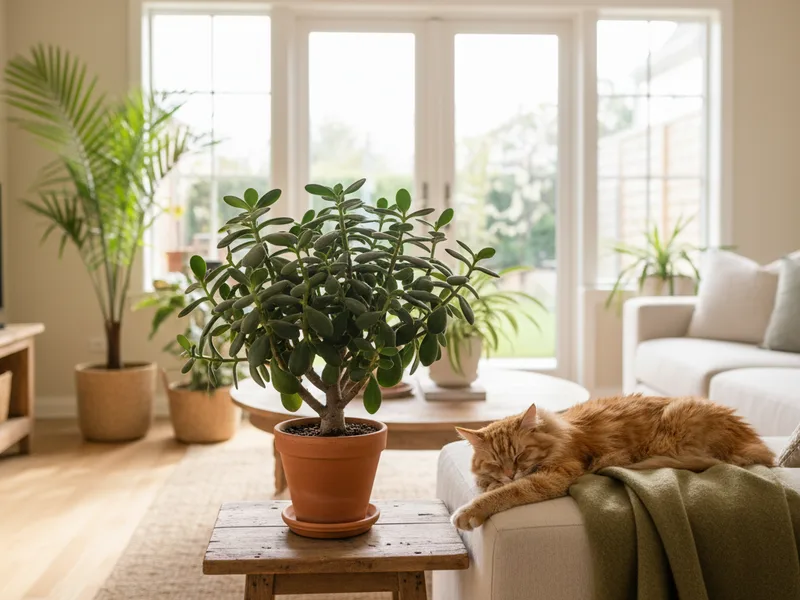
Unfortunately, it belongs on the toxic list for both cats and dogs. Every part of the plant can cause poisoning if your pet chews or eats it.
Interestingly, veterinarians have not pinned down the exact substance responsible. The toxin is classified as unknown. That sounds vague, but the symptoms are consistent and well documented, so the advice is clear: keep jade plant out of reach of pets.
Symptoms
What happens if your pet eats jade plant
Symptoms usually appear within a few hours of eating the plant. The most common signs are vomiting, low energy and a wobbly, uncoordinated walk. Some pets also show a slow heart rate or signs of depression.
The incoordination is often described as looking drunk. Your cat or dog may stagger, stumble or struggle to jump onto furniture.
How bad it gets depends on how much was eaten and the size of your pet. A small cat that eats several leaves is at more risk than a large dog that nibbles one.
If you notice any of these symptoms and you have a jade plant at home, treat the plant as the likely cause and contact your vet.
How serious is jade plant poisoning
Jade plant poisoning is generally considered mild to moderate. Most pets recover fully with prompt veterinary care, and many mild cases resolve with supportive treatment at home under a vet's guidance.
That said, do not wait it out if symptoms are strong. Repeated vomiting, extreme lethargy, trouble walking or a very slow heart rate are reasons to see a vet the same day.
Kittens, puppies, senior pets and animals with existing health problems are more vulnerable. For them, call your vet even after a small nibble.
What to do if your pet eats jade plant
Remove the plant material
Gently take any leaves or pieces out of your pet's mouth and move the plant somewhere your pet cannot reach.
Note what and how much
Try to estimate how much was eaten and when. This helps your vet judge the risk.
Call your vet or a poison helpline
Contact your veterinarian, or in the US the ASPCA Animal Poison Control Center or the Pet Poison Helpline. Describe the plant and the symptoms.
Follow the advice and monitor
Some pets can be watched at home, others need to come in. Keep an eye on energy levels, vomiting and coordination for the next 24 hours.
Safe alternatives
Pet-safe plants with a similar look
You do not have to give up the succulent look. There are pet-safe plants that match the jade plant's style and light needs.
Haworthia is the safest swap. It is a small, sturdy succulent that is generally considered non-toxic to cats and dogs. It likes the same bright light and infrequent watering as jade, and it fits windowsills and desks perfectly.
Elephant bush (Portulacaria afra) looks very similar to jade plant, with small round leaves on woody stems, and it is generally considered non-toxic to cats and dogs. One caveat: it is often confused with jade plant at garden centers, and mislabeled plants are common. Check the botanical name on the tag before you buy, because a mislabeled jade plant in a pet home is a real risk.
If you are comparing other popular houseplants, the same verdict-first approach applies. For example, Monstera is also toxic to cats and dogs, so it pays to check before you buy.
| Plant | Toxic to cats | Toxic to dogs | Light needs | Look |
|---|---|---|---|---|
| Jade plant (Crassula ovata) | Yes | Yes | Bright, direct light | Thick oval leaves, tree-like stems |
| Haworthia | No | No | Bright, indirect to direct light | Compact rosette, striped or dotted leaves |
| Elephant bush (Portulacaria afra) | No | No | Bright, direct light | Small round leaves, reddish stems, very jade-like |
Frequently asked questions
Is jade plant toxic to cats?
Yes. Jade plant is toxic to cats. Eating any part of it can cause vomiting, lethargy and incoordination. Call your vet if your cat has chewed on one.
Is jade plant toxic to dogs?
Yes, dogs are affected the same way as cats. Vomiting, low energy and a wobbly walk are the typical signs. Larger dogs that only nibble a leaf often have milder symptoms, but contact your vet to be sure.
How much jade plant is dangerous for a pet?
There is no known safe amount, because the exact toxin has not been identified. Even a small bite can cause symptoms in a small pet. Treat any ingestion as worth a call to your vet.
Is elephant bush the same as jade plant?
No, they are different species that look very similar. Elephant bush (Portulacaria afra) is generally considered non-toxic, while jade plant (Crassula ovata) is toxic. Always check the botanical name on the label, because the two are often mixed up in stores.
Can I keep a jade plant if I have pets?
It is possible but risky. You would need a spot your pet truly cannot reach, such as a closed room. For most homes, swapping to a pet-safe lookalike like haworthia is the calmer choice.