
Pawproof Plants exists for one simple reason: plant lovers with pets deserve a fast, honest answer. Not a 2,000-word essay. Not vague warnings. Just a clear verdict first, then the details you need.
Every guide on this site starts with the same question you are asking: is this plant toxic to cats, dogs, or both? The answer comes first. Everything else follows.
Our mission
Beautiful plants. Safe pets. Clear answers.
Many pet owners give up on houseplants entirely after one scary vet visit or a confusing search online. We think that is a shame. With the right information, cats, dogs and plants can share the same home.
Our mission is to make that information easy to find and easy to trust. Each plant guide leads with the toxicity verdict. Then we explain what it means, what to watch for, and which pet-safe plant gives you a similar look.
We also translate the science. Calcium oxalate crystals are tiny sharp crystals that can irritate your pet's mouth and throat. When you understand that, you understand the risk, and you can act with calm instead of panic.
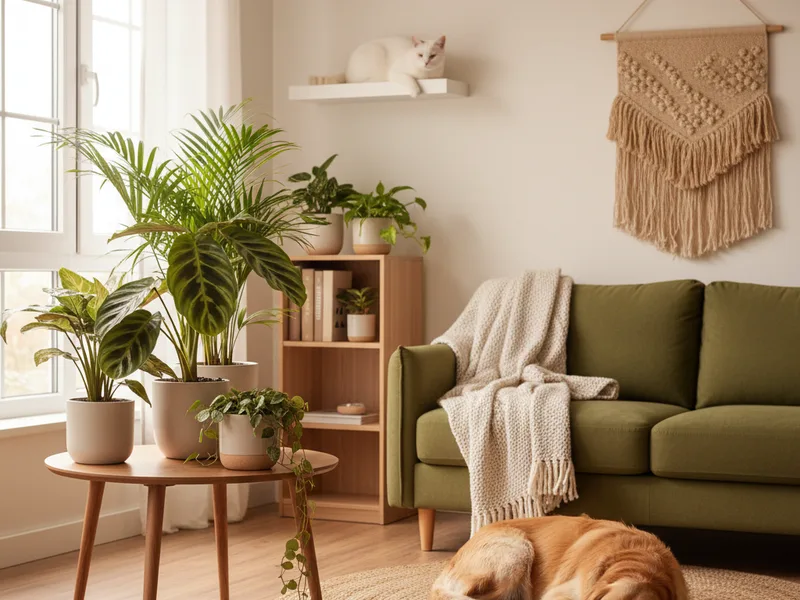
How we build every plant guide
We follow the same structure every time. Verdict first: toxic or generally considered non-toxic, for cats, for dogs, or for both. Then symptoms to watch for, written in plain words. Then a pet-safe alternative that matches the look and light level of the original plant.
Care advice is matched to real apartments and houses, not greenhouse conditions. If a plant needs bright indirect light and your living room is dim, we will say so and suggest something that fits your actual space.
No plant is ever called completely harmless. Even plants that are generally considered non-toxic can cause an upset stomach if your pet eats enough of them. When symptoms appear, contact your vet or a pet poison helpline. That advice stays the same across the whole site.
Our method
From plant name to clear answer
1. Check toxicity
We verify whether the plant is toxic to cats, dogs, or both, and which substance causes the problem.
2. Explain in plain words
Terms like saponins or insoluble oxalates get a simple explanation, so you know what it means for your pet.
3. Describe symptoms
We list what you might see if your pet chews the plant, and when it is time to call a vet.
4. Offer a safe swap
Every toxic plant comes with a pet-safe alternative that fits a similar look and light level.
Who we are for
Made for people who love plants and pets equally
You found a stunning plant on Instagram or in a shop. Before it lands in your living room, you want to know one thing: is it safe for the cat who chews everything, or the dog who eats first and thinks later?
This site is for new pet owners building their first plant shelf, for experienced plant collectors who just adopted a kitten, and for anyone buying a plant as a gift for a household with animals.
Everything is written for quick mobile reading. Short sentences. Narrow paragraphs. The verdict at the top, the details below. Because the moment you need this answer, you are probably standing in a plant shop with your phone in one hand.
What you can count on
- Every guide opens with one clear answer: toxic to cats, dogs, or both.
- Toxic plants always come with a pet-safe alternative that looks and lives similarly.
- Jargon is explained in plain words, so you know what the risk actually means.
- Care advice fits real homes, from dim apartments to sunny kitchens.
- We never call a plant completely harmless, and we always point you to a vet when symptoms appear.
A question about a specific plant?
Not sure about a plant in your home, or is your favorite missing from our guides? Send us a message and we will point you in the right direction.