Is Pampas Grass Toxic to Cats and Dogs?
Pampas grass is not toxic to cats and dogs. The ASPCA does not list it as poisonous, so a nibble will not poison your pet.
That said, non-toxic does not mean risk-free. Fresh pampas blades have sharp edges that can cut your pet's mouth, and dried decor stems shed fibers that can irritate the stomach if swallowed.
Here is what matters for your pet, whether you grow it outside or style it in a vase.
The short answer
- Pampas grass is generally considered non-toxic to both cats and dogs.
- Fresh blades have sharp edges that can cut the mouth and throat.
- Dried stems shed fibers that can irritate the stomach if eaten in larger amounts.
- Safer styling: hang stems high, spray with hairspray, and keep vases out of reach.
- Call your vet if your pet eats a lot, vomits repeatedly, or seems to be in pain.
Is pampas grass toxic to cats?
No. Pampas grass (Cortaderia selloana) is not toxic to cats. It does not contain compounds that poison cats the way lilies or sago palms do.
The real risk is mechanical. The leaf blades have fine, sharp edges, a bit like a paper cut waiting to happen. A cat that chews or bats at fresh pampas can end up with small cuts on the tongue, gums, or lips.
Swallowed grass can also irritate the stomach and trigger vomiting, the same way ordinary lawn grass sometimes does. Occasional mild vomiting after eating grass is common in cats and usually passes on its own.
Is pampas grass toxic to dogs?
No, dogs are in the same boat. Pampas grass is not poisonous to dogs.
Dogs tend to chew more enthusiastically than cats, though. Gnawing on thick dried stalks can splinter them, and swallowing a large wad of fibrous grass can upset the stomach or, rarely, cause a blockage.
Puppies are the ones to watch. Everything goes in the mouth at that age, and a floor vase full of fluffy plumes is a very tempting target.
What happens if your pet eats pampas grass
Most pets that nibble a little pampas grass will be fine. You might see nothing at all, or mild signs such as:
– Drooling or pawing at the mouth, from small scratches on the gums or tongue.
– Gagging or a single episode of vomiting, as the stomach clears out the fibers.
– Soft stool for a day, especially in dogs that swallowed a bigger amount.
These signs usually settle within 24 hours. Call your vet if vomiting repeats, if your pet refuses food, or if you see blood in the mouth or vomit. Persistent vomiting or a bloated, painful belly in a dog can point to a blockage and needs prompt attention.
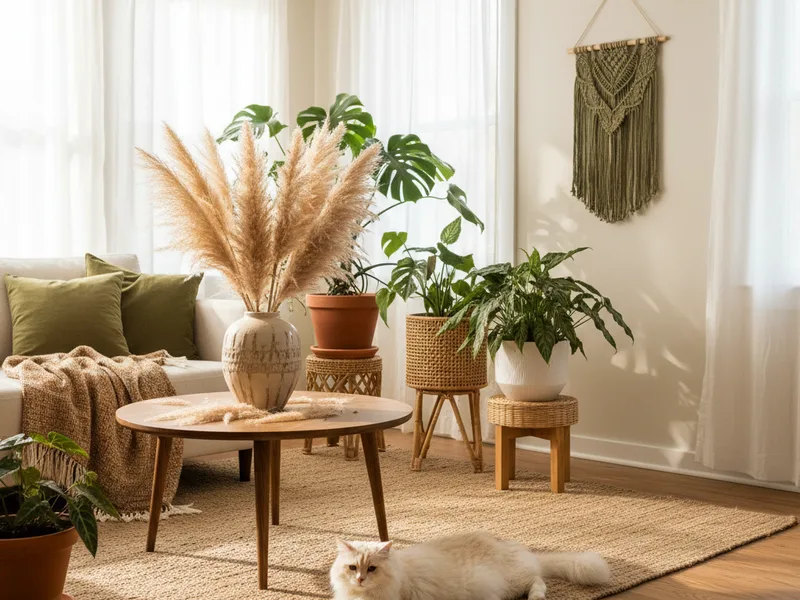
The boho decor problem: dried pampas in the home
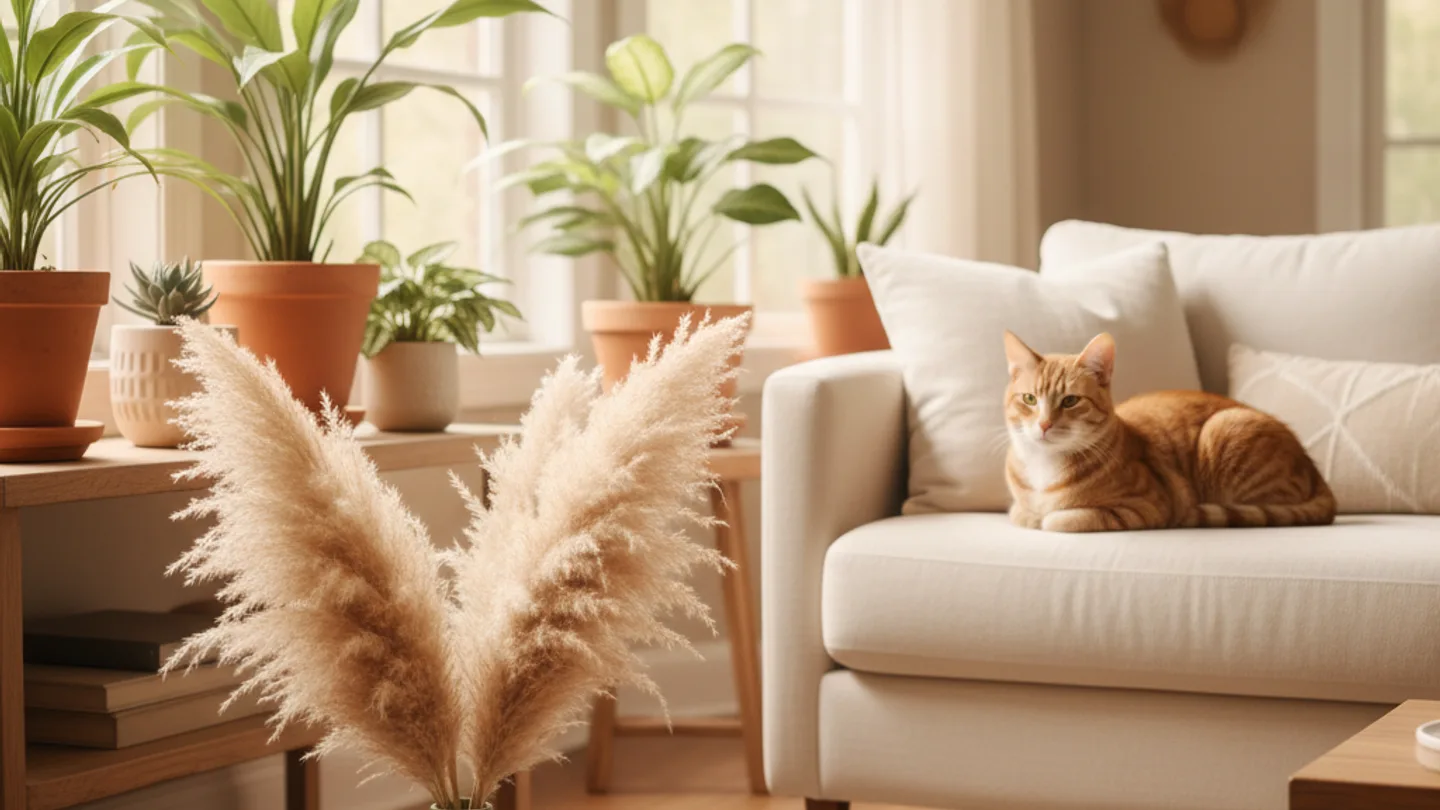
Dried pampas plumes are everywhere right now, and they are usually the bigger issue in a pet household. Not because they are poisonous, but because of how they behave indoors.
Dried stems shed. Tiny fibers and seeds drift down every time the plume is brushed, bumped, or caught in a breeze. Cats love chasing those floaty bits, and anything they catch often gets swallowed.
The plumes also sit at perfect cat height in a floor vase. One good leap and the whole arrangement is on the floor, the cat is in the middle of it, and you are vacuuming fluff for a week.
How to style dried pampas safely around pets
You do not have to give up the look. A few practical moves make dried pampas much safer:
– Spray the plumes lightly with unscented hairspray. This seals the fibers and dramatically cuts shedding. Let them dry fully before bringing them inside.
– Place vases on a high shelf or in a room your pet cannot access. Height is your best friend with cats.
– Consider wall-mounted or hanging arrangements. Plumes in a hanging vase stay fluffy and stay untouched.
– Skip pampas in the bedroom if your cat sleeps there. Loose fibers near a sleeping spot get sniffed and licked.
If your pet is a persistent chewer, dried palms, preserved eucalyptus kept out of reach, or faux pampas give you the same soft, feathery look with nothing to swallow.
Growing pampas grass in a yard with pets
Outdoor pampas is mostly a dog question. The plant itself will not poison your dog, but the sharp blade edges deserve respect.
Plant pampas away from paths and play areas, so nobody, pet or human, brushes past the blades daily. If your dog likes to run through ornamental grasses, a low barrier or a different planting spot is the kind answer.
Also know that pampas is invasive in parts of the US, especially along the West Coast. Check your local guidance before planting, and choose a sterile cultivar where required.
Common questions about pampas grass and pets
Is pampas grass toxic to cats if they eat a lot of it?
It is still not poisonous, but a large amount of fibrous grass can irritate the stomach and cause vomiting. If your cat keeps vomiting or seems unwell, contact your vet.
Are dried pampas plumes more dangerous than fresh grass?
Not more toxic, but they shed fibers and seeds that pets can inhale or swallow, and they sit within easy reach indoors. Sealing them with hairspray and placing them high solves most of the problem.
My dog ate a dried pampas stem. What should I do?
A small amount usually passes without trouble. Watch for repeated vomiting, loss of appetite, or a painful belly over the next 24 hours, and call your vet if any of these appear.
Is pampas grass the same as the grass cats eat on purpose?
No. Cat grass is usually grown from oat, wheat, or barley seed and is soft and safe to chew. Pampas blades are coarse with sharp edges and are not a good chew substitute.
What is a pet-safe alternative with a similar look?
Faux pampas is the simplest swap. For live plants, the fluffy fronds of a parlor palm or the arching stems of a spider plant give softness and movement, and both are generally considered non-toxic to cats and dogs.
Not sure about a plant in your home?
Every plant guide on Pawproof Plants starts with one clear answer: toxic to cats, dogs, or both. Browse the blog and check before you buy.