
Is Lavender Toxic to Cats and Dogs?
Lavender plants are mildly toxic to both cats and dogs. The plant contains linalool, a natural compound that can cause stomach upset if your pet chews the leaves or flowers.
The bigger risk is concentrated lavender essential oil. A knocked-over diffuser or a chewed bottle exposes your pet to far more linalool than a garden plant ever could.
Here is what the difference looks like, which symptoms to watch for, and which fragrant plants are safe to keep instead.
The short answer
- Lavender plants are mildly toxic to cats and dogs because of linalool.
- Eating a small amount of the plant usually causes mild stomach upset, not an emergency.
- Concentrated lavender essential oil is much more dangerous than the plant itself.
- Watch for vomiting, drooling, and loss of appetite after nibbling the plant.
- Call your vet or a pet poison hotline if your pet got into essential oil or shows symptoms.
- Safe fragrant swaps include rosemary, basil, and cat grass.
Why lavender is a problem for pets
Lavender contains linalool, a natural aromatic compound. In small amounts, linalool is what gives lavender its calming scent. In a pet's stomach, it can irritate the digestive system.
The plant also contains linalyl acetate, a related compound with a similar effect. Neither is present in the plant in high concentrations, which is why lavender poisoning from the plant itself is usually mild.
Cats are generally more sensitive than dogs. Their livers process certain plant compounds less efficiently, so the same nibble can hit a cat harder.
| Form | Risk level | Typical exposure | What to expect |
|---|---|---|---|
| Lavender plant (fresh or dried) | Mild | Pet chews leaves or flowers | Usually mild stomach upset: vomiting, drooling, low appetite |
| Lavender essential oil | High | Knocked-over diffuser, chewed bottle, oil on fur | Concentrated linalool exposure; can cause serious symptoms and needs a vet call |
| Lavender-scented products (candles, sprays) | Low to moderate | Licking residue or chewing the product | Depends on concentration; check the label and watch for symptoms |
Symptoms to watch for
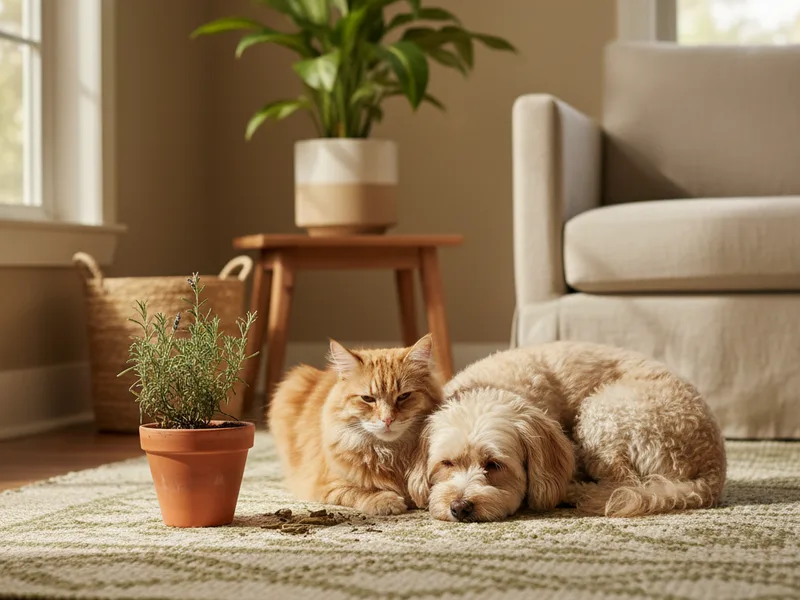
If your cat or dog nibbled lavender leaves or flowers, symptoms are usually mild and pass within a day.
With essential oil exposure, symptoms can be stronger and come on faster. Watch for: vomiting, drooling, diarrhea, loss of appetite, wobbliness or lethargy, and skin irritation where oil touched the coat.
Breathing in heavy diffuser vapor can also irritate airways, especially in cats. If your pet seems to struggle for breath, treat it as urgent.
What to do if your pet ate lavender
Remove the plant or oil
Take the lavender away and clean up any spilled oil. If oil got on your pet's fur, wipe it off with a damp cloth so they do not lick it.
Check what and how much
A bite of a leaf is very different from a lick of essential oil. Note the form and roughly how much is missing. This helps your vet judge the risk.
Watch for symptoms
Keep an eye on your pet for the next 24 hours. Mild stomach upset after eating the plant often resolves on its own.
Call your vet when in doubt
Contact your vet or a pet poison hotline if your pet got into essential oil, ate a large amount, or shows any symptoms. Bring the product label if you have it.
Safe fragrant swaps for your home
You do not have to give up scent to keep your pets safe. Several fragrant plants are generally considered non-toxic to cats and dogs.
Rosemary gives you a similar Mediterranean look and a strong herbal scent. It likes bright light, just like lavender.
Basil is another pet-safe herb with a fresh smell, and it thrives on a sunny windowsill. Cat grass is a safe green option that gives cats something appropriate to chew.
Remember that even non-toxic plants can cause mild stomach upset if your pet eats a lot of them. Placement still matters.
Dealing with other trendy plants? Check our guide on whether Monstera is toxic to cats and dogs before you bring one home.
Common questions about lavender and pets
Is lavender toxic to cats?
Yes, lavender is mildly toxic to cats. The plant contains linalool, which can cause vomiting, drooling, and low appetite if eaten. Cats are more sensitive than dogs, and concentrated lavender oil is a much bigger risk than the plant.
Is lavender toxic to dogs?
Yes, lavender is mildly toxic to dogs as well. A small nibble of the plant usually causes mild stomach upset. Essential oil exposure is more serious and warrants a call to your vet.
Is a lavender diffuser safe around cats and dogs?
Use caution. Diffused oil settles on surfaces and fur, and pets can lick it off. Heavy vapor can also irritate airways, especially in cats. If you diffuse, keep the room ventilated, run it for short periods, and make sure your pet can leave the room.
What happens if my cat eats a lavender leaf?
Usually nothing dramatic. Expect possible mild vomiting or drooling that passes within a day. Watch your cat and call your vet if symptoms appear or get worse.
Is dried lavender safer than fresh lavender?
Not meaningfully. Dried lavender still contains linalool, and sachets can be tempting to chew. Keep dried bundles out of reach, just like the fresh plant.
What is a pet-safe plant that smells nice?
Rosemary and basil are generally considered non-toxic to cats and dogs and both smell great. They also like the same bright light lavender does, so they fit the same spot in your home.