Is ZZ Plant Toxic to Cats and Dogs?
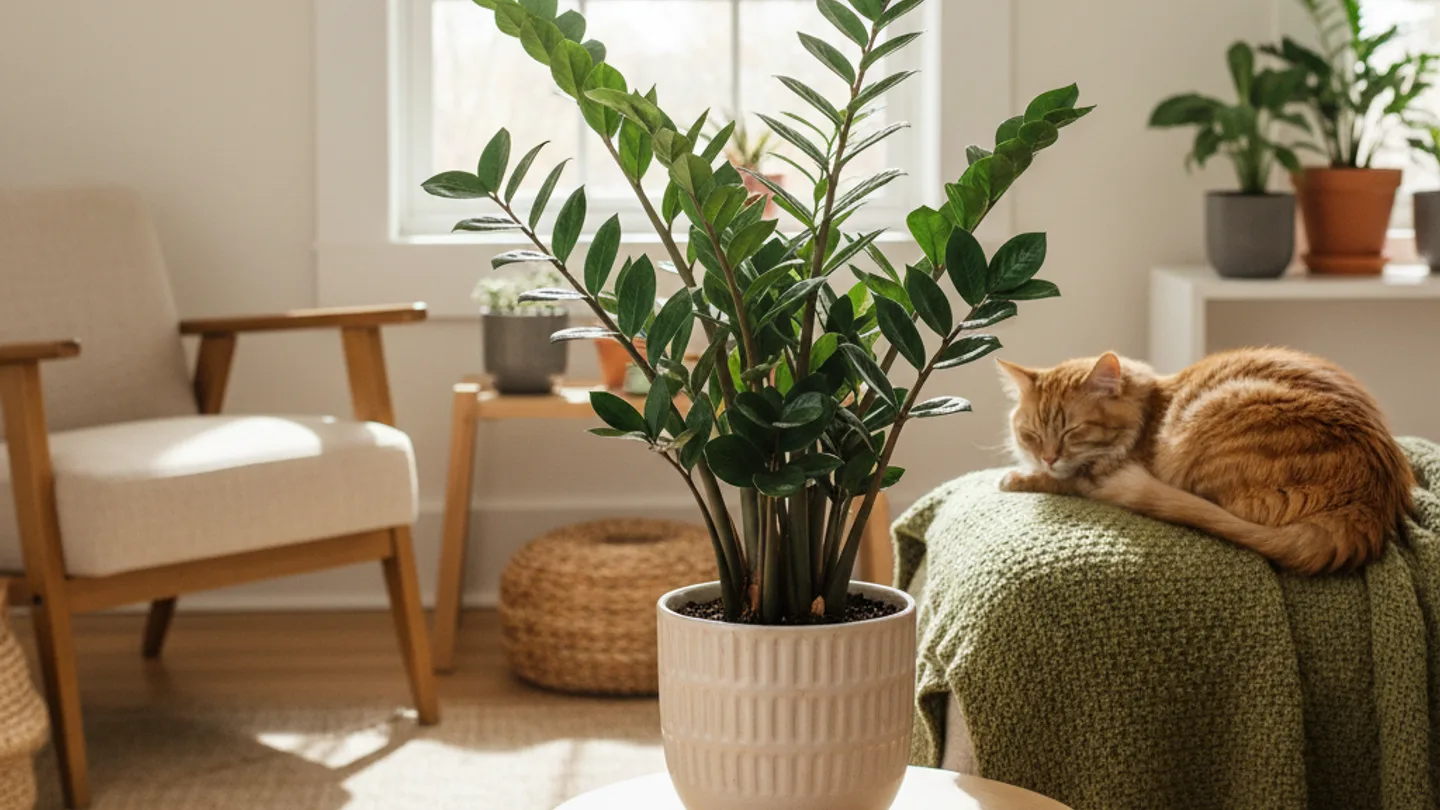
ZZ plants are toxic to both cats and dogs. Every part of the plant contains calcium oxalate crystals, tiny sharp crystals that can irritate your pet's mouth and throat when chewed.
The good news: ZZ plant poisoning is usually mild and rarely an emergency. Most pets take one bite, dislike the burning feeling, and stop. Here is what actually happens, what to do, and a pet-safe plant with the same glossy look.
Belangrijkste punten
- ZZ plants are toxic to cats and dogs because of calcium oxalate crystals.
- Chewing usually causes mouth irritation, drooling and sometimes vomiting. It is rarely life-threatening.
- The 'cancer plant' rumor is not supported by evidence. ZZ plants are not known to cause cancer in people or pets.
- Wash your hands after handling, and place the plant out of reach or swap it for a safe lookalike.
- A peperomia is a good pet-safe swap with the same glossy, upright style.
- Call your vet if symptoms appear or if your pet ate a large amount.
Why the ZZ plant is toxic
The ZZ plant (Zamioculcas zamiifolia) contains insoluble calcium oxalate crystals in its leaves, stems and roots. Calcium oxalate crystals are tiny sharp crystals, like microscopic needles, that can irritate your pet's mouth and throat.
When a cat or dog bites into a leaf, the crystals shoot into the soft tissue of the mouth and tongue. That causes an immediate burning or stinging feeling. It is the same mechanism you find in pothos, philodendron and monstera, which is why ZZ belongs to the same caution group.
Because the first bite hurts, most pets stop after one chew. That built-in deterrent is why serious ZZ poisoning is uncommon, but mild to moderate reactions do happen, especially in curious kittens and puppies.
The 'cancer plant' rumor, explained
You may have seen posts claiming the ZZ plant causes cancer and should be banned from homes. That claim is exaggerated.
The rumor seems to come from a mix of two facts: the plant is toxic if eaten, and it was once studied for potential compounds of interest. Being studied in a lab does not make a houseplant a cancer risk.
There is no solid evidence that having a ZZ plant in your home causes cancer in people or pets. The real, proven risk is much simpler: mouth irritation if your pet chews it. Keep that risk in proportion and manage it with placement or a swap, not panic.
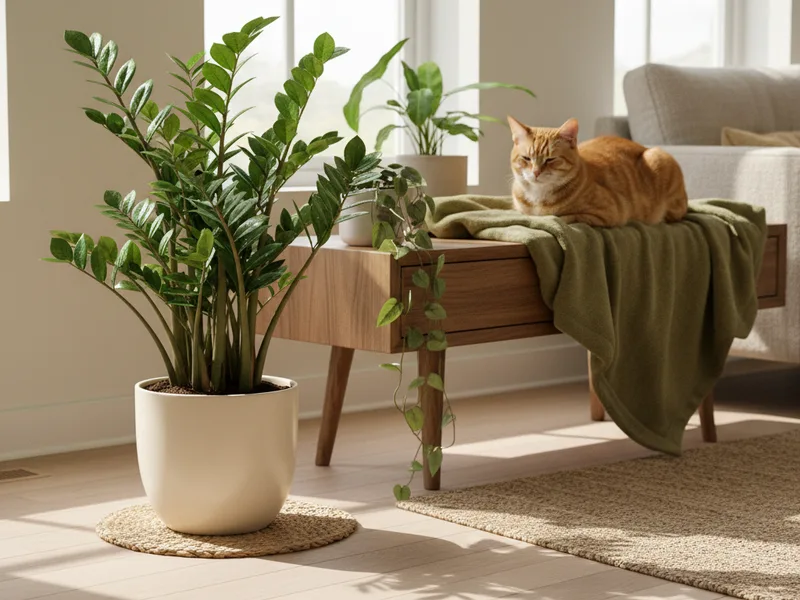
Symptoms if your cat or dog chews a ZZ plant
Symptoms usually start within minutes of chewing and stay limited to the mouth and stomach. Watch for:
Pawing at the mouth or face. Excessive drooling. Redness or swelling of the lips, tongue or gums. Vomiting or gagging. Loss of appetite or refusing food for a meal or two.
In most cases these signs fade within a few hours to a day. Trouble breathing, heavy swelling or repeated vomiting are less common but more serious. Those signs mean you should call a vet right away.
What to do
If your pet ate ZZ plant
Remove the plant material
Gently take any leaf pieces out of your pet's mouth if you can do it safely. Move the plant out of reach.
Rinse the mouth
Offer fresh water or gently wipe the mouth with a damp cloth. This helps clear leftover crystals.
Watch for symptoms
Check for drooling, swelling, vomiting or breathing trouble over the next few hours. Note what and roughly how much was eaten.
Call your vet when in doubt
Contact your vet or a pet poison helpline if symptoms appear, if your pet is very young or small, or if a large amount was eaten. Bring a photo or piece of the plant.
Handling and placement tips
You do not have to throw out a ZZ plant you love. You do need to make it hard to reach.
Place it on a high shelf, in a room your pet cannot enter, or in a hanging planter. Remember that cats climb, so 'high' needs to mean truly unreachable.
Wear gloves or wash your hands after repotting or pruning. The sap can irritate human skin too, and the juice on your hands can transfer to your eyes or to your pet. Wipe up fallen leaves right away, since a dropped leaf at floor level is an easy snack for a dog.
A pet-safe swap with the same glossy look
If you want the ZZ look without the risk, try a peperomia, for example Peperomia obtusifolia. It has the same thick, glossy, deep green leaves and an upright shape, and it is generally considered non-toxic to cats and dogs.
Peperomia tolerates lower light and infrequent watering, so it fits the same 'easy plant for a dim apartment' role that made you want a ZZ in the first place.
Generally considered non-toxic still means moderation matters. Any plant can cause an upset stomach if your pet eats a lot of it, so keep even safe plants reasonably out of reach. Looking for more options? Our guides on pothos and philodendron each include a safe alternative too.
Common questions
Is ZZ plant toxic to cats?
Yes. ZZ plants are toxic to cats. The calcium oxalate crystals irritate the mouth and throat, causing drooling, pawing at the mouth and sometimes vomiting. It is usually mild, but contact your vet if symptoms appear.
Is ZZ plant toxic to dogs?
Yes, for the same reason. Dogs that chew ZZ leaves typically get mouth irritation, drooling and an upset stomach. Serious poisoning is rare because the first bite hurts enough to stop most dogs.
Does the ZZ plant cause cancer?
There is no solid evidence that ZZ plants cause cancer in people or pets. The 'cancer plant' story is an exaggerated internet rumor. The real risk is mouth irritation if the plant is chewed.
Can I keep a ZZ plant if I have pets?
You can, if it is truly out of reach, in a room your pet cannot access or on a surface a cat cannot jump to. If your pet is a persistent chewer or climber, a pet-safe swap like peperomia is the calmer choice.
When should I call the vet?
Call your vet if your pet shows swelling, repeated vomiting, trouble breathing, or refuses food for more than a day. Also call if a small pet ate a large amount, or if you are simply unsure.