
Is Pothos Toxic to Cats and Dogs?
Yes, pothos is toxic to both cats and dogs. If your pet chews a leaf or stem, the plant releases calcium oxalate crystals: tiny, sharp crystals that irritate the mouth and throat. The reaction is fast and painful, and it is why pothos and pets need a plan.
The good news first: most cases stay mild and clear up with simple care and a call to your vet. The less good news: those trailing vines are almost designed to tempt a cat.
Here is what pothos does, which symptoms to watch for, what to do if your pet takes a bite, and a safe trailing plant that gives you the same look.
Key takeaways
- Pothos (Epipremnum aureum, also called devil's ivy) is toxic to cats and dogs. All varieties and all plant parts are affected.
- The cause is calcium oxalate: tiny, needle-sharp crystals that irritate your pet's mouth, tongue and throat on contact.
- Typical symptoms: drooling, pawing at the mouth, vomiting and swelling of the lips or tongue.
- Symptoms are usually mild, but call your vet if your pet chews pothos, especially if you see swelling or repeated vomiting.
- Trailing vines at cat height are an invitation. Hang pothos high, trim the trails, or switch to a pet-safe trailing plant like a spider plant.
In this article
Why pothos is toxic to cats and dogs
Pothos is the everyday name for Epipremnum aureum, also sold as devil's ivy, golden pothos, neon pothos and marble queen. Every variety contains the same irritant, so the answer is the same for all of them.
That irritant is calcium oxalate. In plain words: the leaves and stems are packed with tiny, sharp crystals. When your pet bites into the plant, the crystals are released into the soft tissue of the mouth, tongue and throat and cause an instant burning feeling.
This is why symptoms usually start within minutes of chewing, often before your pet has swallowed anything at all. Like monstera, pothos belongs to a plant family that defends itself with these crystals.
Animal poison control organizations such as the ASPCA list pothos as toxic to cats and dogs. That sounds alarming, but toxic here mostly means painful and worth preventing. Severe cases are uncommon, and most pets recover fully with prompt care.
How cats and dogs get into trouble with pothos
Cats: dangling vines are hard to resist
A trailing pothos vine is, from your cat's perspective, a moving toy at eye level. Cats bat at the leaves, catch them and often chew what they catch. Even one chewed leaf can be enough to set off the burning and drooling.
Typical signs in cats: drooling, pawing at the mouth, shaking the head, vomiting and hiding. Some cats stop eating for a short while because their mouth hurts.
Dogs: fallen leaves and low-hanging pots
Dogs usually meet pothos at floor level: a dropped leaf, a low shelf or a trailing vine they can pull down. Puppies and curious chewers are the most likely to take a bite.
Typical signs in dogs: drooling, whining, vomiting, rubbing the face along the floor and refusing food. A sore mouth, not an upset stomach, is usually the main problem.
Why trailing vines tempt pets, and where to put your pothos
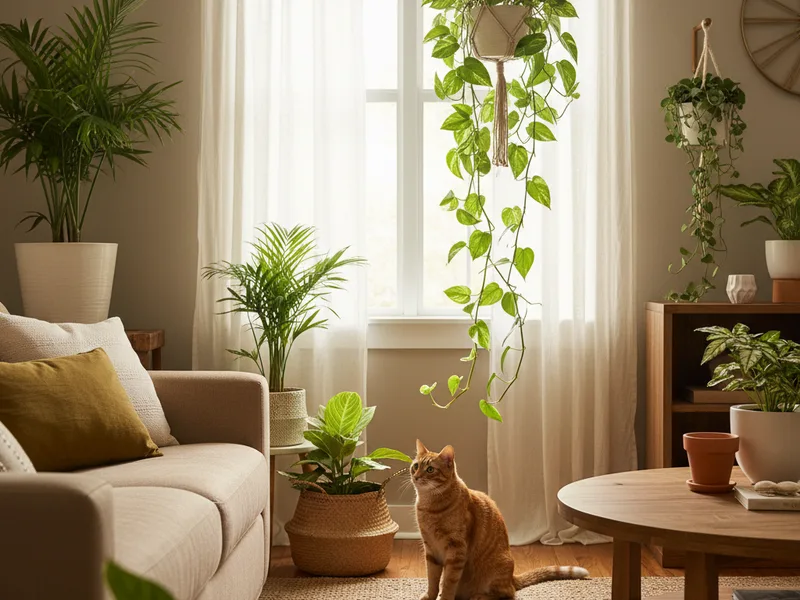
Pothos is popular because it trails beautifully from shelves and hanging baskets. That is exactly the problem. Movement triggers a cat's hunting instinct, and a vine swaying in a draft is hard for many cats to ignore.
If you keep your pothos, treat placement as part of pet safety. Hang it high with the vines trained upward, trim long trails before they reach cat height and pick up fallen leaves the same day.
Be honest with yourself about your pet. A determined cat can reach almost any shelf. If your cat or dog has chewed houseplants before, a safe swap is the calmer choice.
First steps
What to do if your pet eats pothos
Remove the plant
Take any leaf or stem pieces gently out of your pet's mouth and move the plant out of reach. Check the floor for dropped pieces.
Soothe the mouth
Offer fresh water or wipe the mouth gently with a wet cloth. Do not force your pet to swallow large amounts of water.
Call your vet
Tell your vet what was eaten, roughly how much and when. You can also call an animal poison control line; a consultation fee may apply.
Watch for symptoms
Keep an eye on drooling, pawing at the mouth, vomiting and any swelling of the lips, tongue or face. Note when the symptoms started.
Know when it is urgent
Seek immediate veterinary care if you see swelling, trouble swallowing or breathing, repeated vomiting, or if your pet seems very unwell.

The safe swap: trailing plants that are generally considered non-toxic
If you want the pothos look without the risk, the spider plant is the closest match. It has the same easygoing nature, tolerates a similar range of light and trails baby plantlets that look great from a shelf or hanging pot. It is generally considered non-toxic to cats and dogs.
Boston fern is another solid pick for a hanging basket: full, soft fronds, also generally considered non-toxic. It likes a bit more humidity and indirect light, so it suits a bright bathroom or kitchen.
One honest note: even non-toxic plants can cause a mild stomach upset if your pet eats a lot of leaf. Pet-safe means no known toxins, not an all-you-can-eat salad, so it is still worth placing your plants thoughtfully.
| Plant | Safe for cats and dogs? | Look | Light | Care level |
|---|---|---|---|---|
| Golden pothos | Toxic to both | Long vines with heart-shaped leaves | Low to bright indirect | Very easy |
| Spider plant | Generally considered non-toxic | Arching leaves with trailing baby plants | Bright indirect, tolerates lower light | Very easy |
| Boston fern | Generally considered non-toxic | Full, feathery fronds | Bright indirect, likes humidity | Moderate |
| String of hearts | Generally considered non-toxic | Delicate vines with small heart-shaped leaves | Bright, indirect to some direct sun | Easy |
Frequently asked questions
Is pothos toxic to cats?
Yes. Pothos is toxic to cats because its leaves and stems contain calcium oxalate crystals. These tiny, sharp crystals irritate your cat's mouth and throat as soon as the plant is chewed. Expect drooling, pawing at the mouth and possibly vomiting, and call your vet for advice.
Is pothos toxic to dogs?
Yes, for the same reason. The calcium oxalate crystals affect dogs the same way they affect cats: a burning mouth, drooling and vomiting. Most cases are mild, but contact your vet, especially if a small dog or a puppy is involved.
Are all pothos varieties toxic?
Yes. Golden pothos, neon, marble queen and jade are all Epipremnum aureum, and all contain calcium oxalate crystals. Satin pothos is a different plant (Scindapsus), but it belongs to the same plant family and is also considered toxic to cats and dogs.
How much pothos does a pet need to eat to get sick?
Very little. Because the crystals act on contact, even one chewed leaf can cause obvious mouth pain and drooling. The amount matters less than with many other toxins, which is why it is smart to call your vet instead of waiting to see how things develop.
Can I keep a pothos if I have pets?
You can, if your pets leave plants alone and you place it well: high up, vines trimmed, fallen leaves removed quickly. If your cat or dog has a history of chewing plants, choose a pet-safe trailing plant instead. No shelf is fully out of reach for a motivated cat.
Is pothos dangerous to touch?
The main risk comes from chewing the plant. If you prune or repot your pothos, the sap can irritate sensitive skin, so washing your hands afterward is a sensible habit. For pets, the concern is the mouth and throat, not brushing past a leaf.