Are Chrysanthemums Toxic to Cats and Dogs?
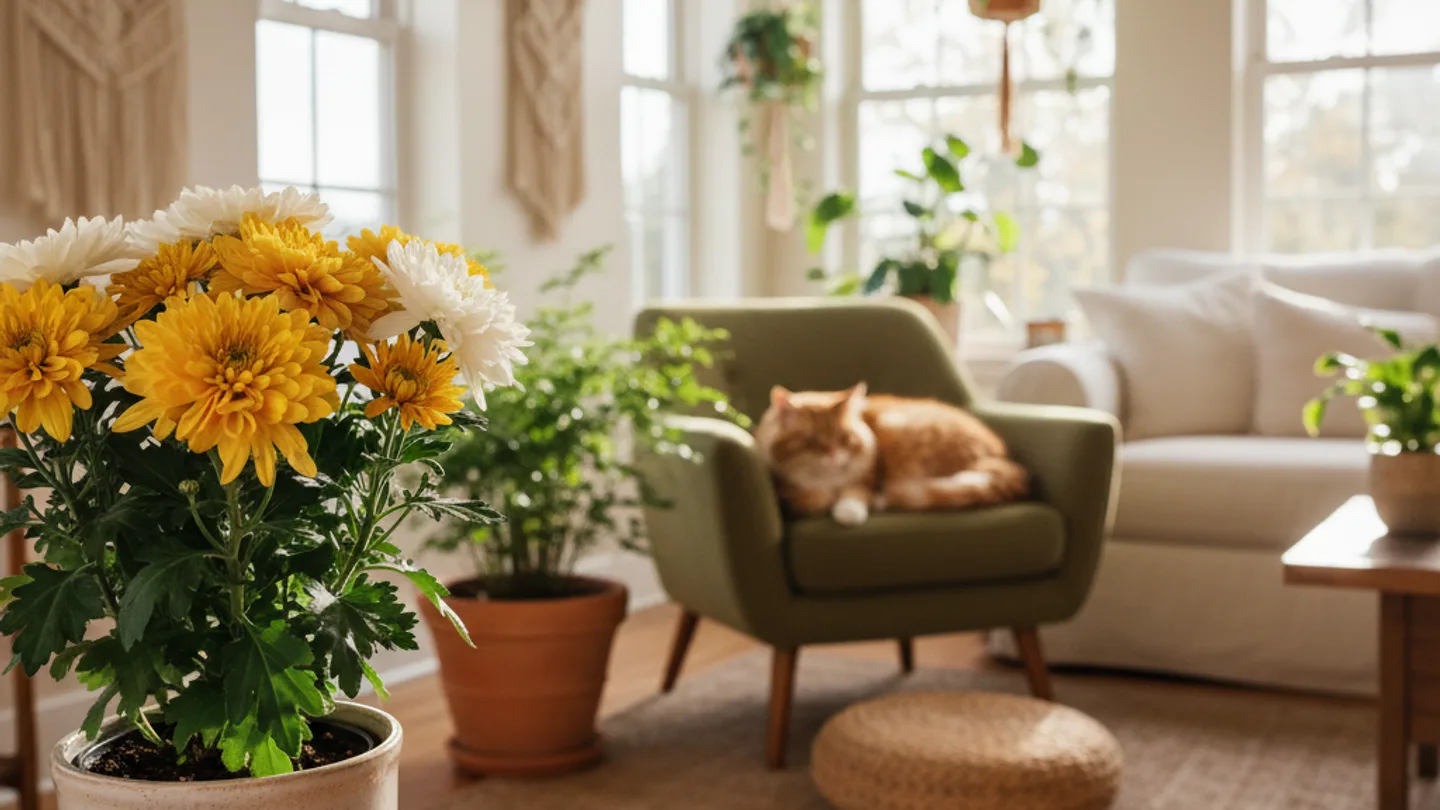
Chrysanthemums are toxic to both cats and dogs. Every part of the plant, from the petals to the leaves and stems, contains natural chemicals that can make your pet sick if chewed or swallowed.
The main culprits are pyrethrins, natural insect-repelling compounds the plant produces to protect itself. In pets, they can cause drooling, vomiting, diarrhea and a wobbly, unsteady walk.
That is a real concern in autumn, when pots of mums show up on porches, steps and patios across the US, right at nose height for a curious dog or cat. Here is what to watch for, what to do, and which fall flowers you can safely swap in.
The short answer
- Chrysanthemums (mums) are toxic to cats and dogs.
- Pyrethrins in the plant can cause drooling, vomiting, diarrhea and wobbliness.
- Most cases are mild to moderate, but you should call your vet if your pet eats any part of a mum.
- Pyrethrins and their synthetic relatives also explain why some dog flea products are dangerous for cats.
- Pet-safe fall swaps include asters, celosia, zinnias, snapdragons and pansies.
Why mums are toxic, and what symptoms look like
Pyrethrins are natural chemicals that chrysanthemums make to keep insects away. They work by attacking the nervous system of bugs. In cats and dogs, the same compounds can irritate the mouth and stomach and, in larger amounts, affect coordination.
You may also see pyrethrins listed alongside sesquiterpene lactones, another group of irritants in mums. In plain words: the plant is chemically defended, and your pet's body notices.
Typical symptoms after a pet chews or eats chrysanthemum include drooling, vomiting, diarrhea and a wobbly or unsteady walk. Some pets also get red, irritated skin from brushing against the plant.
The good news: mum poisoning is usually mild to moderate, and most pets recover well with prompt care. Still, never wait and hope. If your pet has eaten any part of a mum and shows symptoms, call your vet. This article is general guidance, not a diagnosis.
Act fast, stay calm
What to do if your pet eats a mum
Move your pet away from the plant
Gently take away any plant pieces and remove bits still in your pet's mouth if you can do so safely.
Note what happened
Write down roughly how much was eaten, which part of the plant, and when. Your vet will ask.
Rinse and offer water
Wipe or rinse your pet's mouth with a wet cloth and make fresh water available.
Call your vet or a pet poison control service
Describe the plant, the amount and any symptoms. Follow their advice on whether a visit is needed.
Watch for symptoms
Keep an eye out for drooling, vomiting, diarrhea or wobbliness over the following hours, and contact your vet if any appear.
The flea product connection: why cats suffer more
Pyrethrins matter beyond the flower pot. They are the natural blueprint for a family of synthetic insecticides called pyrethroids, which are used in many flea and tick treatments for dogs.
Here is the part every cat owner should know: cats process these chemicals far worse than dogs. A concentrated spot-on flea product made for dogs can seriously poison a cat, whether it is applied directly or the cat simply cuddles up against a recently treated dog. Signs include trembling, twitching and uncoordinated movement, and it can become life-threatening.
So the same plant family chemistry sits behind two common warnings: keep pets from eating mums, and never use a dog flea product on a cat. If a cat is accidentally exposed, treat it as urgent and call your vet right away.
Curious how we handle other popular plants? Our guide on Monstera toxicity follows the same verdict-first format.
| Plant | Look | Light needs | Pet safety |
|---|---|---|---|
| Aster | Daisy-like purple, pink or white blooms | Full sun | Generally considered non-toxic |
| Celosia | Velvety plumes or crests in red, orange and yellow | Full sun | Generally considered non-toxic |
| Zinnia | Bright, rounded blooms in many colors | Full sun | Generally considered non-toxic |
| Snapdragon | Tall spikes in soft or bold colors | Full sun to part shade | Generally considered non-toxic |
| Pansy | Low mounds of cheerful, face-like flowers | Part sun, tolerates cool weather | Generally considered non-toxic |
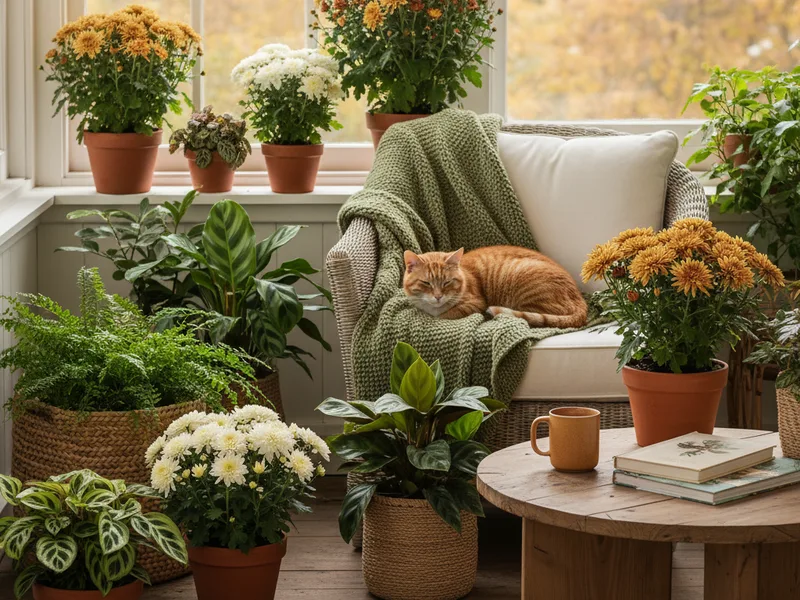
Mums on the porch: practical tips for fall
You do not have to give up autumn color. If you love real mums, place pots where pets simply cannot reach them: on a high plant stand, a wall shelf or a balcony railing your cat does not visit. Dogs that graze on walks should also be steered past neighbors' mum displays.
If you swap in the pet-safe options from the table above, you get the same seasonal look with far less worry. A quick note: non-toxic never means a free snack. Any plant material can upset a pet's stomach if eaten in quantity, so discourage chewing even on safe plants.
And if you give or receive a fall bouquet, check it for mum stems before setting it on a low table. Mixed arrangements often include them.
Common questions about mums and pets
Are mums toxic to dogs?
Yes. Chrysanthemums are toxic to dogs. Eating any part of the plant can cause drooling, vomiting, diarrhea and a wobbly walk. Most cases are mild to moderate, but call your vet if your dog has eaten a mum, especially a small dog or a large amount.
Are mums toxic to cats?
Yes, cats are affected too, and they tend to be more sensitive to pyrethrins than dogs. Chewing leaves or flowers can trigger drooling, vomiting and unsteady movement. Contact your vet if you see symptoms.
My dog ate one mum flower. Is that an emergency?
A small nibble usually causes mild stomach upset rather than a crisis. Remove any remaining plant, offer water and watch for drooling, vomiting, diarrhea or wobbliness. Call your vet if symptoms appear, if your dog is small, or if you are unsure how much was eaten.
Is the water in a vase of mums dangerous?
Treat it as risky. Plant compounds can leach into vase water, so keep pets from drinking it and refresh arrangements well out of reach.
Are dried mums or chrysanthemum tea safe for pets?
Keep both away from pets. Dried flowers still contain the irritating compounds, and tea made for people is not a pet product. Store them where curious noses cannot reach.
Which part of the chrysanthemum is most toxic?
All parts of the plant are considered toxic, with the flowers and leaves carrying the highest concentration of the irritating compounds.