Is Foxglove Toxic to Cats and Dogs? A Garden Emergency
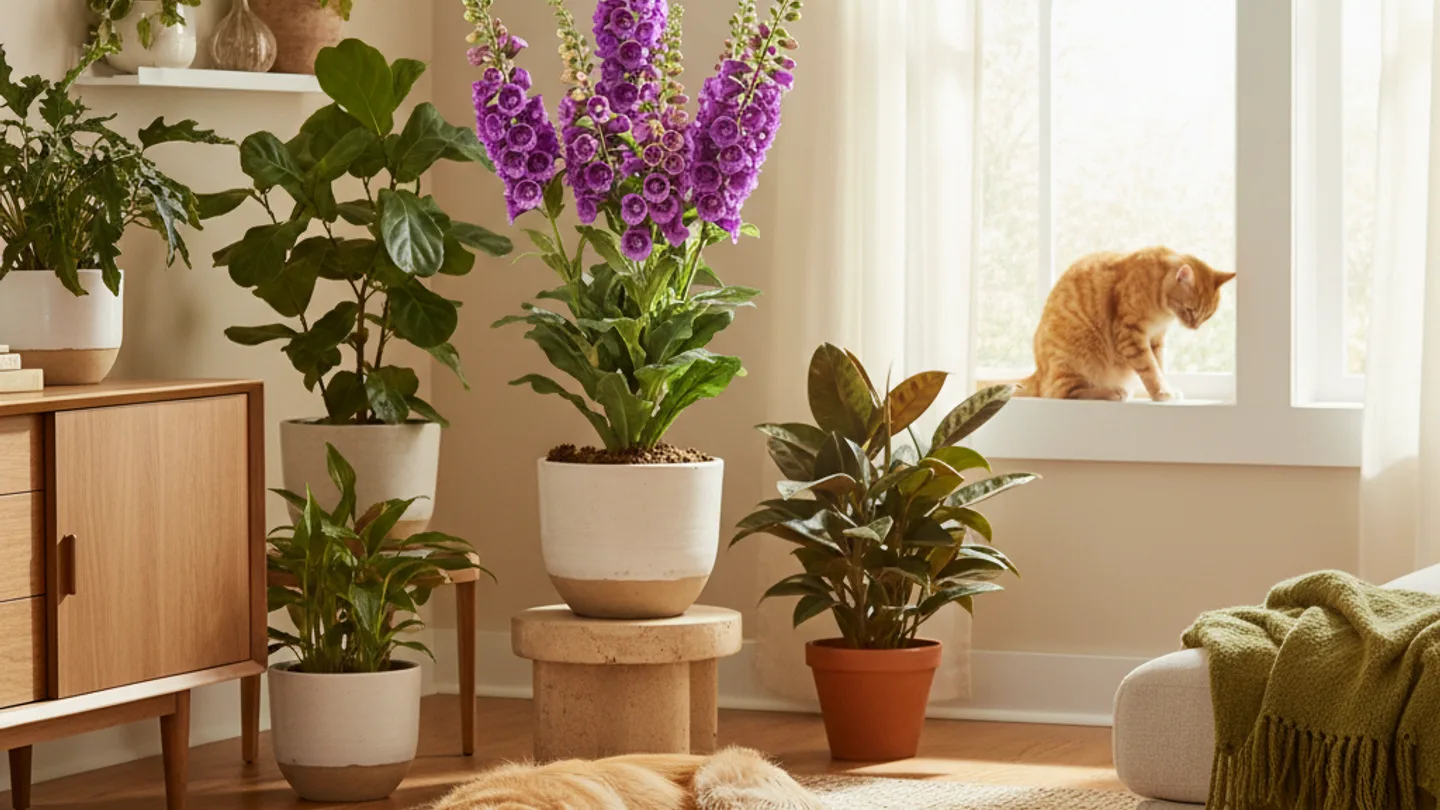
Foxglove is severely toxic to both cats and dogs. Every part of the plant contains chemicals that act on the heart, and even a small amount can be fatal. If your pet has eaten any part of a foxglove, treat it as an emergency and call your vet now.
That is a harder verdict than we give most plants on this site. Foxglove earns it. It is a cottage-garden favorite across the US, it self-seeds into beds you never planted, and it shows up in fresh bouquets and dried arrangements where pets can reach it.
This guide covers why foxglove is so dangerous, what poisoning looks like, exactly what to do in the first minutes, and tall, pet-safe spikes you can plant instead.
The short version
- Foxglove is severely toxic to cats and dogs. Small amounts can be fatal, so treat any exposure as an emergency.
- The whole plant is poisonous: flowers, leaves, stems, seeds and roots. Drying does not make it safe.
- Cardiac glycosides are natural chemicals in foxglove that change how the heart beats. You cannot see a heart rhythm problem at home, which is why a vet call cannot wait.
- Do not wait for symptoms, and do not induce vomiting unless a vet or poison specialist tells you to.
- Snapdragon, hollyhock, salvia, liatris and stock give a similar tall-spike look and are generally considered non-toxic to cats and dogs.
Why foxglove is so dangerous
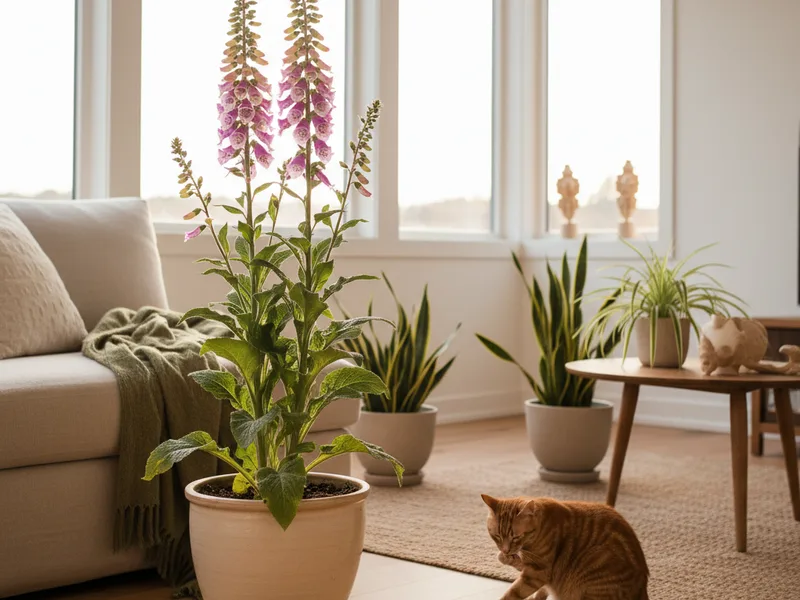
Foxglove (Digitalis purpurea and its relatives) contains cardiac glycosides. The term sounds technical, but the idea is simple: these are natural chemicals that change how the heart beats.
In medicine, a refined version called digoxin is used in tiny, carefully measured doses for certain heart conditions. A garden has no measuring. A dog that chews one leaf gets an uncontrolled dose.
The whole plant is poisonous, including the flowers, leaves, stems, seeds and roots. Drying does not remove the toxins, and they can leach into the water of a vase.
For context, plants like Monstera mainly irritate the mouth and stomach. Foxglove is in a different category: it can stop a heart. This is one of the strongest warnings we give.
Emergency steps
What to do if your pet eats foxglove
Remove plant material
Gently clear any leaves or petals from your pet's mouth and move your pet away from the plant, bouquet or vase.
Note what and when
Write down which part was eaten, roughly how much, and at what time. Take a quick photo of the plant if you can.
Call a vet or poison line now
Do not wait for symptoms. Call your veterinarian, the nearest emergency clinic, the ASPCA Animal Poison Control Center at (888) 426-4435, or the Pet Poison Helpline at (855) 764-7661. A consultation fee may apply.
Do not induce vomiting on your own
Only induce vomiting if a professional tells you to. With heart toxins, the wrong move at home can cost valuable time.
Bring a sample or a photo
If you head to a clinic, take a cutting or a clear photo of the plant. Confirming what your pet ate helps the vet choose treatment faster.
Follow monitoring advice
Heart effects can take hours to appear. Your vet may want to check the heart rhythm even if your pet seems fine.
Symptoms of foxglove poisoning
Symptoms often start within a few hours, but heart changes can lag behind. A pet that looks fine an hour after chewing foxglove is not in the clear.
Stomach and mouth: drooling, vomiting, diarrhea that can be bloody, belly pain and refusing food.
Heart: a pulse that is too slow, too fast or uneven. This is the life-threatening part, and you usually cannot detect it without a vet.
Whole body: weakness, wobbliness, unusual tiredness, tremors or collapse.
Cats are good at hiding illness. A quiet, withdrawn cat after contact with a plant is a warning sign, not reassurance.
Where foxglove exposure actually happens
Cottage gardens and fence lines
Foxglove is a classic cottage-garden plant in the US, loved for tall spikes of bell-shaped flowers in late spring and early summer.
It self-seeds freely. A plant your neighbor put in can show up on your side of the fence next year, and volunteers pop up in beds you never sowed.
Watch puppies and dogs that graze on greenery, and check yard-waste piles. A pulled foxglove left in a heap is still toxic. Bag it or place it where pets cannot reach.
Bouquets, dried flowers and vase water
Florists use foxglove for height in large arrangements, and it is popular in dried-flower decor. Drying does not remove the toxins, so a dried stem is still dangerous if chewed.
The water in a vase can hold leached toxins. Cats that sip from vases or from knocked-over arrangements are a real risk. Dump vase water where pets cannot get to it.
If you receive a bouquet, ask the sender or florist whether it contains foxglove, and keep unknown arrangements out of reach until you know.

Safe tall spikes that keep the cottage-garden look
You do not have to give up the look. Several tall, spiked bloomers are generally considered non-toxic to cats and dogs and grow well in real US yards, from full-sun beds to part-shade corners.
One honest note: non-toxic never means edible. Any plant can cause an upset stomach if a pet eats enough of it. If your pet chews a plant and shows symptoms, call your vet.
| Plant | Safe for cats and dogs? | Look | Light |
|---|---|---|---|
| Snapdragon | Generally considered non-toxic | Upright spikes in many colors, classic cottage feel | Full sun to part shade |
| Hollyhock | Generally considered non-toxic | Very tall spikes with large open blooms | Full sun |
| Salvia (ornamental sage) | Generally considered non-toxic | Slim vertical spikes, often purple or blue | Full sun |
| Liatris (blazing star) | Generally considered non-toxic | Fluffy purple spikes, loved by pollinators | Full sun |
| Stock | Generally considered non-toxic | Dense, fragrant spikes, good for cutting | Full sun to part shade |
Foxglove questions we hear often
Is dried foxglove still toxic?
Yes. Drying does not remove the cardiac glycosides. Treat dried stems, wreaths and arrangements exactly like the live plant and keep them out of reach.
Can the vase water poison my pet?
Yes. The toxins can leach into vase water, and pets do drink from vases. Dump the water somewhere pets cannot reach and keep arrangements away from curious noses.
My dog only nibbled one leaf. Do I still call the vet?
Yes. With foxglove, small amounts can be dangerous, and heart effects may not show right away. A quick call costs little. Waiting can cost a lot.
Is foxglove toxic to people too?
Yes, all parts are toxic to humans as well. Wear gloves when pulling it, wash your hands afterward, and keep the plant away from children.
Is foxglove the plant behind the heart medicine digoxin?
Yes, digoxin is derived from foxglove. The difference is control: a pharmacy measures the dose precisely, while a garden serves an unknown amount.
Are foxglove seeds and roots dangerous too?
Yes. The toxins are in every part of the plant, including seeds, roots, leaves and flowers. Self-sown seedlings count as well.