
Is Wisteria Toxic to Cats and Dogs?
Yes, wisteria is toxic to both cats and dogs. Every part of the plant contains toxins, but the seeds and seed pods are the most dangerous. Even a small amount of chewed seeds can make a pet very sick.
The culprits are two natural compounds, lectin and wisterin. They can cause repeated vomiting, diarrhea, and serious dehydration. The risk peaks in autumn, when dry pods fall to the ground, right where dogs sniff and chew.
This guide gives you the facts: what makes wisteria dangerous, which symptoms to watch for, when a vet visit cannot wait, and which pet-safe climbers give you the same look without the worry.
In this article
Key takeaways
- Wisteria is toxic to both cats and dogs. The seeds and pods carry the highest dose of its toxins.
- Lectin and wisterin attack the stomach and gut, causing repeated vomiting, diarrhea, and dehydration.
- Autumn is the danger season: dry pods fall, split open, and land where pets play.
- If your pet chews a pod or seed, call a vet or poison hotline right away. Do not wait for symptoms.
- Prompt treatment, usually fluids and monitoring, gives pets the best chance of a smooth recovery.
- Star jasmine, climbing roses, and coral honeysuckle are pet-safe climbers with a similar look.

What makes wisteria toxic
Wisteria contains two main toxins: lectin and wisterin. Lectins are proteins that irritate the lining of the stomach and intestines. Wisterin is a glycoside, a plant compound that triggers nausea and vomiting once it is digested.
Together they hit the digestive system hard. The danger is not just the vomiting itself. Repeated vomiting and diarrhea drain fluid fast, and that dehydration is what can become serious, especially for small dogs and cats.
This is different from plants like Monstera. Monstera contains calcium oxalate crystals, tiny sharp needles that burn the mouth on contact. Wisteria works differently: the harm starts after your pet swallows the plant, so a pet can eat a pod without any warning signs at first.
All parts of the plant are toxic, including the flowers and leaves. But the seeds inside the pods hold the highest concentration. A dog that cracks open a dry pod and eats the seeds gets the biggest dose.
The risk for your pet
Why dogs get into trouble with pods
Dogs explore the world with their mouths. A dry wisteria pod is about the size of a stick or a chew toy, and the seeds rattle inside when it moves. That makes fallen pods oddly tempting.
The seeds inside are the most concentrated source of lectin and wisterin. A medium or small dog that eats the contents of a pod can start vomiting within hours and lose a lot of fluid quickly.
If you see chewed pods or seed casings near your dog, treat it as urgent and call your vet, even if your dog still seems fine.
How cats encounter wisteria
Cats are less likely to swallow a whole pod, but they bat at the hanging pods, chew the leaves, and nibble flowers. Kittens and indoor-outdoor cats are the most curious.
The same toxins apply. Even leaf chewing can upset a cat's stomach, and a cat that plays with a fallen pod may lick seed or pod fragments off its paws later.
Watch for vomiting, drooling, or a cat that suddenly goes off its food, and call your vet if you can link it to the plant.

Autumn pods and the symptoms they cause
After flowering, wisteria grows long, velvety pods. Through summer they harden and dry. In autumn they split, drop, and scatter seeds across the ground, sometimes with a little help from the wind, so pods can show up in yards that have no wisteria at all.
This is the season to be careful. Rake up pods and seeds as soon as they fall, and check along fences and under pergolas where vines hang. If your neighbor has wisteria, a quick daily sweep of your yard is worth the two minutes.
Symptoms usually start with the stomach. Watch for repeated vomiting, diarrhea, belly pain, drooling, and loss of appetite. Your pet may seem tired, weak, or unusually quiet.
The red flag is dehydration. Signs include dry or sticky gums, sunken eyes, and very low energy. Severe cases, usually after a pet eats several seeds, can lead to collapse. That is the point where urgent vet care is not optional.
What to do if your pet eats wisteria
Move your pet away from the plant
Take away any pods or seeds and gently clear plant pieces from your pet's mouth if you can do it safely. Keep other pets away from the area.
Save a sample and note the details
Keep a pod, seed, or leaf for the vet to see. Note roughly how much was eaten, which part of the plant, and when it happened.
Call your vet or a poison hotline right away
Do not wait for symptoms to appear. You can also call the ASPCA Animal Poison Control Center at (888) 426-4435 or the Pet Poison Helpline at (855) 764-7661. A consultation fee may apply.
Do not induce vomiting on your own
Only make your pet vomit if a vet or poison expert tells you to. Doing it wrong can make things worse.
Watch for vomiting and dehydration
Repeated vomiting, diarrhea, weakness, and dry gums mean your pet needs fluids and monitoring. Follow your vet's instructions and keep fresh water close by.
| Safe swap | The look | Light | Good to know |
|---|---|---|---|
| Star jasmine (Trachelospermum jasminoides) | Glossy green leaves with masses of small, fragrant white flowers | Full sun to partial shade | Generally considered non-toxic to cats and dogs, and the closest match to wisteria's lush, twining habit |
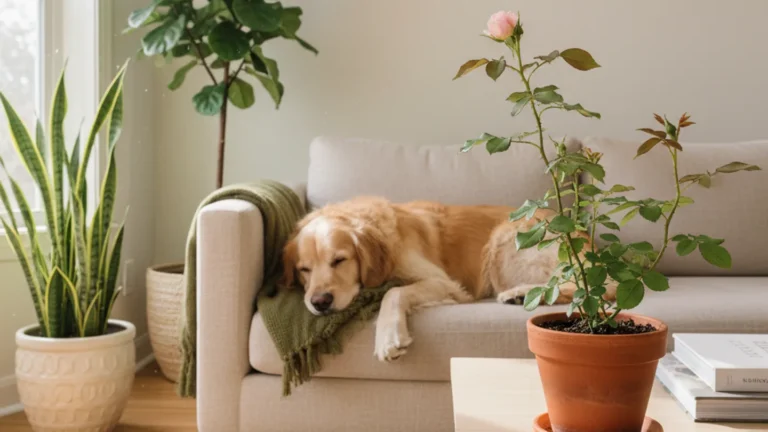
| Climbing rose (Rosa varieties) | Classic romantic blooms along fences and pergolas | Full sun | Roses are non-toxic, but plant thorny canes where paws and noses will not reach them |
| Coral honeysuckle (Lonicera sempervirens) | Tubular coral-red flowers on a twining vine | Full sun to partial shade | Generally considered non-toxic and a favorite of hummingbirds |
Frequently asked questions
Is wisteria toxic to dogs, cats, or both?
Both. The lectin and wisterin in wisteria affect dogs and cats in the same way. The seeds and pods are the most dangerous part for either species.
Which part of wisteria is the most dangerous?
The seeds inside the pods hold the highest concentration of toxins, followed by the pods themselves. The flowers and leaves are toxic too, just at lower levels.
My dog ate one wisteria pod. Is that an emergency?
Treat it as urgent. One pod can contain enough seeds to cause heavy vomiting and fluid loss, and small dogs are hit hardest. Call your vet or a poison hotline now rather than waiting for symptoms.
Are wisteria flowers toxic to pets too?
Yes. All parts of the plant contain the toxins, including flowers and leaves. The concentration is lower than in the seeds, but you should still call your vet if your pet eats more than a nibble.
Can I keep my wisteria if I have pets?
You can reduce the risk by cutting off pods before they dry and fall, sweeping up any that drop, and blocking access to the base of the vine. The safest choice is still a pet-safe swap like star jasmine or a climbing rose.
Will my pet recover from wisteria poisoning?
Most pets that get prompt treatment do well. Care usually focuses on fluids to fight dehydration and monitoring until the stomach settles. Speed matters, so never wait it out at home.