Spider Plant Care: The Perfect Starter Plant for Homes with Pets
Good news first: spider plants are generally considered non-toxic to both cats and dogs. If your pet chews a leaf, you do not need to panic. That makes the spider plant one of the easiest, safest ways to start a plant collection in a home with pets.
This guide covers everything you need for spider plant care: light, water, soil, how to propagate the babies, and what to do about brown tips. We also explain why cats find this plant so tempting and what that means for the plant itself.
The short version
- Spider plants are generally considered non-toxic to cats and dogs.
- Bright, indirect light is ideal, but spider plants tolerate lower light.
- Water when the top inch of soil feels dry, and do not let the pot sit in water.
- Brown tips usually come from dry air or minerals in tap water.
- Cats love chewing the leaves. It is safe for them, but it can wear the plant down.
- The little plantlets root easily, so you can grow new plants for free.
Is the spider plant safe for cats and dogs?
Yes. Spider plants (Chlorophytum comosum) are generally considered non-toxic to cats and dogs. They do not contain calcium oxalate crystals, the tiny sharp crystals in plants like monstera that irritate a pet's mouth and throat.
That said, no plant is a snack. Eating a large amount of any leaf can cause a mild stomach upset in pets, simply because their digestion is not built for greenery. If your pet vomits, drools, or seems off after chewing a plant, contact your vet.
Compared with genuinely dangerous plants, the spider plant is one of the most relaxed choices you can make. That is a big part of why it is such a good starter plant.
Why cats love spider plants so much
If you have a cat, you have probably seen it happen. The long, arching leaves dangle and move, and to a cat that looks like a toy. Some people also report that spider plants have a mildly appealing effect on cats, a bit like catnip, though this is anecdotal rather than proven.
The good news: a nibble will not poison your cat. The less good news: repeated chewing can shred the leaves and stress the plant, especially a young one.
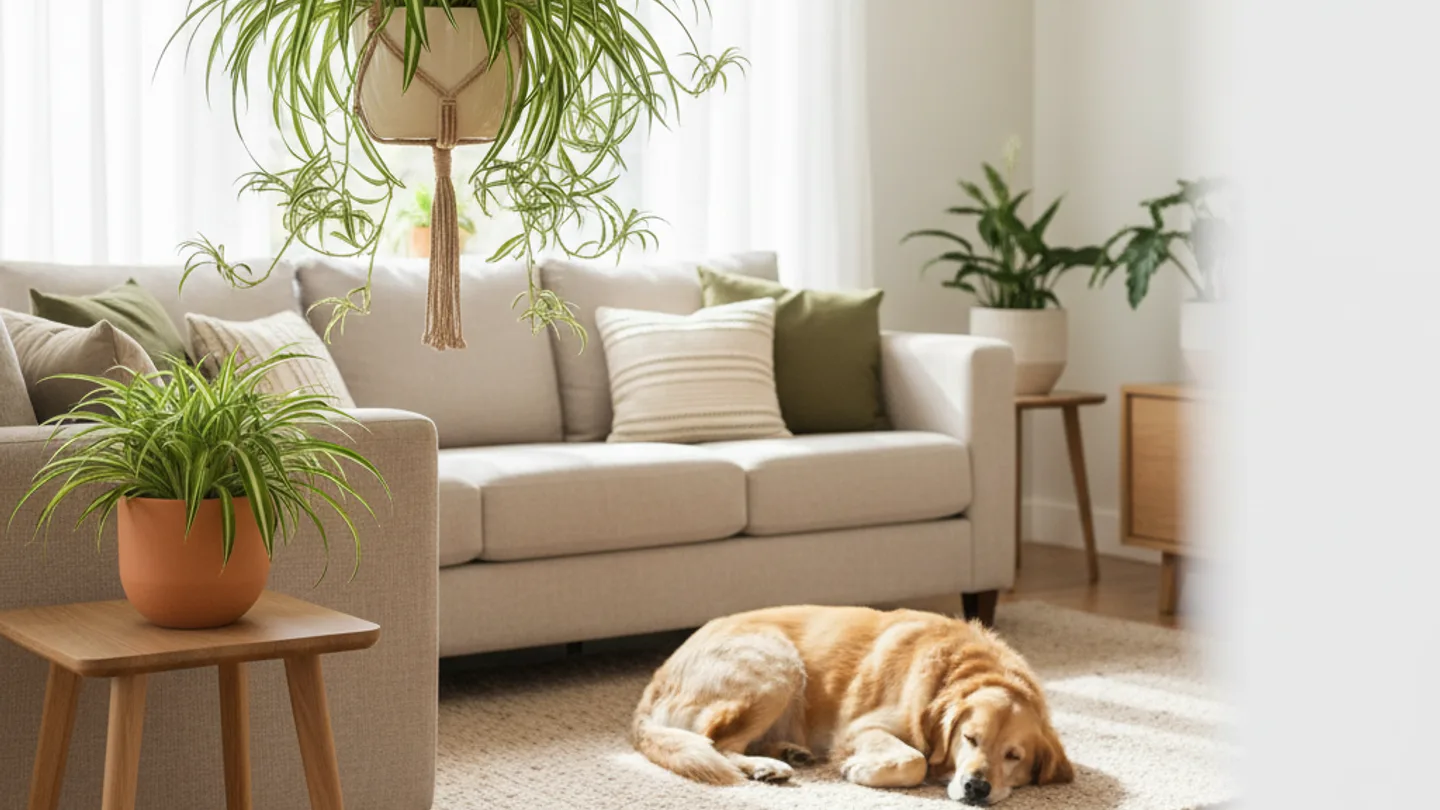
A simple fix is to hang the plant in a basket or place it on a high shelf. The trailing babies still look great from below, and your cat gets to admire rather than snack. If your cat is a determined chewer, offering a pot of cat grass nearby often redirects the habit.
Light: bright, but forgiving
Spider plants do best in bright, indirect light. A spot near an east or west-facing window works well.
They also tolerate medium and lower light, which makes them realistic for apartments. Growth will slow and the striped varieties may lose some contrast, but the plant will survive.
Avoid harsh direct sun, especially afternoon sun through a south-facing window. It can scorch the leaves and leave pale, dry patches.
Water: steady, not soggy
Water when the top inch of soil feels dry. In most homes that means about once a week in spring and summer, and less often in winter.
Spider plants have thick, fleshy roots that store water, so they forgive a missed watering. What they do not forgive is sitting in soggy soil, which leads to root rot. Always use a pot with a drainage hole and empty the saucer after watering.
If your home is very dry in winter, an occasional misting or a spot near other plants helps keep the leaf tips from drying out.
Soil and feeding
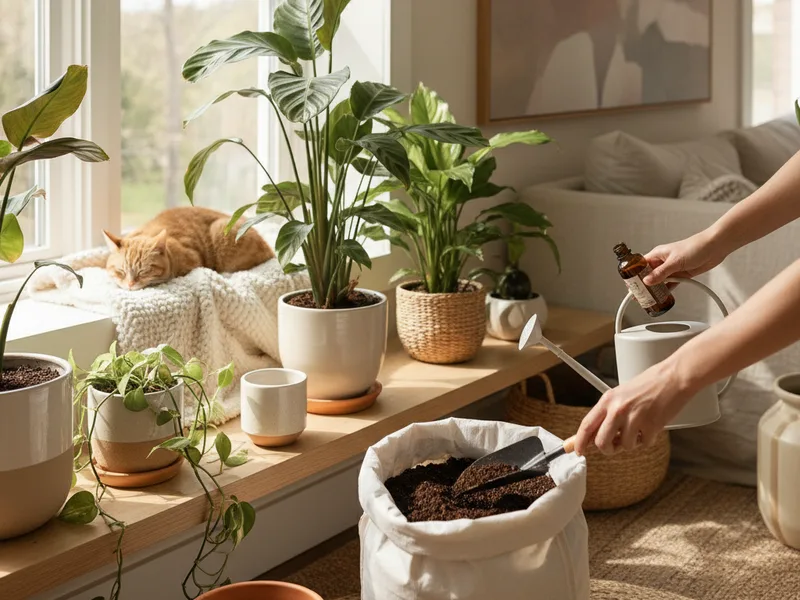
A standard, well-draining potting mix is all a spider plant needs. If your mix feels heavy, add some perlite to loosen it up.
Feed with a diluted houseplant fertilizer about once a month in spring and summer. Skip feeding in fall and winter when growth slows. More is not better here: too much fertilizer can actually cause brown tips.
Repot when roots start pushing out of the drainage holes or the plant dries out within days of watering. Go one pot size up, not three.
Free plants
How to propagate spider plant babies
Find a healthy baby
Mature spider plants send out long stems with small plantlets, often called babies or spiderettes. Pick one with small bumps or short roots already forming at its base.
Root it in water or soil
Snip the baby off and place it in a small glass of water, or press it directly into moist potting soil. Both methods work well.
Give it light and patience
Keep the cutting in bright, indirect light. If you started it in water, change the water every few days. Roots usually appear within a couple of weeks.
Pot it up
Once the roots are an inch or two long, move the baby into a small pot with regular potting mix. Keep the soil lightly moist for the first few weeks while it settles in.
Brown tips: what they mean and what to do
Brown tips are the most common spider plant complaint, and the plant is still fine. It is a cosmetic issue, not a crisis.
The usual causes are dry air, inconsistent watering, or minerals and fluoride in tap water building up in the soil. Spider plants are a bit sensitive to what is in the water.
Easy fixes: water more consistently, and try filtered water or water that has sat out overnight. You can also flush the soil every few months by watering generously and letting it drain fully. Trim brown tips with clean scissors, cutting at an angle so the leaf keeps its natural shape.
Common questions about spider plants and pets
Are spider plants toxic to cats?
No. Spider plants are generally considered non-toxic to cats. A chewed leaf is not a poisoning emergency, though eating a lot of any plant can cause mild stomach upset. Call your vet if symptoms appear.
Are spider plants toxic to dogs?
No. They are generally considered non-toxic to dogs as well. As with cats, large amounts of foliage can cause an upset stomach, so contact your vet if your dog vomits or seems unwell.
Why does my cat keep chewing my spider plant?
The dangling, moving leaves look like prey to a cat, and some cats seem mildly attracted to the plant itself. It is not dangerous, but it can damage the plant. Hanging it out of reach or offering cat grass usually helps.
How often should I water a spider plant?
Water when the top inch of soil is dry, roughly once a week in the growing season and less in winter. Always let excess water drain away.
Can a spider plant survive in a low-light apartment?
Yes. It prefers bright, indirect light but tolerates lower light. Expect slower growth and less vivid striping in dim spots.
Why are the tips of my spider plant turning brown?
Most often dry air, irregular watering, or minerals in tap water. Water consistently, try filtered water, and trim the brown tips with clean scissors.