

Is Holly Toxic to Cats and Dogs?
Yes, holly is toxic to both cats and dogs. The berries and leaves contain saponins, natural compounds that irritate the stomach and intestines. The spiky leaves can also scratch your pet's mouth and throat on the way down.
Holly shows up in homes most often around the holidays, in wreaths, garlands and table arrangements. That is exactly when curious cats and dogs meet it at nose height. Here is what happens if your pet eats holly, how to decorate safely, and which plants give you the same festive berry look without the risk.
The short answer
- Holly berries and leaves are toxic to cats and dogs.
- Saponins in the plant irritate the stomach and intestines, causing vomiting, drooling and diarrhea.
- The spiky leaves can cause mechanical injury to the mouth, throat and stomach lining.
- Watch for vomiting, drooling, lip smacking and head shaking after nibbling.
- Call your vet or a pet poison hotline if symptoms appear or your pet ate several berries.
- Pet-safe swaps with a similar look include winterberry-free options like parlor palm with red accents, or festive favorites like Christmas cactus.
Why holly is a problem for pets
Holly contains saponins. These are natural soap-like compounds the plant makes to defend itself. When a cat or dog eats them, saponins irritate the lining of the mouth, stomach and intestines. The result is the classic upset-stomach picture: drooling, vomiting and sometimes diarrhea.
There is a second problem that has nothing to do with chemistry. Many holly varieties have stiff, spiky leaves. Those sharp points can physically scratch the mouth, tongue and throat. In plain words: even before the toxins do anything, the leaf itself can hurt.
The berries are the biggest draw for pets. They are small, round, bright red and often end up on the floor as decorations dry out. A fallen berry on the carpet is at perfect snacking height for a dog and is an irresistible batting toy for a cat.
The good news: holly poisoning is usually mild to moderate and most pets recover well with prompt care. But 'usually mild' is not the same as harmless, so take any nibbling seriously, especially with small pets or larger amounts.

Symptoms to watch for
Symptoms typically show up within a few hours of eating holly. The most common signs are vomiting and drooling, sometimes with diarrhea or a pet that clearly does not want to eat.
Two subtler signs are worth knowing. Lip smacking and repeated swallowing often mean the mouth or throat is irritated, either by saponins or by the spiky leaf edges. Head shaking can point to the same thing, especially if a piece of leaf is stuck near the gums.
You may also notice pawing at the mouth, whining, or a pet that seems restless and then tired. If symptoms are strong, last more than a few hours, or your pet ate more than a berry or two, call your vet. Kittens, puppies, seniors and small breeds can dehydrate faster from vomiting, so act sooner with them.
What to do if your pet eats holly
Remove the plant material
Take away any remaining berries or leaves and gently clear pieces from your pet's mouth if you can do so safely. Check the floor for fallen berries.
Check what and how much was eaten
A single berry is different from a mouthful of leaves. Note what you can see, roughly how much is missing, and when it happened. This helps your vet.
Watch for symptoms
Look for drooling, vomiting, lip smacking, head shaking and pawing at the mouth over the next few hours. Offer fresh water.
Call your vet or a poison hotline
If symptoms appear, or your pet ate several berries or a lot of leaf material, call your vet. In the US you can also reach the ASPCA Animal Poison Control Center or the Pet Poison Helpline, both available around the clock. A consultation fee may apply.
Follow professional advice
Do not induce vomiting unless a vet tells you to. Most holly cases resolve with supportive care, but let a professional make that call.
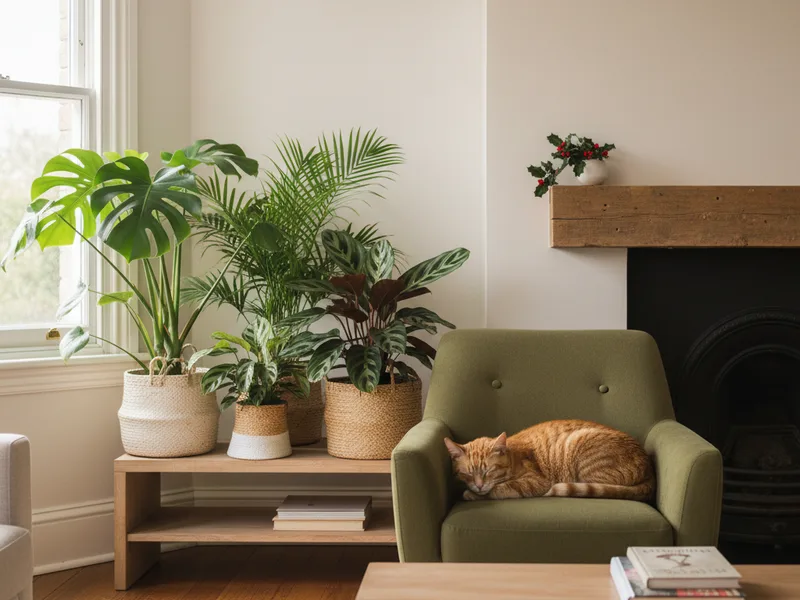
Decorating safely when holly is in the house
The safest option is to skip real holly and use a pet-safe lookalike. If you do bring holly in for the holidays, placement does the heavy lifting.
Keep wreaths on the outside of the front door or high on a wall, well above jumping height. Cats climb, so 'high' means no furniture nearby to launch from. Skip holly in table centerpieces and low garlands, those are exactly where pets sniff and chew.
Sweep or vacuum around arrangements daily. Dried berries drop quietly and are the most likely part to be eaten. When the holidays are over, bag the greenery before it goes to the trash so nothing spills on the way out.
One more note: holly is only one of several risky holiday plants. If you are building a pet-safe plant collection beyond the festive season, it helps to know that popular houseplants like pothos and monstera are also toxic to cats and dogs.
| Plant | Toxic to cats and dogs? | The look | Light needs |
|---|---|---|---|
| Holly | Yes, berries and leaves are toxic | Glossy spiky leaves, bright red berries | Outdoor shrub, used as cut decor |
| Christmas cactus | Generally considered non-toxic | Arching green stems with red or pink winter blooms | Bright indirect light |
| Parlor palm with red ribbon or ornaments | Generally considered non-toxic | Soft green fronds you can dress up for the season | Low to medium indirect light |
| Polka dot plant (red varieties) | Generally considered non-toxic | Green leaves splashed with red and pink | Bright indirect light |
| Faux holly stems | No plant toxins, but keep small parts away from chewers | Classic holly look, zero risk from the plant itself | Anywhere |
A note on 'non-toxic'
No plant is completely harmless. Even plants generally considered non-toxic can cause mild stomach upset if your pet eats a lot of leaf, and any plant can be a choking or blockage risk in big pieces. The goal is lower risk, not zero risk.
If your pet eats any plant and then vomits, drools heavily, or seems off, contact your vet. Trust your eyes over any plant list, including this one.
Common questions about holly and pets
Is holly toxic to cats?
Yes. Holly berries and leaves are toxic to cats. The saponins in the plant can cause drooling, vomiting and diarrhea, and the spiky leaves can scratch your cat's mouth and throat. Call your vet if your cat ate holly and shows symptoms.
Is holly toxic to dogs?
Yes, for the same reasons. Dogs tend to eat fallen berries from the floor, so watch for vomiting, drooling and lip smacking after walks past holly bushes or around holiday decor.
How many holly berries are dangerous?
There is no exact safe number, and it depends on your pet's size. A single berry often causes only mild stomach upset, but several berries can lead to repeated vomiting. When in doubt, call your vet or a pet poison hotline and tell them roughly how much was eaten.
What about the holly bush in my yard?
The same rules apply outdoors. If your dog grazes on plants, consider fencing off the bush or raking up fallen berries in winter. Most dogs ignore shrubs, but puppies and bored chewers are the exception.
Is holly more dangerous than poinsettia?
Both usually cause mild to moderate symptoms rather than severe poisoning. Poinsettia's reputation is worse than its actual effect, which is typically mild mouth and stomach irritation. Holly adds the risk of spiky leaves causing physical scratches, so treat both with the same caution: keep them out of reach and call a vet if symptoms appear.
My cat ate holly but seems fine. Should I still worry?
Keep an eye on her for the rest of the day. Symptoms like vomiting, drooling and lip smacking usually appear within a few hours. If nothing shows up and she is eating and behaving normally, that is reassuring. If symptoms do appear, contact your vet.