Is Amaryllis Toxic to Cats and Dogs?
Yes, amaryllis is toxic to both cats and dogs. Every part of the plant contains a compound called lycorine, and the bulb holds the highest concentration.
That matters more than you might think, because amaryllis is one of the most gifted plants of the holiday season. Bulbs show up in gift boxes, on kitchen counters and in windowsills right when curious pets are watching.
Here is what lycorine does, which symptoms to watch for, and which festive plants give you the same look without the risk.
The short answer
- Amaryllis is toxic to cats and dogs. The toxic compound is called lycorine.
- The bulb is the most dangerous part, followed by the leaves and flowers.
- Common symptoms include vomiting, drooling, diarrhea, belly pain and loss of appetite.
- Gifted bulbs on counters are a real risk, especially for cats who climb.
- Call your vet or a pet poison hotline if your pet chews any part of the plant.
- Pet-safe festive swaps include Christmas cactus, moth orchids and Boston ferns.
Why amaryllis is toxic
Amaryllis contains lycorine, an alkaloid that irritates the stomach and intestines. An alkaloid is a natural chemical a plant makes to defend itself. For your pet, it simply means: chewing this plant leads to an upset stomach at minimum.
The bulb is the biggest problem. It stores the highest concentration of lycorine, so a few bites of bulb are worse than a nibble on a leaf. Dogs that dig or chew are most likely to reach the bulb. Cats more often go for the leaves and flowers, which are still toxic, just less concentrated.
The good news: most pets need to eat a meaningful amount before things get serious, and severe cases are uncommon. That said, any amount can make your pet sick, so treat every chew as worth a call to the vet.
Symptoms to watch for
Symptoms usually start within a few hours of eating the plant. Watch for:
Vomiting and drooling. This is the most common reaction, and often the first sign.
Diarrhea and belly pain. Your pet may seem restless, hunched or unwilling to be touched around the stomach.
Loss of appetite and low energy. A pet that skips a meal after chewing a plant deserves attention.
In larger amounts, lycorine can cause tremors, a drop in blood pressure and changes in heart rate. These cases are rare, but they are the reason you should not wait and see when your pet has eaten bulb material.
Why gifted bulbs are a cat magnet
Amaryllis is a classic December gift. It often arrives as a bare bulb in a box, sometimes before it is even potted. That is the risky moment.
A loose bulb on a counter looks like a ball or an onion. Cats bat at things that roll. Dogs counter-surf. And a bulb that sits out while you find a pot is at exactly the wrong height for both.
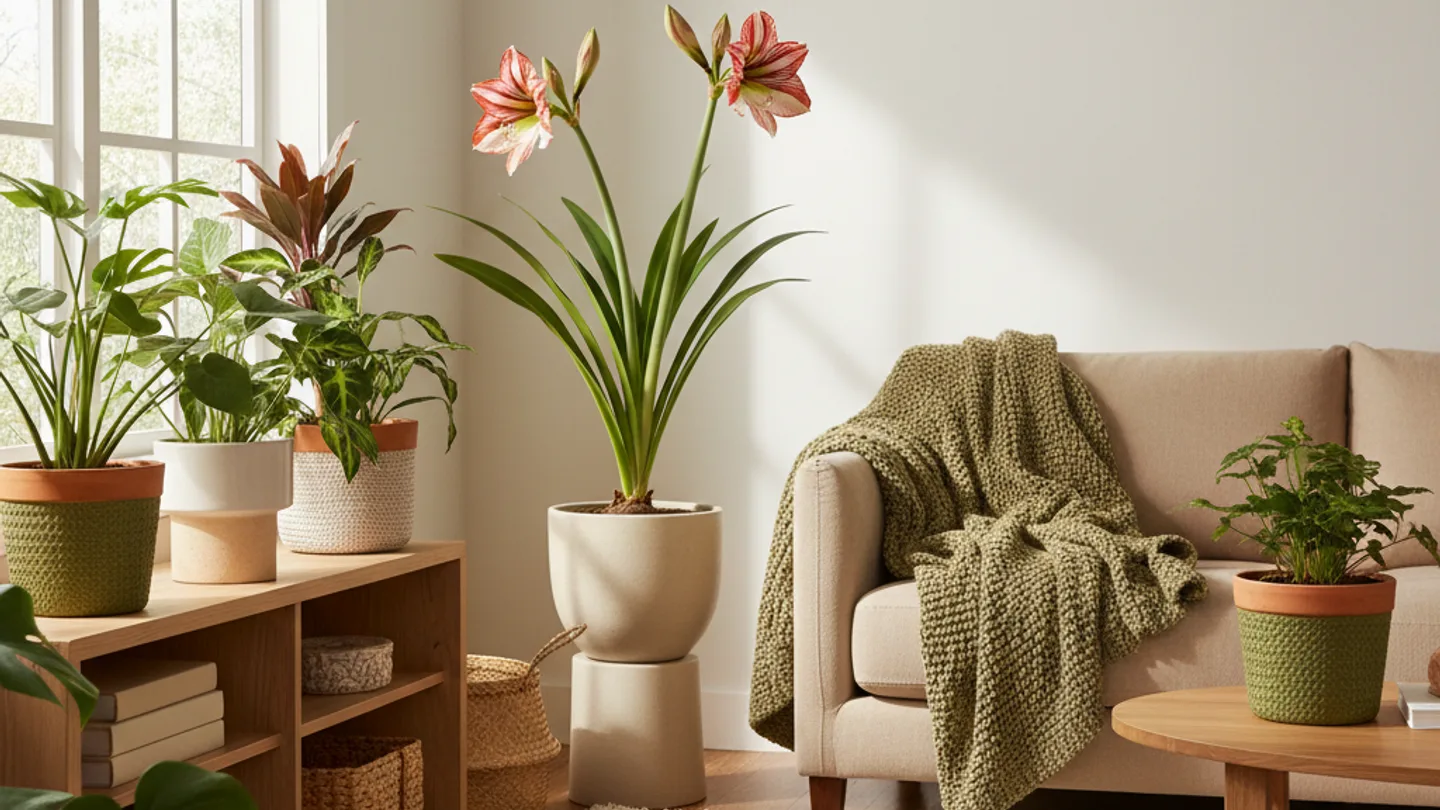
Even after planting, the danger is not over. Amaryllis is usually placed somewhere bright and visible, like a windowsill or table, which is also exactly where cats like to sit. The strap-like leaves move when brushed, and that movement triggers the same hunting instinct as a cat toy.
Practical fixes: pot gifted bulbs right away, keep them on a surface your pets cannot reach, and clear away fallen leaves or flowers the same day.
What to do if your pet eats amaryllis
Remove the plant
Take your pet away from the plant and clear any remaining pieces from their mouth if you can do so safely.
Check what was eaten
Note which part was chewed and roughly how much. Bulb material matters more than a small bite of leaf. This helps your vet judge the risk.
Call your vet or a poison hotline
Contact your veterinarian or a pet poison control line. Describe the plant, the part eaten and your pet's weight. Do not wait for symptoms to appear.
Do not induce vomiting yourself
Only make your pet vomit if a vet explicitly tells you to. Done wrong, it can cause more harm.
Watch for symptoms
Keep an eye on your pet for the next 24 hours. Vomiting, drooling, diarrhea or unusual tiredness all justify a vet visit.

How risky is it, really?
Most amaryllis incidents end with an upset stomach and a miserable afternoon, not an emergency. The plant is genuinely toxic, but it is not in the same league as lilies, which can cause kidney failure in cats from tiny exposures.
Still, never call any exposure harmless. A small dog that eats half a bulb is a different situation than a large cat that licked a leaf. When in doubt, call your vet. That call is always worth it.
If you are comparing this with other popular houseplants, the pattern is similar to Monstera: toxic, common in homes, and manageable once you know the facts.
| Pet-safe swap | Look | Light needs | Why it works |
|---|---|---|---|
| Christmas cactus | Arching stems with bright winter blooms | Bright, indirect light | Flowers around the holidays, just like amaryllis, and safe around pets |
| Moth orchid (Phalaenopsis) | Tall, elegant flower spikes | Bright, indirect light | Gives the same statement look as an amaryllis in bloom |
| Boston fern | Full, lush green fronds | Medium to bright indirect light | Fills the empty corner a festive plant would take |
| Peperomia | Compact, decorative leaves | Medium to bright indirect light | Small enough for counters and shelves, easy for beginners |
| Haworthia | Sturdy striped rosettes | Bright light, tolerates some neglect | A safe stand-in if you like bold, sculptural shapes |
Living with amaryllis when you have pets
You do not have to ban amaryllis forever. You do have to place it where paws and jaws cannot reach. A high shelf a cat cannot jump to, or a room your pets do not enter, are the realistic options.
Be honest about your pet. A cat that climbs bookshelves will find a way to that high shelf. In that case, skip the amaryllis and pick one of the safe swaps above. You get the same winter color without the worry.
Also tell gift-givers. Friends mean well when they send a bulb in December. A quick note that you have pets, and a hint toward a Christmas cactus instead, saves everyone a stressful evening.
Common questions about amaryllis and pets
Is amaryllis toxic to cats?
Yes. Amaryllis is toxic to cats. All parts contain lycorine, with the bulb holding the most. Expect vomiting, drooling and diarrhea if your cat chews it, and call your vet.
Is amaryllis toxic to dogs?
Yes, dogs are affected the same way. Dogs are more likely to dig up or chew the bulb, which is the most concentrated part, so take bulb ingestion seriously and contact your vet.
Which part of the amaryllis is most dangerous?
The bulb. It stores the highest concentration of lycorine. Leaves and flowers are also toxic, just less concentrated.
My cat only licked an amaryllis leaf. Should I worry?
A single lick is unlikely to cause serious harm, but it can still irritate the mouth and stomach. Rinse your cat's mouth area with a damp cloth, watch for drooling or vomiting, and call your vet if any symptoms appear.
Are amaryllis and Hippeastrum the same plant?
The big-flowered holiday plant sold as amaryllis is usually a Hippeastrum hybrid. For pet safety, treat them the same: both contain lycorine and both are toxic to cats and dogs.
What is a good pet-safe alternative to amaryllis for the holidays?
Christmas cactus is the closest match: bright winter blooms, easy care, and generally considered non-toxic to cats and dogs. Moth orchids give a similar elegant look.