Is String of Pearls Toxic to Cats and Dogs?
String of pearls is toxic to cats and dogs. That is the short answer, and it matters, because this trailing succulent is one of the most popular hanging plants on Instagram right now.
If your pet chews a strand or a leaf, the sap can irritate the skin, mouth and stomach. Common effects include vomiting and lethargy. The good news: there is a pet-safe trailing succulent that gives you the same look.
Below you will find what happens if your pet eats string of pearls, why hanging placement is not a real fix, and which safe alternative fits the same spot in your home.
The short version
- String of pearls is toxic to both cats and dogs.
- The sap can irritate the skin and mouth and can cause vomiting and lethargy.
- The dangling strands are extra tempting for cats, who bat at anything that moves.
- Hanging the plant up high does not solve the problem, because strands trail down and cats climb.
- A pet-safe trailing succulent gives you the same cascading look without the risk.
- Call your vet if your pet shows symptoms after chewing any part of the plant.
Why string of pearls is risky around pets
String of pearls (Senecio rowleyanus) stores moisture in its round, bead-like leaves. The plant's sap contains compounds that irritate on contact. If your pet bites into a leaf, that sap reaches the mouth and stomach.
In plain terms, the sap acts like a chemical irritant. It can inflame the lining of the mouth and digestive tract, which is why drooling and vomiting are typical reactions.
Skin contact can also cause irritation. A cat that walks through a fallen strand, or a dog that brushes against the plant, may develop redness or itching where the sap touched the skin.
Symptoms to watch for
Most cases are mild to moderate, but do not wait and see if your pet is clearly unwell. Watch for these signs after possible contact with string of pearls:
Vomiting, drooling or pawing at the mouth. Lethargy, meaning your pet seems unusually tired or flat. Skin redness or irritation where the sap touched. Loss of appetite.
If you notice any of these symptoms, contact your vet. Tell them your pet may have chewed string of pearls, and bring a photo or a piece of the plant if you can. That helps the vet decide on treatment faster.
Why cats are the bigger problem
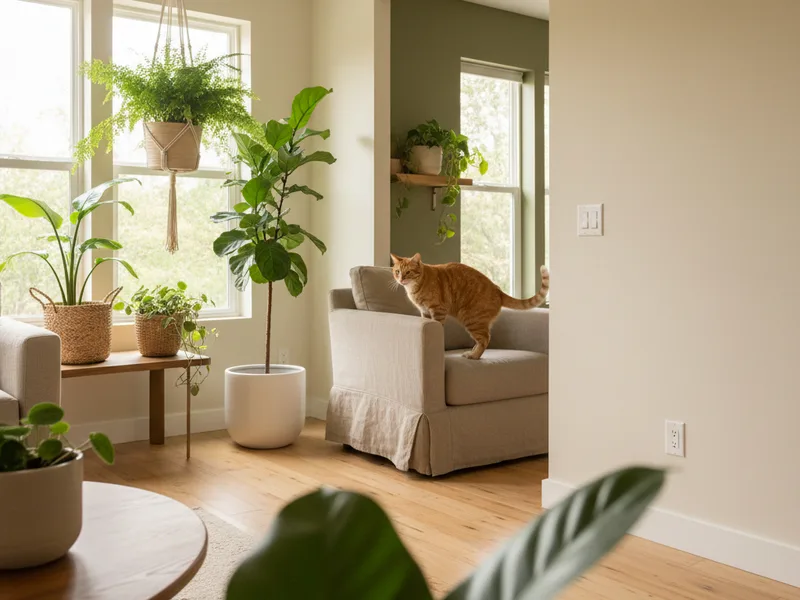
String of pearls is basically designed to tempt cats. The strands dangle, sway in a breeze and bounce when touched. To a cat, that reads as prey.
A quick bat with a paw breaks a bead open and releases sap. Many cats will then chew the strand they caught. Kittens and playful young cats are the most likely to try.
Dogs tend to get into trouble a different way: fallen strands on the floor, or a plant placed on a low shelf within nose reach.
Hanging it high is not a fix
The usual advice for toxic plants is to hang them out of reach. With string of pearls, that advice falls short.
First, the whole point of this plant is that the strands trail down. A mature plant in a hanging basket can drape well below the pot, right into jumping range.
Second, cats climb. Shelves, curtain rails and the tops of cabinets are all reachable. Many owners have come home to find their cat exactly where the plant hangs.
If you share your home with a cat, the safer move is to swap the plant, not the shelf. The same logic applies to other popular trailing plants, for example pothos, which is also toxic to cats and dogs.
A pet-safe trailing succulent swap
You do not have to give up the cascading look. Burro's tail (Sedum morganianum) is a trailing succulent with plump, bead-like leaves that spill over the edge of a pot, much like string of pearls. It is generally considered non-toxic to cats and dogs.
It likes the same conditions too: a bright spot, light watering and a pot with good drainage. It suits sunny windowsills and high shelves where its stems can trail freely.
One note: even non-toxic plants can cause a mild stomach upset if your pet eats a lot of leaf material. Placement still matters, just less urgently. If your pet shows symptoms after eating any plant, contact your vet.
Want more options with the same verdict-first approach? Read our guides on philodendron and monstera, two other popular houseplants that are toxic to pets.
Common questions about string of pearls and pets
Is string of pearls toxic to cats?
Yes. String of pearls is toxic to cats. The sap irritates the mouth and stomach and can cause vomiting and lethargy. The dangling strands are especially tempting to cats, which makes exposure more likely.
Is string of pearls toxic to dogs?
Yes, it is toxic to dogs as well. Dogs usually run into it through fallen strands on the floor or a plant placed within reach. Symptoms include vomiting, drooling and tiredness.
What should I do if my pet eats string of pearls?
Remove any plant material from your pet's mouth and move the plant out of reach. Watch for vomiting, drooling, lethargy or skin irritation. If symptoms appear, or you are unsure how much was eaten, contact your vet. Bring a photo or a piece of the plant to help identification.
Is the sap dangerous on skin contact alone?
It can be. The sap may irritate skin where it touches, causing redness or itching. This applies to pets and to you, so wash your hands after handling or pruning the plant.
What is a safe plant that looks like string of pearls?
Burro's tail (Sedum morganianum) is a pet-safe trailing succulent with a similar cascading habit and bead-like leaves. It is generally considered non-toxic to cats and dogs and thrives in the same bright light.