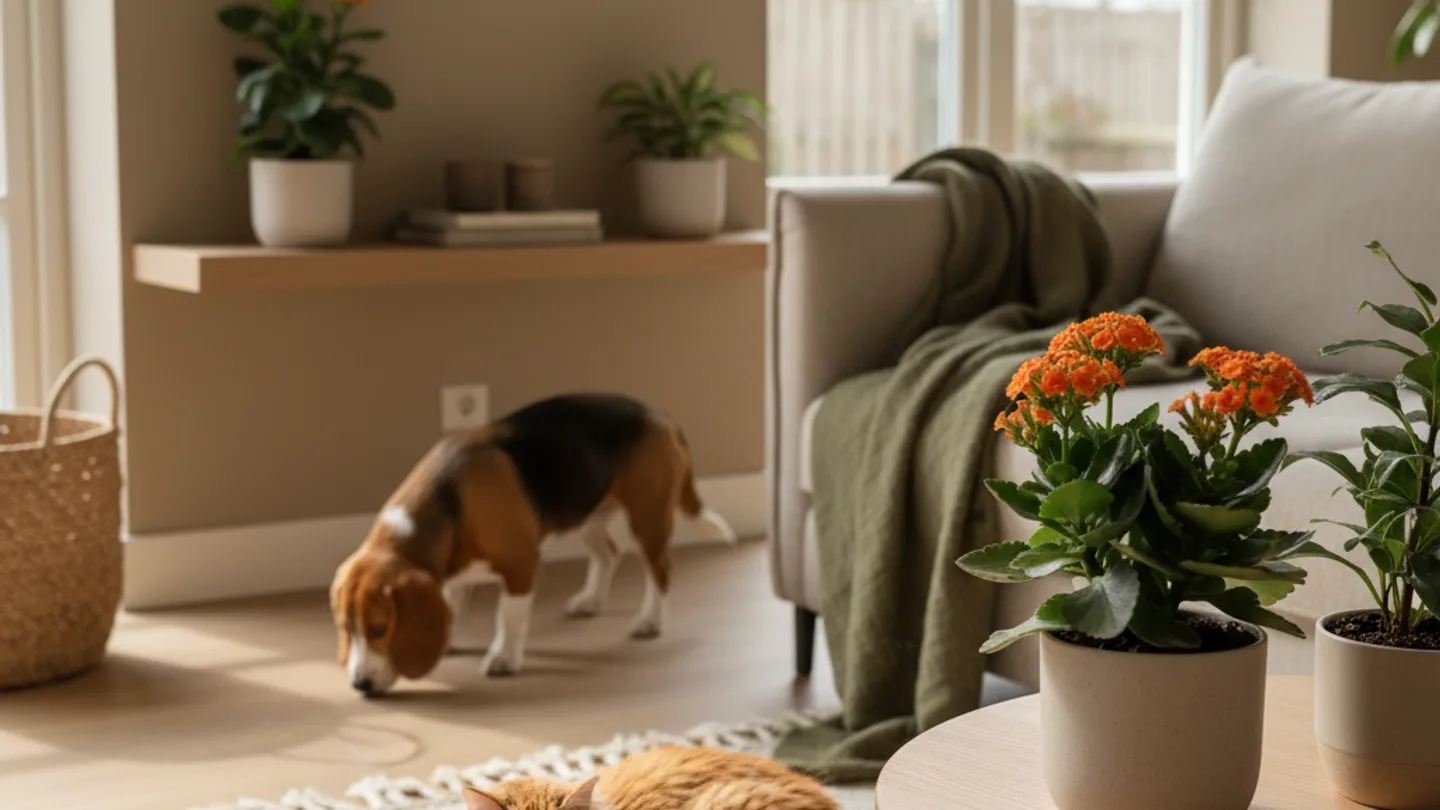
Is Kalanchoe Toxic to Cats and Dogs?
Kalanchoe is toxic to cats and dogs. The plant contains cardiac glycosides, compounds that can upset the stomach and, in larger amounts, affect heart rhythm.
Most cases cause mild to moderate belly trouble, but it is smart to keep this popular supermarket flowering plant away from curious nibblers.
Here is what happens if your pet eats kalanchoe, which parts are dangerous, and which flowering plants make safer swaps for your home.
Why kalanchoe is risky for pets
Cardiac glycosides are natural chemicals that affect how the heart beats. Kalanchoe makes them to protect itself from pests.
For cats and dogs, these compounds irritate the stomach and intestines first. In larger quantities they can also speed up, slow down, or disrupt heart rhythm.
All parts of the plant are toxic. The leaves, flowers, stems, and roots all contain these dangerous compounds.
What symptoms look like
Most pets that nibble kalanchoe get tummy troubles. Watch for vomiting, diarrhea, and drooling. Your pet may also seem tired or lose interest in food.
Heart-related signs are less common but more serious. These include an irregular heartbeat, weakness, or collapse. Most cases happen when a pet eats a large amount, especially a small dog or cat.
Symptoms usually start within a few hours of eating the plant.

If your pet eats kalanchoe
Remove any plant pieces from your pet's mouth and move the plant out of reach.
Call your veterinarian or a pet poison hotline right away. Do not wait to see if symptoms get worse.
Tell the vet roughly how much your pet ate and when. This helps them decide whether your pet needs monitoring or treatment.
Do not make your pet vomit at home unless a vet tells you to. It can cause more harm.
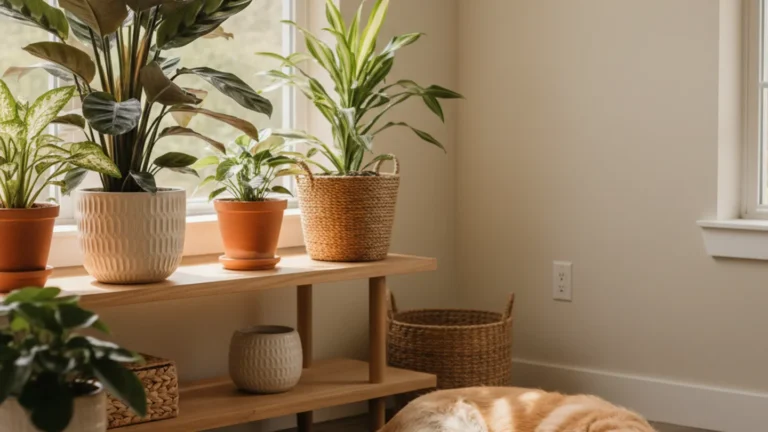
| Plant | Light needs | Look and feel |
|---|---|---|
| African violet | Bright, indirect light | Velvety leaves with purple, pink, or white blooms |
| Moth orchid | Bright, indirect light | Long-lasting arching flower stems in many colors |
| Bromeliad | Medium to bright indirect light | Colorful central flower spike, tropical look |
| Christmas cactus | Bright, indirect light | Trailing stems with festive winter blooms |
| Polka dot plant | Medium to bright indirect light | Spotted pink, red, or white foliage for a pop of color |
Where kalanchoe shows up in homes
This plant is popular because it flowers for weeks with little care. You will often find it in grocery stores and gift baskets, especially in winter and early spring.
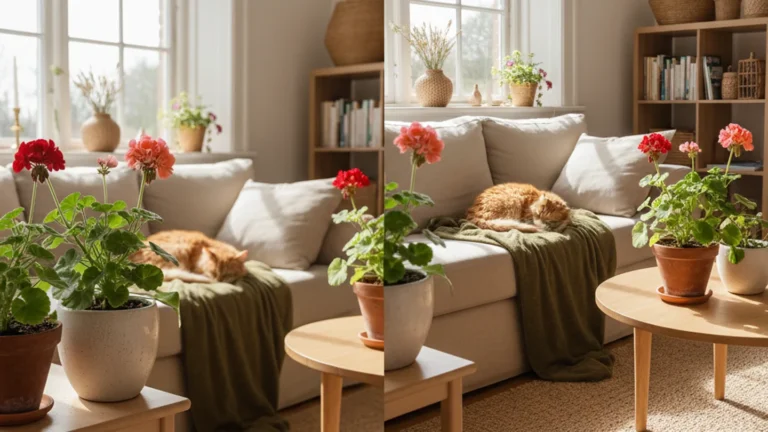
Because it stays compact, people place it on windowsills and coffee tables. These low spots put it right at pet level.
If you receive kalanchoe as a gift or already have one, keep it in a room your pets cannot enter, or swap it for a safer flowering plant.
Veelgestelde vragen
Is kalanchoe toxic to cats?
Yes. Kalanchoe is toxic to cats. It contains cardiac glycosides that can cause vomiting, diarrhea, and in serious cases abnormal heart rhythms.
Is kalanchoe toxic to dogs?
Yes. Kalanchoe is toxic to dogs. The same compounds affect dogs the same way, with stomach upset being most common and heart effects possible after eating larger amounts.
How much kalanchoe is dangerous?
Even a small amount can cause stomach upset in most pets. Heart problems are more likely with larger amounts, especially in smaller animals. Because sensitivity varies, treat any ingestion as a reason to call your vet.
What part of the plant is toxic?
All parts are toxic: leaves, flowers, stems, and roots. The highest concentration of cardiac glycosides is often in the leaves and stems.
Can kalanchoe kill a cat or dog?
Severe poisoning is rare but possible, especially with large ingestions or if treatment is delayed. Quick veterinary care greatly improves the outlook, so contact a vet immediately if you suspect your pet ate this plant.
Need a vet-worthy plant list?
Check our guides before you buy your next houseplant. We tell you fast whether a plant is safe for cats and dogs and what to grow instead.