Is Tradescantia Toxic to Cats and Dogs?
Is tradescantia toxic to cats and dogs? Yes. Tradescantia, the trailing plant many of us know as the inch plant, is mildly toxic to both cats and dogs.
The sap is the problem. If it touches your pet's skin, it can cause redness and irritation. If your pet chews the leaves or stems, it can irritate the mouth and lead to stomach upset like drooling, vomiting or diarrhea. The good news: reactions are usually mild and pass within a day.
Below you will find what the sap actually does, why the dangling strands are so tempting for cats, what to do if your pet takes a bite, and pet-safe purple trailing plants that give you the same look without the worry.
The short version
- Tradescantia is mildly toxic to both cats and dogs. This includes inch plant, spiderwort, purple heart and Nanouk varieties.
- The sap can cause redness and irritation where it touches skin, and mouth irritation if chewed.
- Eating the leaves or stems usually leads to mild stomach upset: drooling, vomiting or diarrhea.
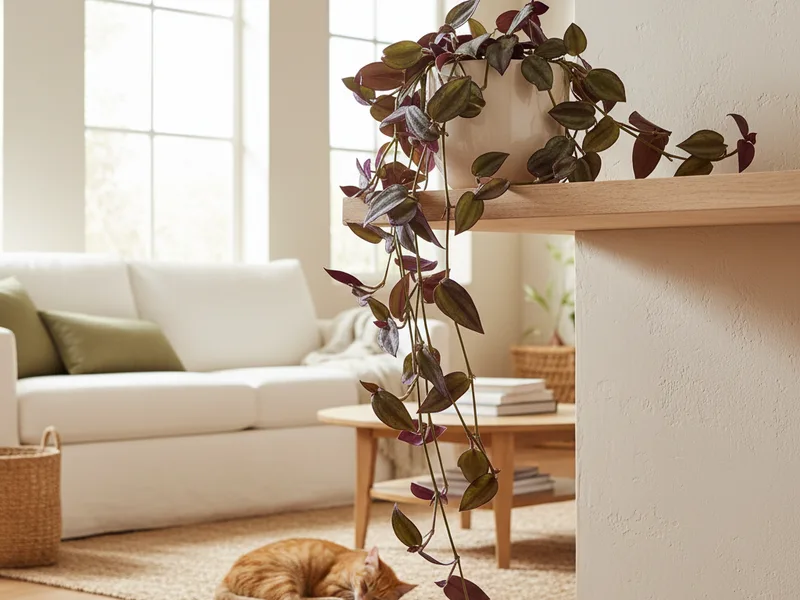
- Trailing strands move in the air and are a strong chew trigger for cats, so hanging planters need careful placement.
- Pet-safe purple trailing swaps include purple passion plant, purple waffle plant and string of hearts.
- Call your vet if symptoms are strong, your pet ate a large amount, or signs last more than a day.
Meet the inch plant
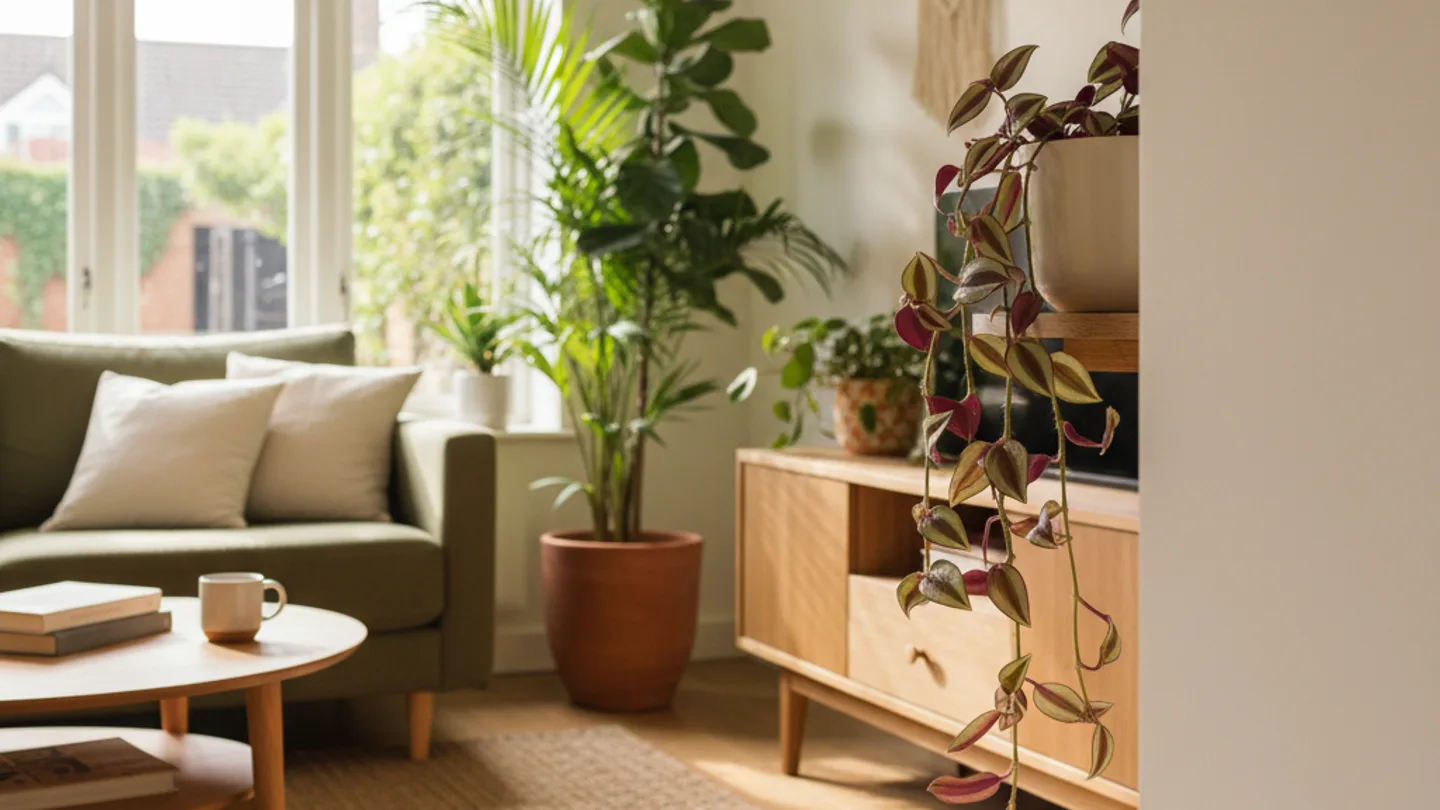
Tradescantia is a fast-growing trailing plant with soft stems and striped or purple leaves. You might know it as inch plant, spiderwort or wandering dude. Popular types include Tradescantia zebrina with its silver and purple stripes, the pink and cream Nanouk, and purple heart, Tradescantia pallida, with deep violet leaves.
It is everywhere right now: on Instagram shelves, in Pinterest plant walls and in nearly every garden center. It roots easily, grows quickly and forgives missed waterings, which makes it a favorite for beginners.
All common tradescantia types share the same trait that matters here: a sap that irritates skin, mouths and stomachs. If you have read our take on whether Monstera is toxic, the pattern will feel familiar. Answer first, details after.
What it does to cats and dogs
What tradescantia does to cats
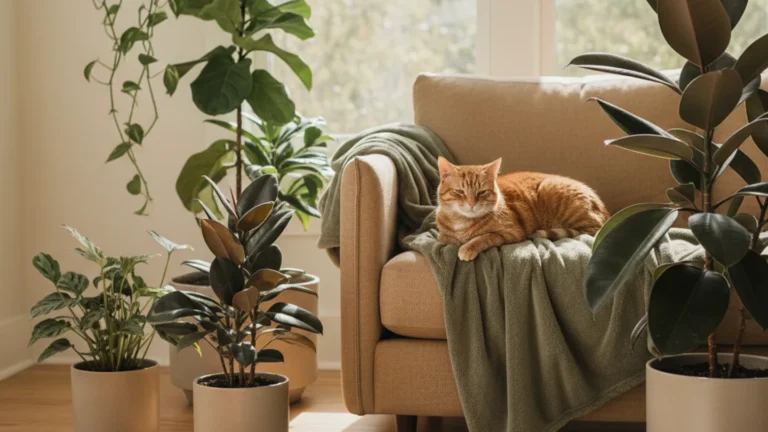
Cats usually run into trouble two ways. They brush against the plant and get sap on their fur or paws, which can cause red, itchy patches. Or they chew the strands, which irritates the mouth and can bring on drooling, vomiting or loose stools.
Most cases are mild and clear up within about a day. Still, watch your cat after any chewing. If vomiting continues, the mouth looks swollen, or your cat refuses food, call your vet.
What tradescantia does to dogs
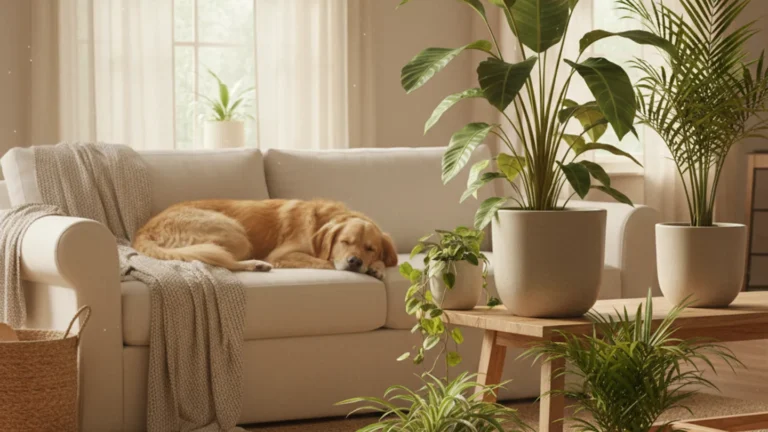
Dogs tend to chew plants that sit on low shelves, floors or porches, and tradescantia stems snap easily. A dog that eats the leaves or stems may drool, vomit or have diarrhea. Sap on the belly, paws or snout can leave red, irritated skin.
For most dogs this stays mild and passes on its own. Puppies and small dogs can get an upset stomach from a smaller amount, so keep a closer eye on them and call your vet if symptoms linger.
Why the dangling strands are a magnet for cats
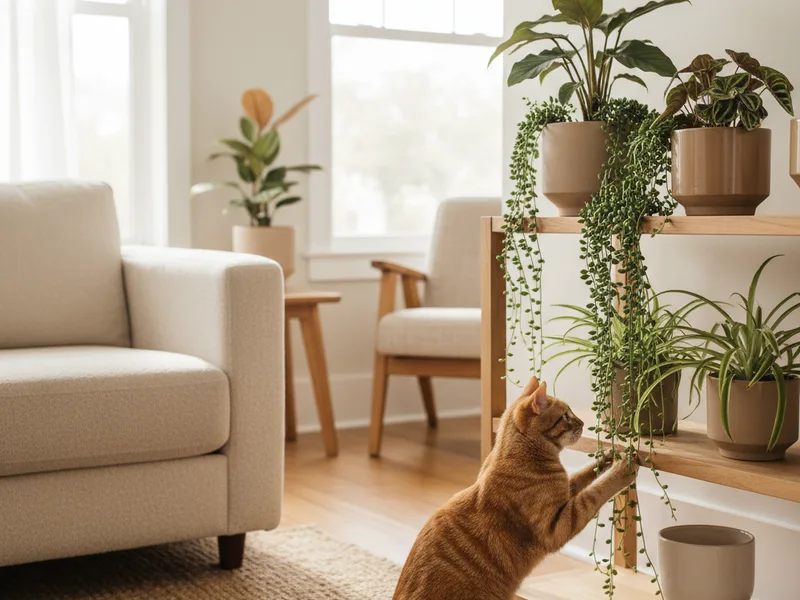
A hanging tradescantia moves every time the air does. To a cat, those swaying purple strands look exactly like a toy. Bats turn into bites, and bites turn into a mouthful of sap.
Placement is everything with this plant. A basket at jumping height, or one near a shelf your cat can launch from, is within reach even if it looks high. Cats are better climbers than most plant stands assume.
If your cat is a dedicated plant chewer, the safest answer is not a higher hook. It is a safer plant, which we cover below.
What to do if your pet eats tradescantia
Remove the plant
Gently take any leaf or stem pieces out of your pet's mouth and move your pet away from the plant. Pick up fallen leaves so there is no second serving.
Rinse and wipe
Offer fresh water to rinse the mouth. If sap touched the fur or paws, wipe the area with a damp cloth so it cannot irritate the skin or be licked off later.
Watch for the next 24 hours
Keep an eye out for drooling, vomiting, diarrhea or red patches of skin. Most reactions to tradescantia are mild and fade within a day.
Call your vet if symptoms persist
Contact your vet if vomiting continues, the mouth or face looks swollen, your pet seems unwell, or a small pet ate a large amount. You can also reach a pet poison hotline such as the ASPCA Animal Poison Control Center; a consultation fee may apply.
The purple trailing look, without the risk
Part of tradescantia's charm is the color. That silver-purple drape is hard to replace, but a few trailing plants come close and are generally considered non-toxic to cats and dogs.
One honest note first: no plant is completely harmless. Even pet-safe plants can cause a mild stomach upset if your pet eats a lot of leaves. Safe plants still deserve sensible placement, especially with determined chewers.
Here are the swaps we reach for most often.
| Plant | The look | Light | Pet safety |
|---|---|---|---|
| Purple passion plant (Gynura aurantiaca) | Velvety green leaves covered in soft purple fuzz | Bright, indirect light | Generally considered non-toxic to cats and dogs |
| Purple waffle plant (Hemigraphis alternata) | Crinkled leaves with deep purple undersides | Medium to bright, indirect light | Generally considered non-toxic to cats and dogs |
| String of hearts (Ceropegia woodii) | Slim trailing vines with small heart-shaped leaves, purple on the back | Bright light, tolerates some direct sun | Generally considered non-toxic to cats and dogs |
| Spider plant (Chlorophytum comosum) | Arching striped leaves with dangling baby plantlets | Adaptable, from low to bright indirect light | Generally considered non-toxic to cats and dogs |
Keeping tradescantia when you already have pets
You do not have to throw the plant out. Tradescantia is mildly toxic, not dangerous on the level of lilies or sago palms, so smart placement is a reasonable plan for many homes.
Hang it well out of jumping range, and check what your pet could climb to reach it. Trim long strands before they dangle into swatting distance, and sweep up fallen leaves quickly, since a dried leaf on the floor is still chewable.
If your pet keeps finding a way to it, take that as the answer. Swap it for one of the safe trailers above and move the tradescantia to a room your pet cannot enter, or gift it to a pet-free friend.
Common questions about tradescantia and pets
Is tradescantia toxic to cats?
Yes, tradescantia is mildly toxic to cats. The sap can irritate the mouth and skin, and chewing the leaves often leads to drooling, vomiting or diarrhea. Reactions are usually mild, but call your vet if symptoms are strong or last more than a day.
Is tradescantia toxic to dogs?
Yes, it is mildly toxic to dogs as well. Dogs that chew the stems or leaves may drool, vomit or have loose stools, and sap on the skin can cause red, itchy patches. Most dogs recover on their own within about a day.
Is purple heart (Tradescantia pallida) toxic too?
Yes. Purple heart is a tradescantia, so it carries the same irritating sap as inch plant and spiderwort. Treat all common tradescantia varieties as mildly toxic to cats and dogs.
How much tradescantia does a pet need to eat to get sick?
There is no safe amount to aim for, but toxicity is mild. A small nibble often causes little more than mouth irritation, while a larger serving is more likely to bring vomiting or diarrhea. Small pets can react to less, so watch them closely and call your vet if you are unsure.
Can I keep tradescantia in a home with cats?
You can, if it stays truly out of reach: a high hanging planter, trimmed strands, and quick cleanup of fallen leaves. If your cat is a persistent plant chewer, a pet-safe trailing plant like purple passion plant or string of hearts is the calmer choice.
What is a good pet-safe alternative with purple leaves?
Purple passion plant and purple waffle plant both deliver rich purple color and are generally considered non-toxic to cats and dogs. For trailing vines, string of hearts gives a similar drape with purple-backed leaves.