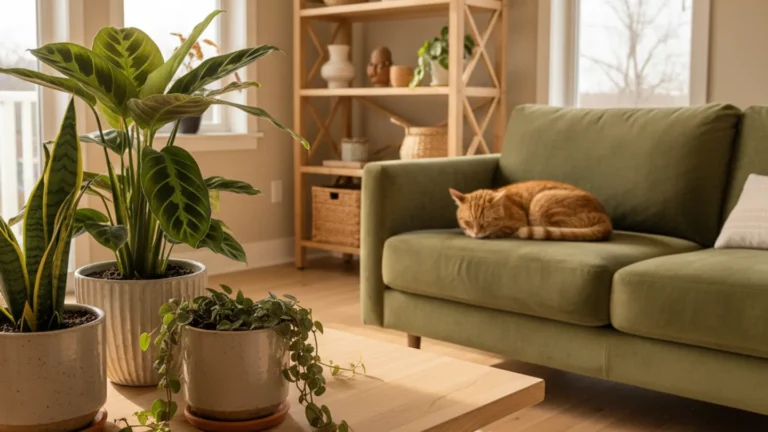
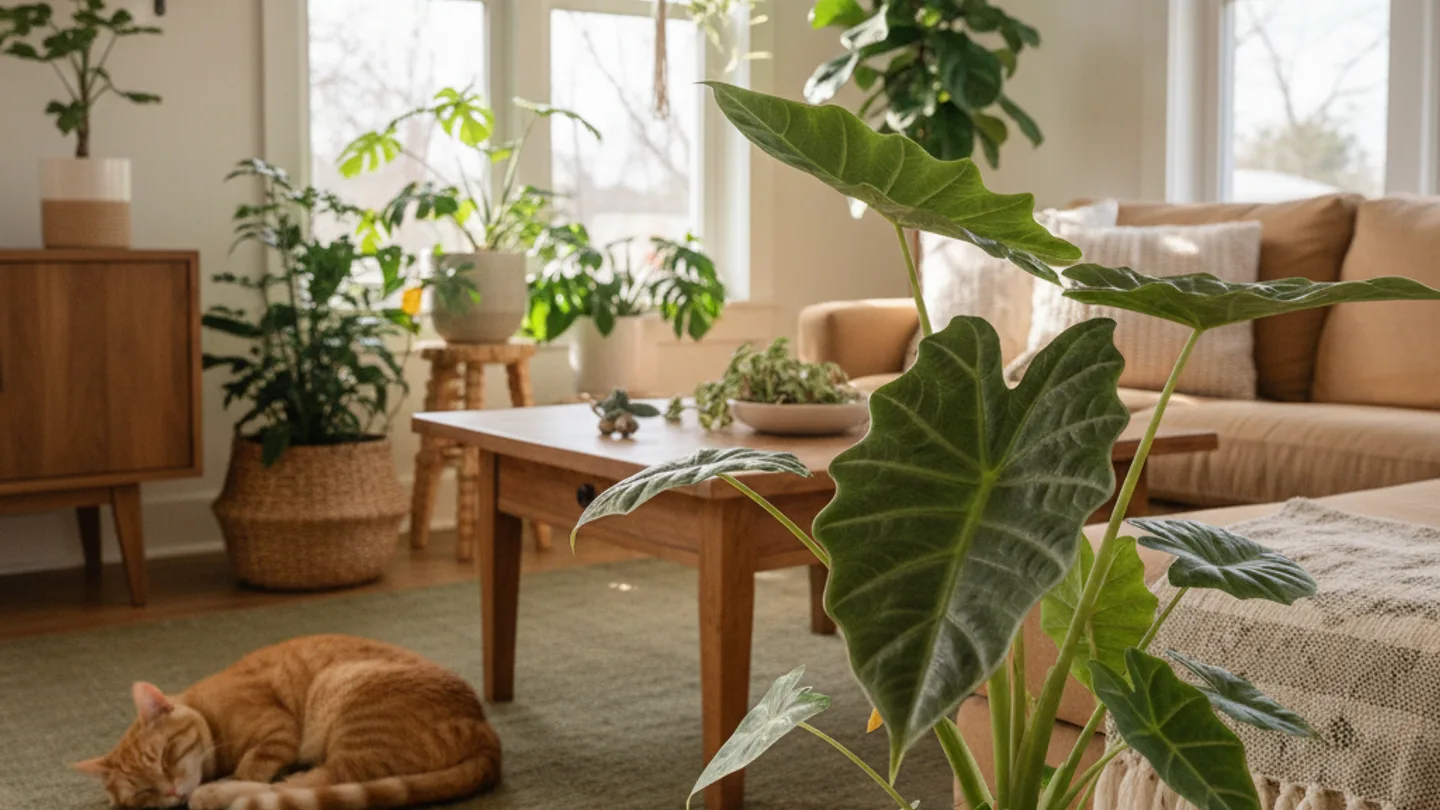
Is Alocasia Toxic to Cats and Dogs?
Yes, alocasia is toxic to both cats and dogs. Every part of the plant contains calcium oxalate crystals, tiny sharp needles that cause intense pain the moment your pet bites into a leaf or stem.
Alocasia, often called elephant ear, is one of the most popular houseplants on Instagram right now. Its huge, dramatic leaves look stunning in a bright corner. But if you share your home with a curious cat or dog, this is one plant you need to think twice about.
Below you will find exactly what happens if your pet chews on alocasia, why popular varieties like Polly are all equally risky, and which pet-safe plants give you the same bold look.
The short answer
- Alocasia is toxic to cats and dogs. All parts of the plant are harmful.
- The toxin is calcium oxalate: microscopic sharp crystals that irritate the mouth, tongue and throat on contact.
- Symptoms include drooling, pawing at the mouth, swelling of the lips and tongue, vomiting and difficulty swallowing.
- Every alocasia variety is toxic, including Polly, Amazonica, Dragon Scale and Zebrina. There is no safe alocasia for pets.
- Symptoms usually appear within minutes of chewing. Call your vet or the ASPCA Animal Poison Control Center at (888) 426-4435 if your pet ate alocasia.
- Pet-safe swaps with a similar dramatic look include calathea, peacock plant and certain palms.
Why alocasia is toxic to pets
Alocasia belongs to the Araceae family, the same plant family as monstera, philodendron and peace lily. Every plant in this family defends itself with calcium oxalate crystals.
Calcium oxalate crystals are tiny sharp crystals that can irritate your pet's mouth and throat. They sit packed inside the plant's cells, bundled together in structures called raphides. The moment your cat or dog bites into a leaf, these crystals shoot out and embed themselves in the soft tissue of the mouth, tongue and throat.
This is not a slow-acting poison. The pain starts almost immediately, which is actually one small mercy: most pets stop chewing after the first bite because it hurts. The severe cases usually involve a pet that swallowed a larger piece before the irritation kicked in.
All parts of the plant are toxic: the leaves, the stems, and the roots. Even the water in the plant's saucer can contain dissolved crystals, so empty any runoff your pet could drink from.
Symptoms to watch for
Because the crystals act on contact, symptoms show up fast, usually within minutes to a couple of hours after your pet chews the plant.
The most common signs in cats and dogs are intense drooling, pawing or rubbing at the mouth and face, and visible swelling of the lips, tongue or gums. Your pet may also vomit, refuse food, or have trouble swallowing. You might hear a change in their meow or bark if the throat is swollen.
In most cases these symptoms are painful but manageable, and they ease as the irritation subsides. The situation becomes urgent if the swelling affects the airway. Signs of that are labored or noisy breathing, gagging, or obvious distress. If you see any of these, treat it as an emergency and get to a vet right away.
Even milder cases deserve a call to your vet. Describe what plant your pet ate and roughly how much. You can also reach the ASPCA Animal Poison Control Center at (888) 426-4435, 24 hours a day. A consultation fee may apply, but it is worth it for peace of mind.
What to do if your pet ate alocasia
Remove the plant material
Gently take any remaining leaf or stem out of your pet's mouth if you can do so safely. Move the plant out of reach or move your pet to another room.
Rinse the mouth
Offer fresh water or gently rinse your pet's mouth with a wet cloth. This helps wash away leftover crystals. Do not force water down their throat.
Check their breathing
Watch for labored or noisy breathing, gagging, or severe swelling around the mouth and throat. These are emergency signs. Go straight to an emergency vet.
Call your vet
Even if symptoms seem mild, call your veterinarian or the ASPCA Animal Poison Control Center at (888) 426-4435. Tell them the plant name and how much was eaten. Follow their advice on monitoring at home.
Monitor for the next 24 hours
Keep an eye on eating, drinking and breathing. Most pets recover well from a small nibble, but worsening swelling or repeated vomiting means another call to the vet.
Every alocasia variety counts, including Polly
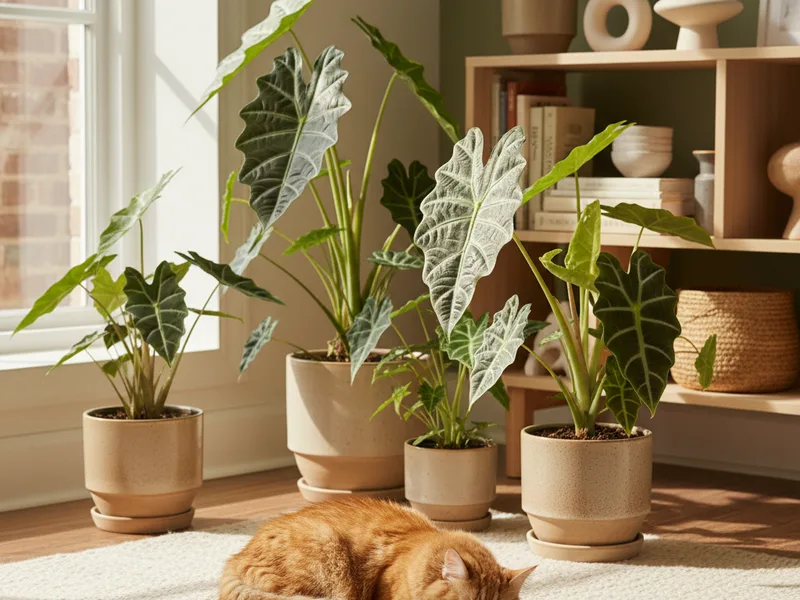
There is no pet-safe alocasia. The calcium oxalate crystals are part of how the whole genus works, not a trait of one or two varieties.
That means the popular ones you see all over plant shops and social feeds are all toxic to cats and dogs. Alocasia Polly, sometimes sold as Alocasia Amazonica, is toxic. So are Dragon Scale, Zebrina, Silver Dragon, Frydek, Regal Shields and Black Velvet. The giant outdoor elephant ears in the Colocasia and Alocasia genera carry the same risk.
Do not let a pretty leaf or a cute nickname lower your guard. If it is sold as an alocasia or elephant ear, assume it is toxic and place it accordingly, or choose a swap from the list below.
| Plant | Why it works | Light needs | Pet safety |
|---|---|---|---|
| Calathea (prayer plant) | Bold patterned leaves with the same tropical feel; leaves move during the day | Medium to bright indirect light | Generally considered non-toxic to cats and dogs |
| Peacock plant (Goeppertia makoyana) | Striking feathered leaf pattern, compact size for shelves | Medium indirect light | Generally considered non-toxic to cats and dogs |
| Parlor palm | Lush, full foliage that fills a corner like a small elephant ear | Low to medium indirect light | Generally considered non-toxic to cats and dogs |
| Areca palm | Tall, arching fronds give a dramatic statement without the risk | Bright indirect light | Generally considered non-toxic to cats and dogs |
| Rattlesnake plant | Wavy, patterned leaves with deep purple undersides | Medium indirect light | Generally considered non-toxic to cats and dogs |
If you already own an alocasia
You do not necessarily have to throw it out. The risk depends on your pet. Some dogs and older cats ignore houseplants completely. Kittens, puppies and plant-chewing cats are a different story.
If you keep the plant, put it somewhere your pet physically cannot reach: a high shelf a cat cannot jump to, a room the door stays closed to, or a hanging position well away from climbable furniture. Remember that fallen leaves are just as toxic as leaves on the plant, so pick up any dropped foliage right away.
Be honest with yourself about your pet's habits. If your cat chews every green thing in the house, no shelf is truly safe. In that case, rehoming the alocasia to a plant-loving friend and picking a calathea instead is the calmer choice. If you are weighing up other trendy plants, our guide on whether monstera is toxic to cats and dogs covers a very similar plant with the same crystal problem.
Common questions about alocasia and pets
Is alocasia toxic to cats?
Yes. Alocasia is toxic to cats. All parts of the plant contain calcium oxalate crystals that cause immediate mouth pain, drooling and swelling when chewed. Contact your vet if your cat has bitten into an alocasia.
Is alocasia toxic to dogs?
Yes. Alocasia is toxic to dogs for the same reason it is toxic to cats: sharp calcium oxalate crystals in every part of the plant. Symptoms include drooling, pawing at the mouth, vomiting and swelling of the lips and tongue.
Is Alocasia Polly safe for pets?
No. Alocasia Polly, also sold as Alocasia Amazonica, is just as toxic as any other alocasia. The nickname and compact size do not change the plant's chemistry.
What happens if my cat just licks an alocasia leaf?
A lick is less serious than a bite, but it can still transfer crystals to the tongue and cause irritation and drooling. Rinse the mouth with a wet cloth, offer water, and watch for swelling. Call your vet if symptoms appear or worsen.
How much alocasia is dangerous for a pet?
There is no safe amount, because the crystals cause pain on contact. Most pets stop after one bite, so severe poisoning is uncommon, but a larger swallowed piece can cause significant swelling. Always call your vet after any known chewing.
Is alocasia toxic to humans too?
Yes, the same calcium oxalate crystals can irritate human skin and mouths. Keep the plant away from small children, wear gloves when pruning, and wash your hands after handling cut stems.