Are Christmas Trees Toxic to Cats and Dogs?
Real Christmas trees, like pines and firs, are mildly toxic to cats and dogs. The tree itself is rarely the biggest danger, though. The real risks are the sharp needles, the water in the stand, and the ornaments hanging within paw's reach.
The good news: most pets who nibble a needle or two end up with an upset stomach at worst. With a few smart adjustments, you can have a real tree and a safe pet.
The short answer
- Real pines and firs are mildly toxic to cats and dogs, not deadly.
- Needles can irritate the stomach and, in rare cases, puncture the mouth or gut.
- Tree stand water is often the bigger risk, especially with fertilizer or preservative additives.
- Ornaments, tinsel and lights cause more holiday vet visits than the tree itself.
- A covered stand, a sturdy base and a pet-free zone around the tree solve most problems.
- Call your vet if your pet shows vomiting, drooling, or stomach pain after contact with the tree.
How toxic is a real Christmas tree, really?
Popular Christmas trees like pine, fir and spruce contain oils that can irritate your pet's mouth and stomach. If your cat or dog chews on the needles or bark, the most likely result is drooling, vomiting or diarrhea. Unpleasant, but usually mild and short-lived.
The needles are the mechanical part of the problem. They are sharp and stiff. Swallowed needles can poke the mouth, throat or intestines, and in rare cases cause a puncture or blockage. This is more likely if your pet eats a lot of needles, or if fallen needles get licked off paws in quantity.
Artificial trees are not automatically safe either. Plastic needles can still cause a blockage if swallowed, and older artificial trees may shed small pieces that curious pets chew on.
The hidden risk: tree stand water
The water reservoir in your tree stand often worries vets more than the tree. Many people add fertilizer or preservative products to keep the tree fresh. Those additives can make the water genuinely harmful to drink.
Even without additives, standing water collects bacteria, mold and tree sap. To a thirsty pet, it looks like a water bowl at floor level.
Signs your pet drank tree water include drooling, vomiting and diarrhea. If you used an additive and your pet drank from the stand, call your vet and tell them which product you used. Keep the packaging if you can.
Ornaments, tinsel and lights: the bigger troublemakers
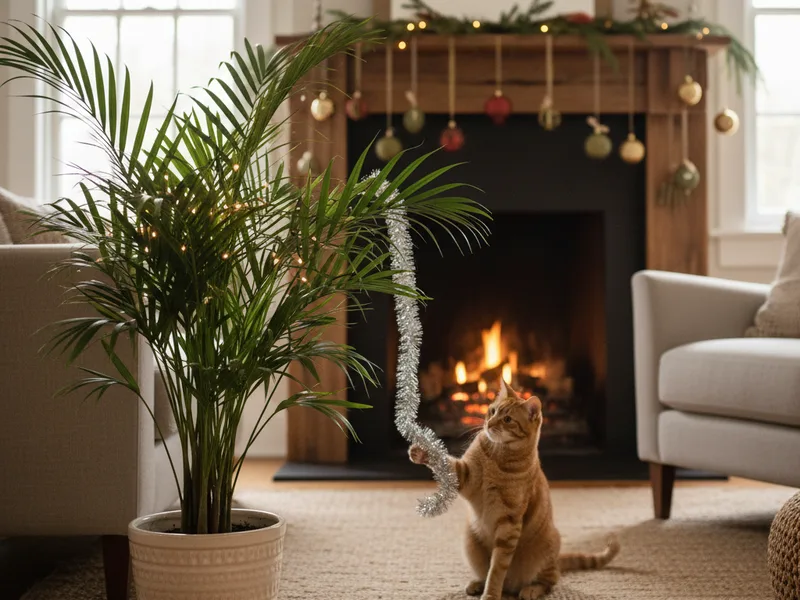
If we rank holiday hazards, decorations usually beat the tree. Glass or fragile ornaments can shatter and cut paws or mouths. Tinsel and ribbon are a classic cat trap: swallowed strands can bunch up in the intestines and need surgery.
String lights add two risks. Chewed cords can shock or burn, and climbing attempts can pull the whole tree over.
A fallen tree is scary but rarely poisonous. The danger is injury from falling, broken ornaments, and a panicked pet tangled in wires.
How to set up a pet-safer Christmas tree
Choose a fresh tree and sweep often
A fresh tree drops fewer needles. Vacuum or sweep around the tree daily so your pet cannot snack on fallen needles.
Anchor the tree securely
Use a heavy, stable stand. For cats that climb, anchor the top of the tree to a wall or ceiling hook with clear fishing line.
Cover the stand water
Use a stand with a covered reservoir, or wrap the base tightly with a tree skirt so no water is accessible. Skip fertilizer additives entirely if you have pets.
Decorate with pets in mind
Skip tinsel. Hang fragile or tempting ornaments high, and use shatterproof ornaments on the lower branches. Secure light cords against the wall or inside cord covers.
Create a boundary
A pet gate, a playpen around the tree, or an aluminum foil ring around the base keeps most pets at a distance. Give your cat an approved climbing alternative nearby, like a cat tree.
Know the warning signs
Watch for drooling, vomiting, diarrhea, belly pain, or a pet that stops eating. If symptoms appear, contact your vet.
Pet-safe greenery that gives the same festive feel
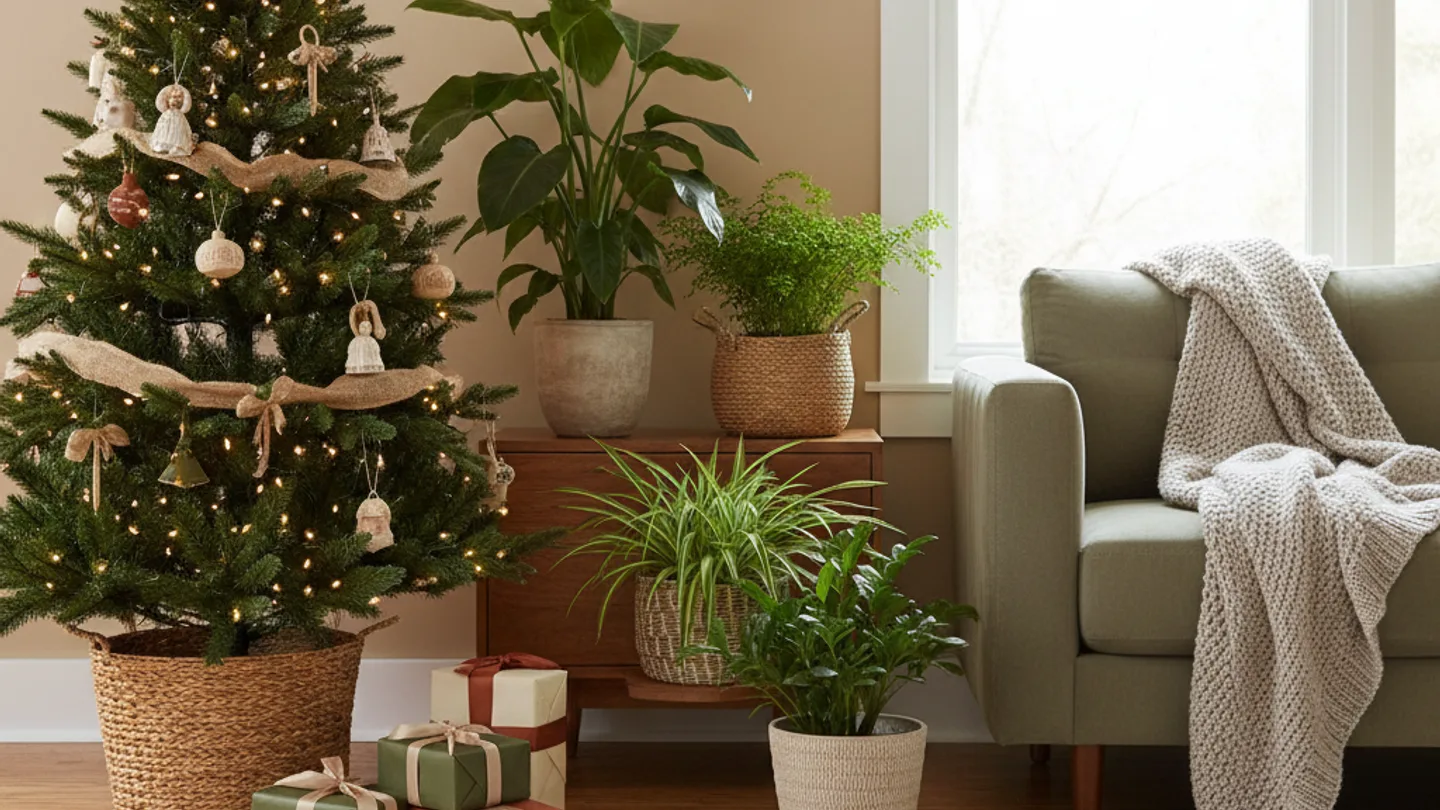
Want green without the worry? A few houseplants are generally considered non-toxic to cats and dogs and still bring that lush, wintry look.
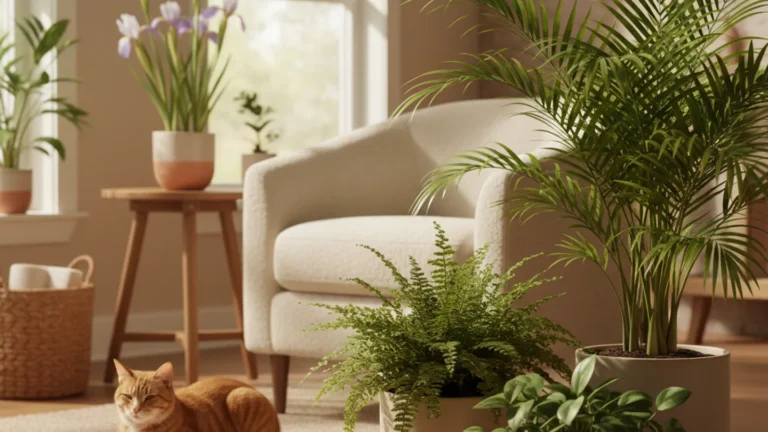
A parlor palm or a Calathea gives you full, feathery foliage for lower light corners. A Boston fern works well on a sideboard. For a fuller guide to a popular pet-safe option, read is lavender toxic to cats and dogs if you are decorating with dried bundles too.
If you keep other houseplants near your tree, check them as well. Holiday favorites like poinsettia are only mildly irritating, but plants like philodendron and monstera are toxic to both cats and dogs and should stay out of reach year-round.
Common questions about Christmas trees and pets
Are Christmas trees toxic to cats?
Real pine, fir and spruce trees are mildly toxic to cats. Chewing needles usually causes drooling, vomiting or diarrhea. The bigger dangers are sharp needles, stand water with additives, and tinsel or ornaments.
Are Christmas trees toxic to dogs?
The same mild toxicity applies to dogs. Dogs are more likely to drink from the tree stand, so cover the water reservoir and skip fertilizer or preservative additives.
My cat ate a few pine needles. What should I do?
A needle or two usually passes without trouble. Watch for drooling, vomiting, loss of appetite or signs of belly pain over the next day. If any symptoms appear, or your cat ate a lot of needles, call your vet.
Is Christmas tree water poisonous to pets?
It can be. Plain water collects bacteria and tree sap, and water with fertilizer or preservative additives is worse. Treat the stand as off-limits: cover it completely and refresh your pet's own water bowl often.
Are artificial Christmas trees safe for pets?
They remove the needle and sap problem, but plastic needles and small parts can still cause intestinal blockages if swallowed. Anchor an artificial tree well and keep cords out of reach.
What holiday plants should I avoid around pets?
Lilies are extremely dangerous to cats, and mistletoe and holly are toxic to cats and dogs. Poinsettia is only mildly irritating but still best kept out of reach. Choose pet-safer greenery instead.