Is Bird of Paradise Toxic to Cats and Dogs?
Yes, bird of paradise is toxic to cats and dogs. The whole plant can cause problems, and the seeds and fruit are the most toxic parts. Most cases lead to stomach upset rather than a life-threatening emergency, but this is not a plant to leave within reach of a curious pet.
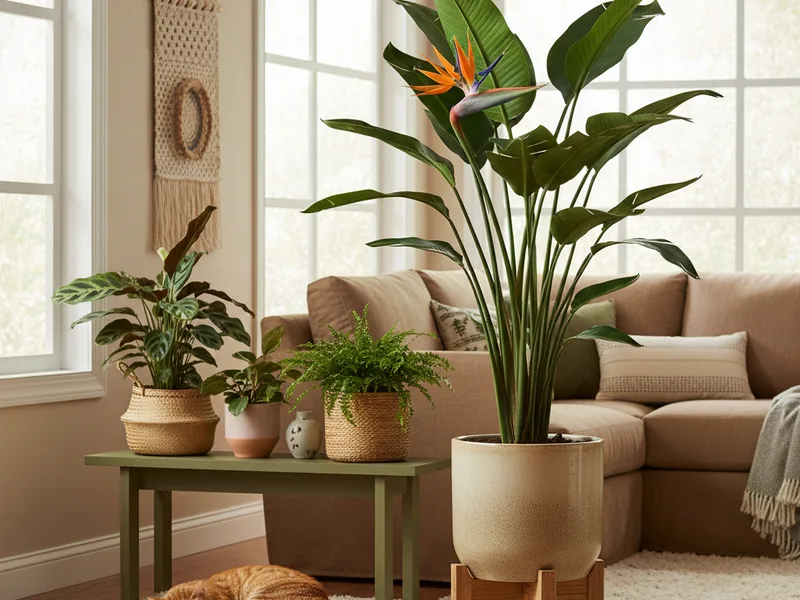
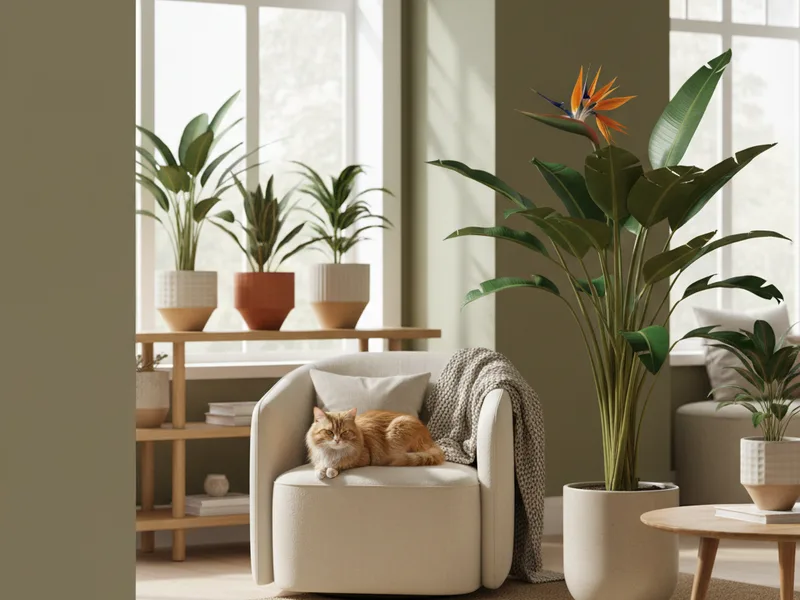
Bird of paradise (Strelitzia) is one of the most pinned statement plants on Instagram and Pinterest. Huge paddle-shaped leaves, a tall silhouette and, on mature plants, orange and blue flowers that look like a tropical bird. If one just landed on your wishlist or your windowsill, here is what it means for your cat or dog.
Below: what makes it toxic, the symptoms to watch for, what to do after a nibble, and pet-safe swaps that keep the same bold tropical look.
The short answer
- Bird of paradise (Strelitzia) is toxic to both cats and dogs.
- It mainly causes gastrointestinal upset, meaning nausea, vomiting and drooling.
- The seeds and fruit are the most toxic parts of the plant.
- Most poisonings are mild to moderate, but call your vet if your pet shows symptoms.
- Pet-safe swaps with a similar look include the banana plant, areca palm and ponytail palm.
What bird of paradise is, and why it is toxic
Bird of paradise usually means Strelitzia reginae, a South African plant with leathery, banana-like leaves and striking orange and blue flowers shaped like a bird in flight. Indoors it is a true statement plant: tall, architectural and happiest in a bright spot near a big window.
You may also see the giant white bird of paradise, Strelitzia nicolai, sold as a houseplant. It grows even larger and carries white flowers. It is a close relative, so the safest approach is to treat it as toxic too unless your vet tells you otherwise.
The plant contains compounds that irritate the digestive tract. The ASPCA lists Strelitzia reginae as toxic to both cats and dogs, with stomach upset as the main effect.
The highest concentration sits in the seeds and the seed pods or fruit. The leaves and flowers contain less, but they can still make your pet sick, and a chewing cat or dog rarely stops at one bite.
The typical symptoms are gastrointestinal: nausea, vomiting and drooling. Some pets also seem drowsy or lose their appetite. Signs usually show up within a few hours of chewing or swallowing plant material.
In plain words: this is not a plant that quietly sits in a corner. To a bored cat it is a tall, leafy toy, and to a dog a dropped seed pod can look like a snack.
What to do if your pet eats bird of paradise
Move your pet and the plant apart
Take plant pieces out of your pet's mouth if you can do it safely. Move the plant somewhere your pet cannot reach, or move your pet to another room.
Check what was eaten
Look at the plant. Missing leaves are less worrying than chewed seed pods or fruit. Try to estimate how much is gone and when it happened.
Call your vet or a poison control line
Describe the plant, the part eaten and your pet's weight. In the US you can also call a service such as the ASPCA Animal Poison Control Center; a consultation fee may apply.
Watch your pet closely
Over the next hours, look for vomiting, drooling, nausea or unusual tiredness. Note when each symptom starts so you can tell the vet.
Follow professional advice only
Do not make your pet vomit or give home remedies unless a vet tells you to. Bring a photo or a piece of the plant if you are asked to come in.
How serious is bird of paradise poisoning?
For most healthy adult cats and dogs, bird of paradise poisoning is mild to moderate. Stomach upset is unpleasant, but pets usually recover well with rest and guidance from a vet. That said, no toxic plant is completely harmless, and 'usually mild' is not a guarantee.
The risk goes up when a pet eats seeds or fruit, when a small pet eats a large amount, or when vomiting is repeated and your pet stops drinking. In those cases, or if your pet seems weak, shaky or very tired, contact a vet right away.
If you are building a pet-safe plant collection, it helps to know this plant is not the only risky statement plant. Our guide on whether Monstera is toxic to cats and dogs covers another trending giant with a similar verdict.
| Plant | The look | Light needs | Pet safety |
|---|---|---|---|
| Banana plant (Musa) | Huge paddle leaves, the closest match to bird of paradise | Bright light with some direct sun | Generally considered non-toxic |
| Areca palm | Tall, feathery fronds for a lush green corner | Bright, indirect light | Generally considered non-toxic |
| Ponytail palm | Sculptural trunk with a fountain of narrow leaves | Bright light, tolerates direct sun | Generally considered non-toxic |
| Parlor palm | Soft, compact fronds for smaller rooms | Low to medium indirect light | Generally considered non-toxic |
| Calathea | Bold patterned leaves for color at a lower height | Medium, indirect light | Generally considered non-toxic |
Bird of paradise and pets: common questions
Is bird of paradise toxic to cats?
Yes. Bird of paradise is toxic to cats. Chewing the leaves, flowers, seeds or fruit can cause nausea, vomiting and drooling. The seeds and fruit are the most toxic parts, so remove fallen pods and call your vet if your cat shows symptoms.
Is bird of paradise toxic to dogs?
Yes, it is toxic to dogs too. The main effect is stomach and intestinal upset. Dogs that chew seed pods or fruit are at the highest risk, so keep the plant and anything that falls from it out of reach.
Which part of the bird of paradise is most toxic?
The seeds and fruit contain the highest concentration of the irritating compounds. Leaves and flowers contain less, but they can still cause vomiting and nausea, especially if your pet eats several bites.
Can I keep a bird of paradise if I have pets?
You can reduce risk by placing the plant where your pet truly cannot reach it and clearing fallen leaves and pods daily. In practice, floor-standing statement plants are hard to protect from determined cats and most dogs. A pet-safe swap is the calmer choice.
Is the white bird of paradise toxic as well?
The giant white bird of paradise (Strelitzia nicolai) is a close relative of the orange species. Treat it as toxic around cats and dogs unless your vet or an animal poison control service tells you otherwise.
My pet only nibbled one leaf. Should I worry?
A single small nibble often causes mild signs or none at all. Watch your pet for the rest of the day for vomiting, drooling or tiredness, and call your vet if any symptoms appear.