Is Schefflera Toxic to Cats and Dogs?
Schefflera, also called the umbrella plant, is toxic to both cats and dogs. It contains calcium oxalate crystals: tiny sharp crystals that can irritate your pet's mouth and throat the moment they bite into a leaf.
If you share your home with a chewer, this is not a plant to keep within reach. The good news: the symptoms are usually mild to moderate, and there is a pet-safe tree that gives you the same leafy look.
Here is what happens if your cat or dog eats schefflera, when to call the vet, and which plant to buy instead.
Why schefflera is so common in homes and offices
Schefflera is everywhere. Garden centers sell it as the umbrella plant because its leaflets fan out like the spokes of an umbrella. It grows fast, tolerates some neglect, and copes well with indoor light.
That is why it shows up in offices, waiting rooms, and rental apartments so often. It is also why many pet owners bring one home without knowing it is a problem. A plant that thrives on a desk will also survive in your living room, right at cat height.
Its popularity is exactly the risk. Cats especially like to bat at the dangling leaf clusters, and a curious dog can strip a low branch in seconds.
What makes schefflera toxic
The problem is calcium oxalate crystals. These are tiny, needle-shaped crystals inside the plant's cells. When your pet bites into a leaf or stem, the crystals shoot out and embed in the soft tissue of the mouth, tongue, and throat.
This causes immediate pain and irritation. It is a mechanical injury, like chewing on glass slivers, not a poison that spreads quietly through the body.
All parts of the plant contain these crystals: leaves, stems, and roots. Chewing is the usual route, but even licking sap from a broken stem can cause a reaction.
Symptoms to watch for
Symptoms usually start right away, within minutes of chewing. That fast onset is actually helpful: you will often catch it happening or find your pet reacting near the plant.
Common signs in cats and dogs include pawing at the mouth, heavy drooling, and shaking the head. You may see redness or swelling of the lips, tongue, or gums. Vomiting is also common, and some pets refuse food because their mouth hurts.
In rare cases, swelling of the throat can make swallowing or breathing harder. That is more serious and needs a vet immediately.
Most cases stay mild to moderate and pass within hours. But mild is not the same as harmless, and every pet reacts differently.
The short version
- Schefflera (umbrella plant) is toxic to cats and dogs.
- It contains calcium oxalate crystals: tiny sharp crystals that irritate the mouth and throat on contact.
- Expect drooling, pawing at the mouth, vomiting, and a sore mouth.
- Call your vet if symptoms are severe, last more than a few hours, or your pet struggles to swallow or breathe.
- A pet-safe swap with a similar tree shape exists, so you do not have to give up the look.
What to do if your pet eats schefflera
Stay calm. Most schefflera exposures are uncomfortable rather than dangerous, but quick action helps.
First, move your pet away from the plant and gently remove any plant material from their mouth if you can do so safely. Offer fresh water. Do not try to make your pet vomit unless a vet tells you to.
Then call your veterinarian or a pet poison helpline. Describe the plant, roughly how much was eaten, and the symptoms you see. Bring a photo of the plant or a leaf if you head to the clinic.
Watch closely for the next few hours. Worsening swelling, repeated vomiting, trouble swallowing, or any breathing difficulty means an urgent vet visit.
If your pet chews the plant, step by step
Remove access
Move your pet away from the plant and pick up any chewed leaves or stems from the floor.
Rinse the mouth
Offer fresh water or gently rinse the mouth with a wet cloth if your pet allows it.
Call for advice
Contact your vet or a pet poison helpline. Give the plant name and the symptoms you see.
Monitor closely
Watch for a few hours. Escalate to an emergency visit if swelling, vomiting, or breathing problems get worse.
A pet-safe swap with the same look
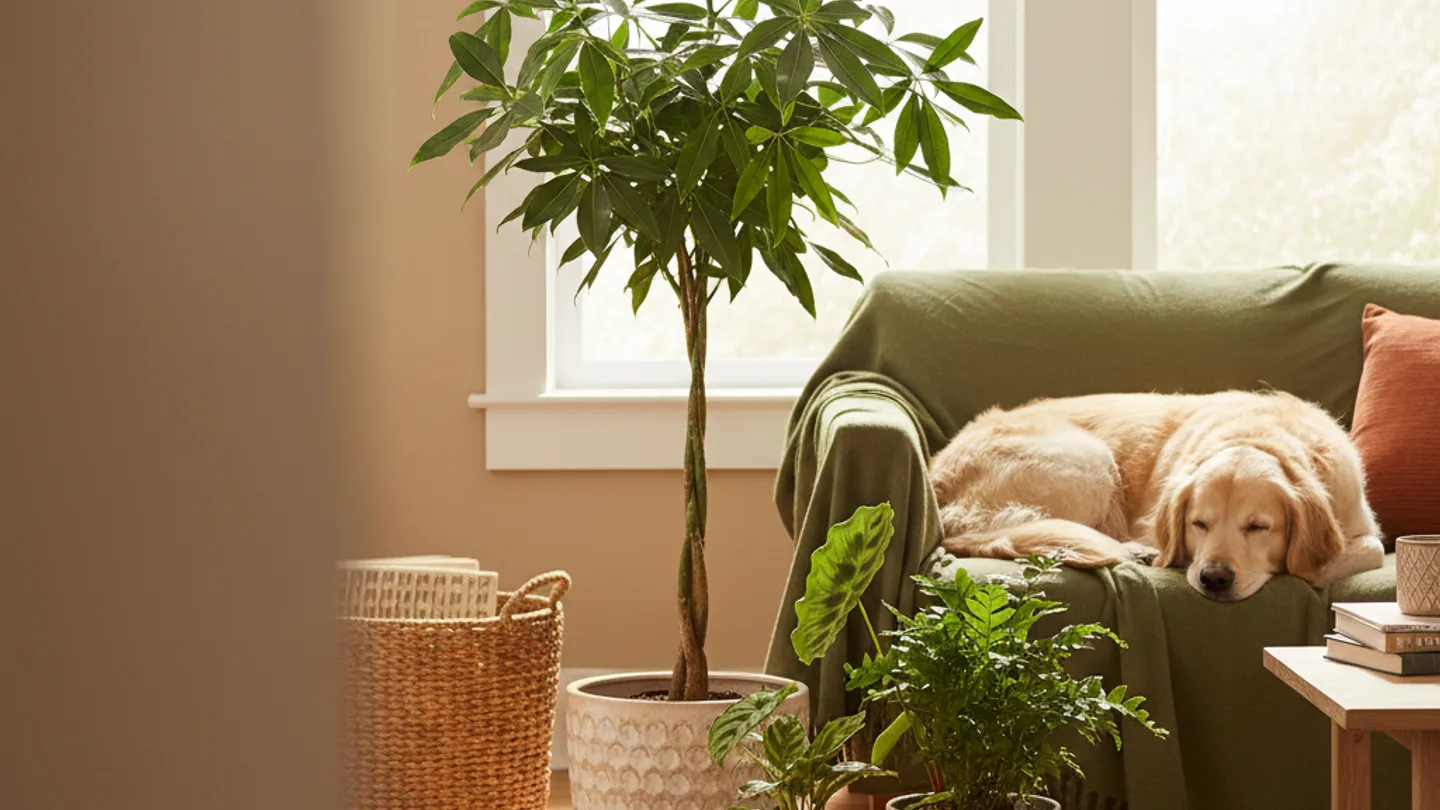
You do not have to give up the indoor tree look. A parlor palm or a money tree gives you height and lush green leaves without the calcium oxalate problem, and both are generally considered non-toxic to cats and dogs.
The money tree in particular comes close: it has a full canopy of glossy leaflets on a woody trunk, fits the same corner, and handles similar light. If you liked your schefflera's silhouette, that is your swap.
The same logic applies to other popular but risky plants. We cover the same question for another common houseplant in Is Monstera Toxic to Cats and Dogs?.
Common questions about schefflera and pets
Is schefflera toxic to cats?
Yes. Schefflera contains calcium oxalate crystals that irritate a cat's mouth and throat on contact, causing drooling, pawing at the mouth, and vomiting.
Is schefflera toxic to dogs?
Yes, dogs react the same way. The crystals cause mouth pain, drooling, and vomiting. Most cases are mild to moderate, but contact your vet when symptoms appear.
How much schefflera is dangerous?
Even a small bite can cause clear mouth irritation because the injury is mechanical. Severity depends on the amount chewed and your pet's size. Call your vet for guidance after any exposure.
Is there a pet-safe plant that looks like schefflera?
Yes. A money tree or parlor palm gives a similar leafy, tree-like shape and is generally considered non-toxic to cats and dogs. No plant is completely harmless if eaten in quantity, so supervise chewers.
My pet ate schefflera an hour ago and seems fine. Should I worry?
Symptoms from calcium oxalate usually appear within minutes, so a pet that seems fine an hour later likely had little contact. Still watch for drooling or vomiting through the day and call your vet if anything changes.