Is Yucca Toxic to Cats and Dogs?
Yucca is toxic to both cats and dogs. Every part of the plant contains saponins, natural chemicals that can cause vomiting, drooling and weakness if your pet chews or swallows the leaves. The stiff, pointed leaf tips can also injure eyes, so this plant carries two kinds of risk in a home with pets.
That verdict holds for the tall cane yuccas sold as indoor trees and for the spiky yuccas used in desert landscaping across the Southwest and beyond.
Here is what saponins actually do, which symptoms to watch for, what to do after a bite, and which pet-safe plants give you the same bold, architectural look.
Key takeaways
- Yucca is toxic to cats and dogs. The toxic compounds are saponins, found throughout the plant and most concentrated in the roots.
- Typical symptoms are drooling, vomiting, diarrhea, weakness and loss of appetite.
- The rigid leaf tips can scratch or puncture eyes, even if your pet never chews the plant.
- Call your vet if your pet eats yucca or if symptoms appear. Do not wait for symptoms to get worse.
- Pet-safe swaps with a similar look include the ponytail palm, parlor palm and cast iron plant.
Why yucca is toxic: saponins in plain words
Saponins are natural chemicals the yucca plant makes to defend itself. The name comes from their soap-like behavior: mixed with water, they foam. Inside the stomach and intestines, they act as an irritant.
In practice, a pet that chews yucca usually ends up with an irritated mouth, stomach and gut. The result is the classic pattern vets see: drooling, vomiting, diarrhea, weakness and a pet that goes off its food.
Saponins occur in the whole plant, but they are most concentrated in the roots. A dog or cat that digs in the pot and chews the root can take in a bigger dose than a pet that nibbles one leaf tip.
The ASPCA lists yucca as toxic to cats and dogs. The reassuring part: most pets that take a small bite recover well, especially with quick advice from a vet. Larger amounts, or symptoms that keep getting worse, always call for a vet visit.
Two settings, one verdict
The indoor tree your cat can actually reach
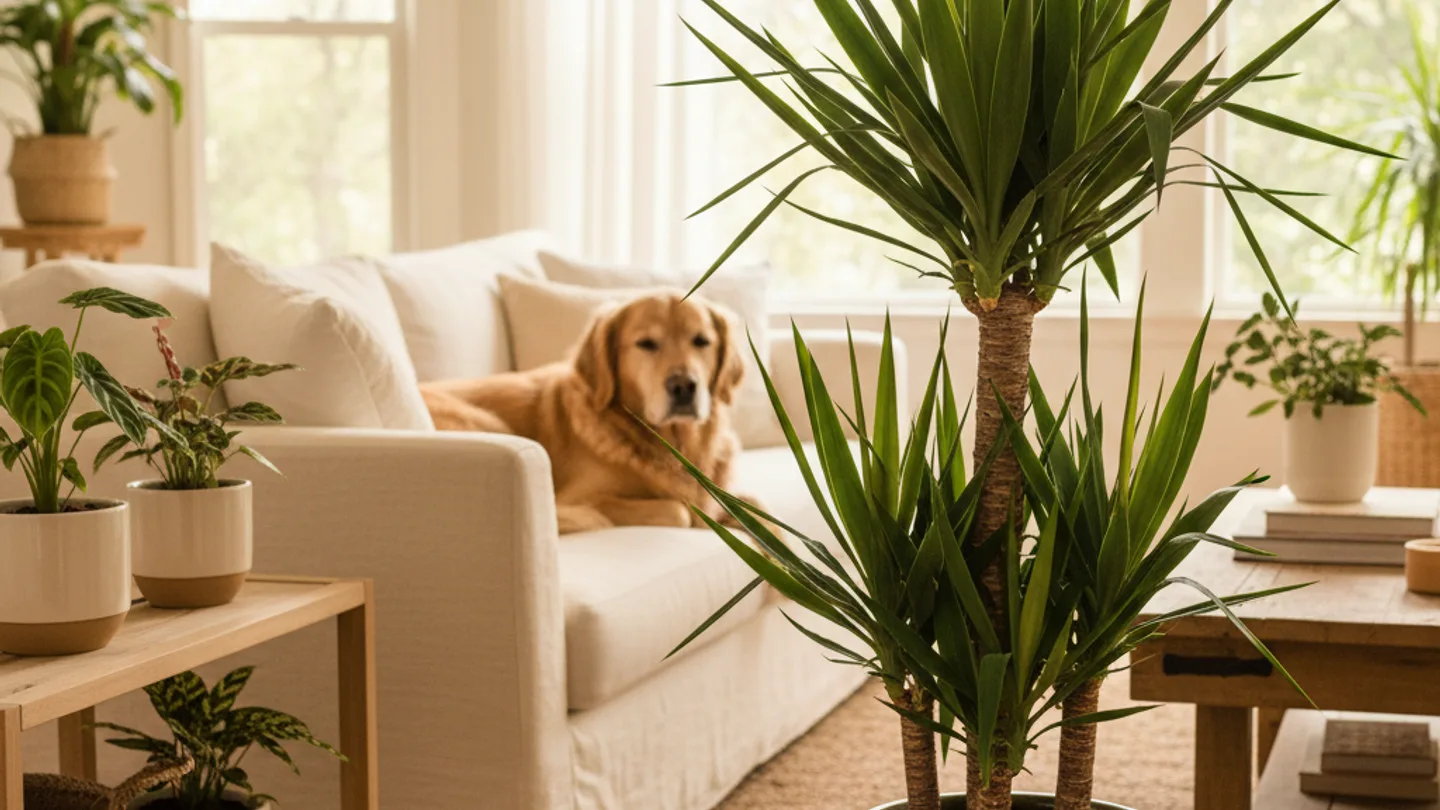
The cane yucca, often sold as Yucca elephantipes or spineless yucca, is a popular floor plant. It looks like a small tree with a thick trunk and a crown of long, strap-like leaves. Those leaves hang exactly at cat and dog height.
Cats like to bat the dangling leaves, and dogs may chew them out of boredom. One word on the name: spineless only describes the softer leaf edges. The plant is still toxic when eaten.
Placing a cane yucca out of reach rarely works, because cats climb. If your cat shows interest in the leaves, replacing the plant is the calm, reliable option.
Landscaping yuccas and your dog
In desert and water-wise landscaping, yuccas are everywhere. Think of the spiky rosettes in front yards across the Southwest, and hardy types like Adam's needle that survive winters in colder states.
The risk here is different. Dogs brush past these plants at full speed, and the rigid leaf points sit right at eye and nose height. Puppies also chew almost anything, and a yucca root is within digging range.
If you have yuccas near paths, patios or play areas, fence them off or move them. A plant your dog runs past every day should not end in a sharp point.
The other risk: sharp leaf tips and eyes
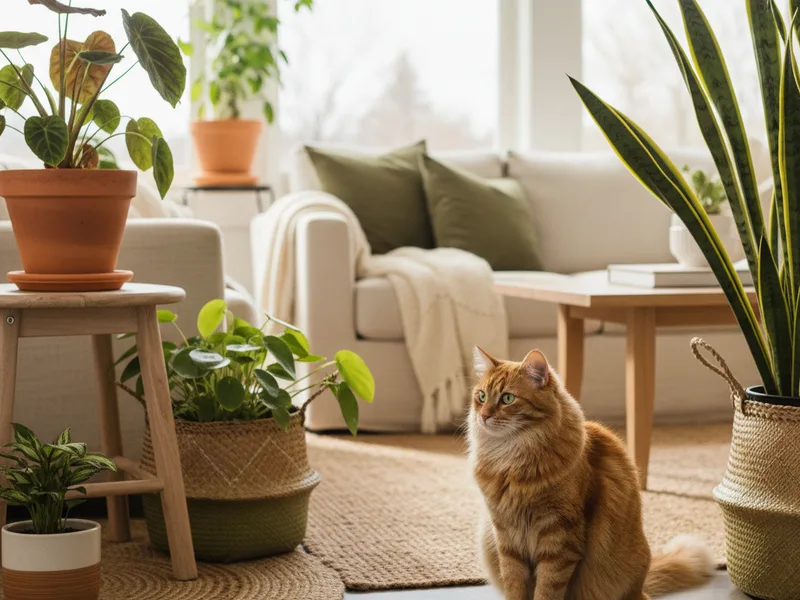
Even a pet that never chews a yucca can get hurt by one. Yucca leaves end in a hard, sharp point. A dog running past a landscaping yucca, or a cat swatting a cane yucca's leaves, can end up with a scratched or punctured eye.
Eye injuries are painful and can turn serious fast. Warning signs include squinting, a watery or cloudy eye, pawing at the face, or a pet that suddenly pulls away from touch near the head. See a vet the same day if you notice any of these.
The practical fix is simple: keep yuccas out of walkways and play zones, or swap them for a softer plant. No training reliably stops a cat from swatting a moving leaf.
What to do if your pet eats yucca
Move your pet away from the plant
Take away any chewed leaves and gently clear plant pieces from your pet's mouth if you can do it safely. Keep a piece of the plant for identification.
Check what and how much was eaten
A bite of leaf is different from a dug-up root, which holds more saponins. Note the amount, the plant part and the time. Your vet will ask for this.
Call your vet or a pet poison control service
Describe the plant, the amount and your pet's weight, then follow their advice. Do not make your pet vomit unless a professional tells you to.
Watch for symptoms over the next hours
Drooling, vomiting, diarrhea, weakness and low appetite are the usual signs. Repeated vomiting, worsening symptoms or a pet that seems weak or wobbly means a vet visit now.
Decide on the plant's future
Once your pet is safe, remove the yucca or move it somewhere truly inaccessible. For most homes, a pet-safe swap is the lasting solution.
Pet-safe plants with the same bold look
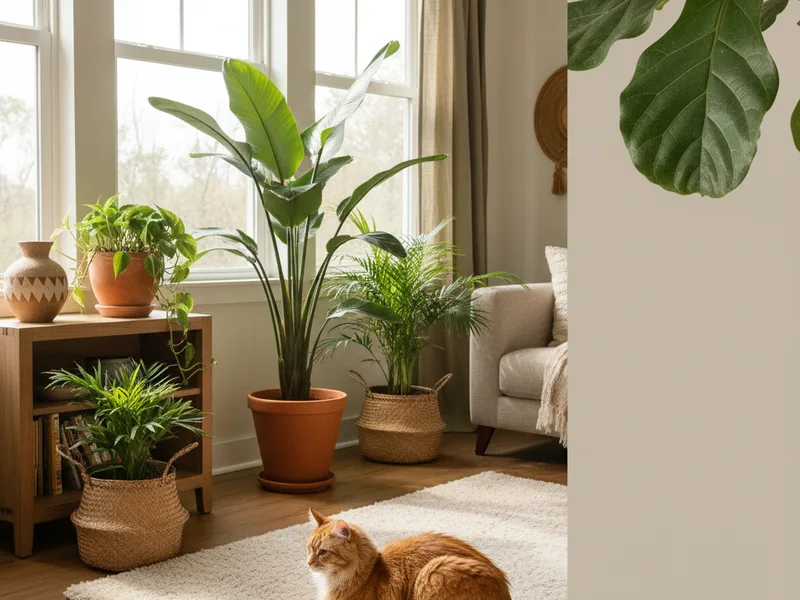
You do not have to give up the sculptural look. Several plants that are generally considered non-toxic to cats and dogs bring the same strong shape and work in real living rooms, not just greenhouses.
Checking other statement plants too? Our guide to monstera and pet safety gives the same verdict-first answer.
| Plant | The look | Light | Pet safety |
|---|---|---|---|
| Ponytail palm | Thick trunk with a fountain of long, strap-like leaves | Bright light, some direct sun | Generally considered non-toxic to cats and dogs |
| Parlor palm | Soft, feathery fronds on slim stems | Low to medium indirect light | Generally considered non-toxic to cats and dogs |
| Areca palm | Full, arching fronds, a taller statement plant | Bright indirect light | Generally considered non-toxic to cats and dogs |
| Cast iron plant | Broad, deep green leaves, very tough | Low light | Generally considered non-toxic to cats and dogs |
| Spider plant | Arching striped leaves, easy in a hanging pot | Medium to bright indirect light | Generally considered non-toxic to cats and dogs |
Common questions about yucca and pets
Is yucca toxic to dogs?
Yes. Yucca is toxic to dogs. The saponins in the plant can cause drooling, vomiting, diarrhea and weakness. Call your vet if your dog eats any part of a yucca, especially the root, where saponins are most concentrated.
Is yucca toxic to cats as well?
Yes, the same verdict applies to cats. Cats face an extra risk too: they like to bat the long leaves, and the sharp tips can injure an eye. Keep yuccas away from cats or replace them with a safe swap.
My pet only ate a small piece. Should I worry?
A small bite often leads to mild stomach upset, and most pets recover well. Still, call your vet for advice, especially for small pets or if the root was chewed. Contact your vet right away if symptoms appear or get worse.
Is one type of yucca safer than another?
No. Cane yucca, spineless yucca and outdoor types like Adam's needle all contain saponins. The word spineless refers to the leaf edges, not to the toxicity. Treat every yucca as toxic to cats and dogs.
Are there pet-safe plants that look like yucca?
Yes. The ponytail palm is the closest match, with a trunk and a spray of strap-like leaves, and it is generally considered non-toxic. Parlor palm, areca palm and cast iron plant also give a strong shape without the risk.