
Is Arrowhead Plant Toxic to Cats and Dogs?
Yes. Arrowhead plant is toxic to both cats and dogs. If your pet chews a leaf, expect a painful mouth, heavy drooling and possibly vomiting.
The cause is calcium oxalate. Calcium oxalate crystals are tiny sharp crystals that can irritate your pet's mouth and throat. Almost every part of the plant carries them, from leaf to stem.
Arrowhead plant, also sold as Syngonium, arrowhead vine or nephthytis, is one of the most common starter plants in the US. Here is what that means for your cat or dog, what to watch for, and a safe swap with a similar look.
The short answer
- Arrowhead plant (Syngonium podophyllum) is toxic to cats and dogs.
- It contains insoluble calcium oxalate crystals that irritate the mouth, tongue and throat.
- Typical signs are drooling, pawing at the mouth, vomiting and trouble swallowing.
- Most cases are painful but short-lived. Call your vet if symptoms appear or your pet seems distressed.
- A hoya or peperomia gives you a similar look and is generally considered non-toxic.
Why arrowhead plants are toxic to cats and dogs
Arrowhead plants defend themselves with insoluble calcium oxalate crystals. These are needle-shaped crystals stored inside the plant's cells. When your pet bites into a leaf, the crystals act like tiny needles. They embed in the lips, tongue and throat and cause an intense burning feeling.
All parts of the plant contain the crystals. Leaves get the most attention, but stems carry them too, so a cat chewing a trailing vine is at the same risk as one biting a leaf.
Signs usually start within minutes of a bite. The most common ones are drooling, pawing at the mouth, swelling of the lips or tongue, vomiting, trouble swallowing and a sudden loss of interest in food.
The reassuring part: most pets stop after one bite because it hurts right away, so serious poisoning is rare. In uncommon cases, swelling can make breathing harder, and that needs urgent care. Kittens, puppies and small breeds can also get dehydrated faster from vomiting, so call your vet sooner for them.
The same crystals are the reason monstera is toxic to cats and dogs as well. Many popular plants in the arum family share this defense.
First aid at home
What to do if your pet eats arrowhead plant
Move your pet away
Take the plant out of reach and gently remove any leaf pieces still in your pet's mouth.
Rinse or offer water
Rinse the mouth with a gentle stream of cool water, or offer fresh water to drink. This helps wash out the crystals.
Call your vet
Describe what your pet ate and roughly how much. You can also reach the ASPCA Animal Poison Control Center at (888) 426-4435 at any hour.
Watch for swelling
If you see swelling of the face or tongue, repeated vomiting, or any trouble breathing, treat it as urgent and head to an emergency vet.
Note the plant's name
Write down the plant's name or take a clear photo of it. A confirmed identification helps your vet act faster.
Why arrowhead ends up in so many pet homes
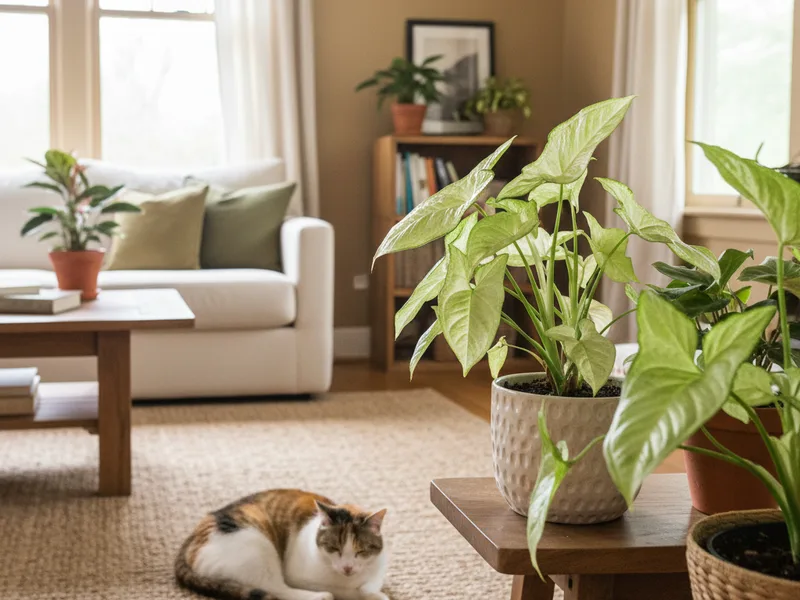
Arrowhead plant is a classic starter plant. It is affordable, grows fast, forgives missed waterings and tolerates the medium light of a real apartment. The arrow-shaped leaves often come variegated in pink, white or soft green, which makes it a favorite on Instagram and Pinterest.
It also hides behind several names. Depending on the shop, the same plant may be labeled Syngonium, arrowhead vine, arrowhead ivy, goosefoot plant or nephthytis. Pots rarely carry a toxicity warning, so many owners bring one home without knowing.
If you already have one, placement lowers the risk. A high shelf, a hanging planter or a closed room all help. But determined cats climb, and a dangling vine is an invitation. For most pet homes, a swap is the calmer choice.
| Plant | Toxic to cats and dogs? | Leaf look | Light needs |
|---|---|---|---|
| Arrowhead plant (Syngonium) | Yes. Contains calcium oxalate crystals. | Arrow-shaped leaves, often variegated pink, white or green | Medium to bright indirect light |
| Hoya (wax plant) | No. Generally considered non-toxic. | Thick, waxy, heart to oval leaves on trailing vines | Bright indirect light, some morning sun is fine |
| Peperomia | No. Generally considered non-toxic. | Compact, rounded or rippled leaves in many patterns | Medium to bright indirect light |
A pet-safe swap with a similar look
If you love the arrowhead look, a hoya is the closest calm choice. It trails or climbs much like a young Syngonium, and many types have shaped, waxy leaves with a similar outline. Hoyas are generally considered non-toxic to cats and dogs, and they handle normal home conditions well.
Peperomia is another easy option for shelves and desks. It stays compact, copes with medium apartment light, comes in plenty of leaf patterns, and is also generally considered non-toxic.
Even with safer plants, treat chewing as a habit to interrupt. Any plant can cause an upset stomach if your pet eats enough of it, and soil or fertilizer residue can add problems. If symptoms appear after a nibble, call your vet.
Common questions about arrowhead plant and pets
Is arrowhead plant toxic to cats?
Yes. Arrowhead plant is toxic to cats. Its leaves and stems hold calcium oxalate crystals that burn a cat's mouth and throat. Expect drooling, pawing at the mouth and vomiting, and call your vet if symptoms appear.
Is arrowhead plant toxic to dogs?
Yes, for the same reason. Dogs get the same mouth irritation, drooling and vomiting after chewing a leaf. Puppies and small dogs can dehydrate faster, so call your vet early for them.
Can arrowhead plant kill a cat or dog?
That is rare. Most pets take one bite, find it painful, and stop. The real concerns are swelling that interferes with breathing or heavy vomiting in a small pet. Treat those as urgent and see a vet right away.
Are all Syngonium varieties toxic?
Yes. Whether the label says 'Neon Robusta', 'White Butterfly' or plain green arrowhead vine, every Syngonium contains the same calcium oxalate crystals.
Is arrowhead plant safe around people?
The crystals can irritate skin and mouths in people too, so keep the plant away from babies and toddlers and wash your hands after pruning. In most homes, though, the bigger daily risk is a curious cat or dog.
Can I keep my arrowhead plant if I have pets?
You can lower the risk with a high shelf, a hanging planter or a room your pet cannot enter. Determined cats do climb, so many owners feel calmer switching to a non-toxic lookalike like a hoya.