Are Hydrangeas Toxic to Cats and Dogs?
Hydrangeas are toxic to both cats and dogs. Every part of the plant contains cyanogenic glycosides, natural compounds that can release small amounts of cyanide when chewed and digested.
The good news: most hydrangea nibbles cause stomach upset, not a life-threatening emergency. A pet would usually need to eat a fair amount of plant material before things get serious.
Below you will find what actually happens if your cat or dog eats hydrangea, when to call the vet, and which big, showy flowers give you the same look without the risk.
The short version
- Hydrangeas are toxic to cats and dogs. All parts of the plant are affected, with the highest concentration in the leaves and flower buds.
- The toxic compounds are cyanogenic glycosides. In plain words: natural chemicals that can release a little cyanide when the plant is chewed and digested.
- Most cases cause vomiting, diarrhea and drooling. Severe poisoning is rare and usually involves eating a large amount.
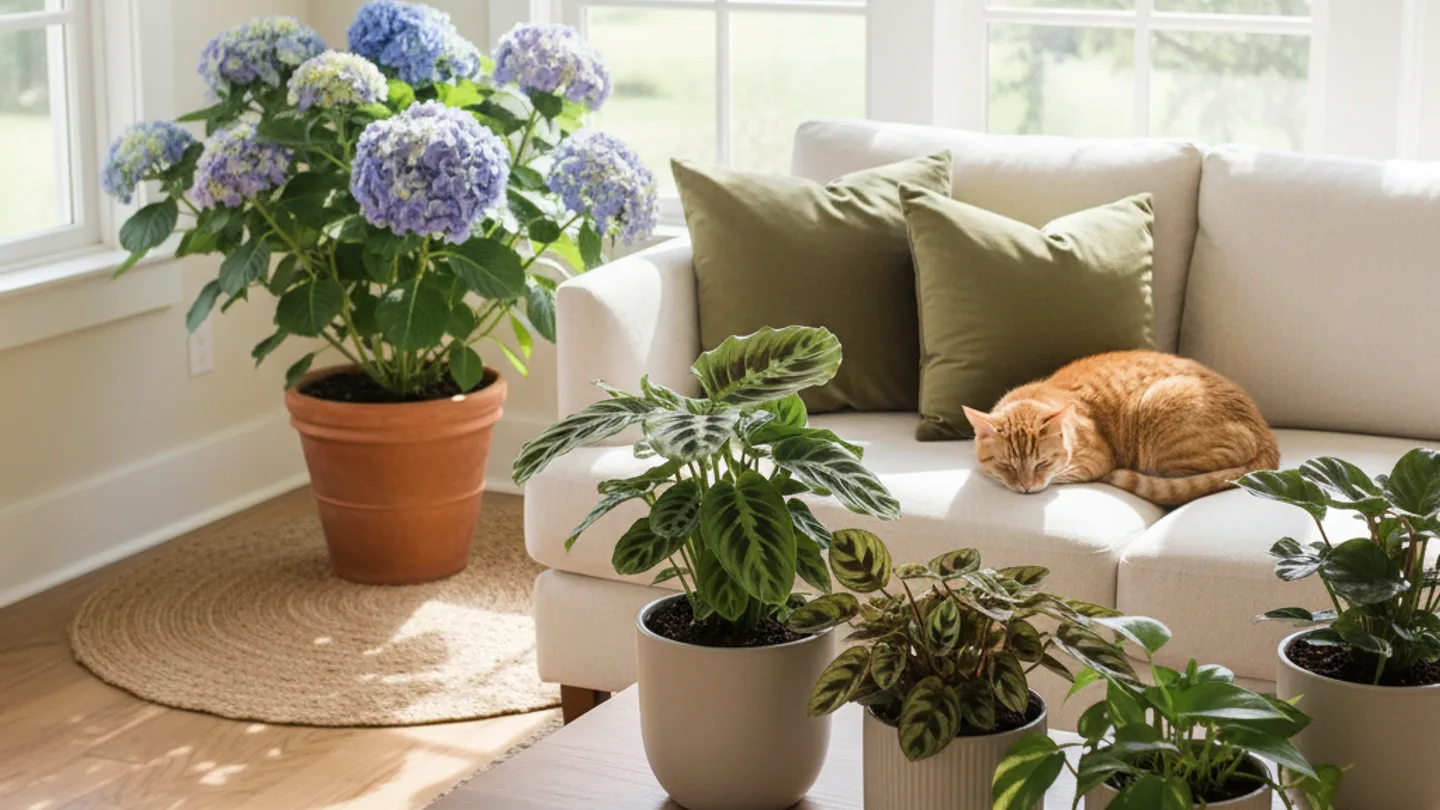
- Risk shows up in two places: garden shrubs your dog can reach, and cut hydrangeas in bouquets your cat can chew.
- Call your vet or a pet poison hotline if your pet ate hydrangea and shows symptoms, or if you are unsure how much was eaten.
- Want the same lush, full-flower look? Roses, zinnias, snapdragons and orchids are generally considered non-toxic to cats and dogs.
Why hydrangeas are toxic
Hydrangeas contain cyanogenic glycosides. That sounds alarming, so here is what it means in plain words: these are natural plant chemicals that can release a small amount of cyanide when the leaves or flowers are chewed and broken down in the stomach.
The compounds are spread through the whole plant, but the leaves and flower buds carry the highest concentration. Dried hydrangea stays toxic too, so a faded bouquet is not a safe one.
The dose matters. A single petal is unlikely to do more than cause mild stomach upset, because the amount of cyanide released is small. Trouble starts when a pet eats a large quantity, for example a bored dog chewing through several stems in the yard.
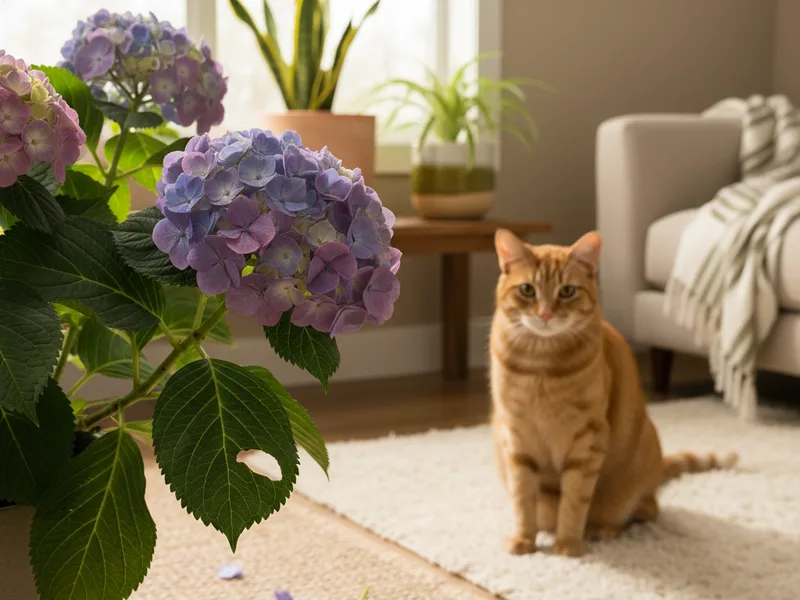
What happens if your pet eats hydrangea
The most common reaction is gastrointestinal upset. Expect symptoms like vomiting, diarrhea, drooling and a pet that seems off its food or a little lethargic. These signs usually show up within a few hours of chewing the plant.
In larger ingestions, symptoms can be more pronounced: repeated vomiting, a painful belly and noticeable weakness. True cyanide poisoning from hydrangea is rare in pets, but it is the reason vets take bigger ingestions seriously.
So the honest picture is this: hydrangea poisoning is usually unpleasant rather than dramatic. That said, small pets, puppies, kittens and animals with existing health issues have less margin, so treat their exposures with extra care.
Garden shrubs and cut bouquets: where the risk actually is
For dogs, the classic scenario is the garden. Hydrangeas are popular shrubs, often planted at exactly the height a curious dog can reach. A dog that chews sticks and plants can work through a surprising amount of leaf material while you are not looking.
For cats, the bigger risk is indoors. Cut hydrangeas are a florist favorite, and a vase on the table puts toxic leaves right at cat level. Cats that like to chew greenery will find them.
There is also a quiet second risk with bouquets: the vase water. Water that cut hydrangea stems have sat in can carry plant compounds, and some cats drink from vases. Empty and refresh vases often, or better, keep hydrangeas out of the house entirely.
What to do if your pet ate hydrangea
Remove the plant and check your pet
Take the plant or bouquet away, gently clear any plant pieces from your pet's mouth, and note what and roughly how much was eaten.
Watch for symptoms
Look for vomiting, diarrhea, drooling, loss of appetite or unusual tiredness over the next few hours. Mild cases often pass on their own, but you need to see the trend.
Call your vet or a pet poison hotline
If symptoms appear, if a large amount was eaten, or if your pet is very small, young or already unwell, call your vet. In the US you can also reach the ASPCA Animal Poison Control Center or the Pet Poison Helpline. A consultation fee may apply.
Follow professional advice, not home remedies
Do not make your pet vomit unless a vet tells you to. Bring a photo or a piece of the plant to the appointment if a visit is needed.
How serious is it, really?
Realistically, most hydrangea exposures end with an upset stomach and a pet that feels sorry for itself for a day. That matches what vets see in practice: plenty of calls, few true emergencies.
But 'usually mild' is not the same as harmless. Large ingestions can mean repeated vomiting, dehydration and real discomfort, and very small pets hit that threshold faster. If your pet shows symptoms, contacting a vet is always the right call.
The calm takeaway: you do not need to panic if your dog grabbed a leaf on a walk. You do need to rethink that hydrangea hedge if your dog treats the garden like a salad bar.
| Pet-safe swap | Why it works as a hydrangea stand-in | Light needs | Grows well in |
|---|---|---|---|
| Rose | Big, lush blooms in soft pinks, whites and reds; classic romantic look | Full sun | Garden beds, large pots |
| Zinnia | Full, rounded flower heads in bold colors; great for cutting | Full sun | Garden beds, containers |
| Snapdragon | Tall, full flower spikes that fill out beds and bouquets | Full sun to partial shade | Garden beds, pots |
| Orchid (Phalaenopsis) | Elegant, long-lasting blooms for indoors instead of a hydrangea bouquet | Bright, indirect light | Indoors, windowsills |
| African violet | Compact clusters of blooms for small spaces and tabletops | Bright, indirect light | Indoors, small pots |
Swapping hydrangeas without losing the look
Part of hydrangea's charm is the volume: big mounds of flowers that fill a border or a vase. The swaps above do the same job. Roses and zinnias carry a garden bed, snapdragons add height, and orchids or African violets replace the cut bouquet indoors.
All of these are generally considered non-toxic to cats and dogs. No plant is completely harmless, since any greenery can cause mild stomach upset if eaten in quantity, but these are the kind of plants you can place without a safety calculation.
If you are rethinking your houseplants too, have a look at another common favorite in our guide: is Monstera toxic to cats and dogs.
Common questions about hydrangeas and pets
Are hydrangeas toxic to dogs?
Yes. Hydrangeas are toxic to dogs. The leaves and flower buds contain cyanogenic glycosides, which most often cause vomiting, diarrhea and drooling. Severe poisoning is rare and usually requires a large amount, but call your vet if your dog shows symptoms.
Are hydrangeas toxic to cats?
Yes, hydrangeas are toxic to cats as well. Cats are most often exposed indoors through cut flowers in a vase. Watch for vomiting, diarrhea and drooling, and contact your vet if symptoms appear.
Which part of the hydrangea is poisonous?
All parts of the plant contain the toxic compounds, with the highest concentration in the leaves and flower buds. Dried hydrangea remains toxic too.
My dog ate one hydrangea leaf. Should I panic?
No. A single leaf will most likely cause mild stomach upset at worst. Remove access to the plant, watch for vomiting or diarrhea over the next few hours, and call your vet if symptoms show up or if you are unsure how much was eaten.
Is the water in a vase with hydrangeas dangerous?
It can be. Water that hydrangea stems have sat in may carry plant compounds, and some cats drink from vases. If you keep hydrangeas at all, refresh the water often and place the vase where pets cannot reach it.
What flowers look like hydrangeas but are safe for pets?
Roses, zinnias and snapdragons give a similar full, showy look in the garden, and orchids or African violets work indoors. All are generally considered non-toxic to cats and dogs.