Are Sweet Peas Toxic to Cats and Dogs?
Sweet pea plants are toxic to both cats and dogs. The seeds and pods carry the most risk, but no part of the plant is a safe snack for your pet.
If a dog or cat eats sweet pea, symptoms can include weakness and lethargy. In serious cases, seizures are possible. If your pet has eaten any part of a sweet pea plant, call your vet.
Below you will find out why sweet peas are not the peas on your plate, how garden exposure really happens, and which pet-safe climbers give you a similar look.
The short answer
- Sweet peas (Lathyrus odoratus) are toxic to cats and dogs.
- The seeds and pods are the riskiest part. Symptoms include weakness and lethargy, with seizures in serious cases.
- Sweet peas are not related to edible garden peas, despite the shared name.
- If your pet eats any part of a sweet pea plant, call your vet straight away.
- Pet-safe swaps with a similar look include climbing roses, black-eyed Susan vine, and star jasmine.
Is sweet pea toxic to dogs and cats?
Yes. Sweet pea is toxic to dogs, and to cats as well. Every part of the plant contains compounds that can make your pet sick, and the highest concentration sits in the seeds and the pods that hold them.
The symptoms to watch for are weakness and lethargy. Your pet may seem unusually tired, wobbly, or uninterested in food and play. In serious cases, especially when a pet has eaten a larger amount of seeds, seizures can happen.
Not every nibble turns into an emergency, but there is no amount of sweet pea we can call safe. If you know or suspect your pet has eaten sweet pea, contact your vet and describe what was eaten and roughly how much.
What to do if your pet eats sweet pea
Move your pet away from the plant
Gently remove any plant pieces from your pet's mouth. Move the plant, the vase, or your pet so no more can be eaten.
Check what was eaten
Note which part is missing: leaves, flowers, pods, or loose seeds. Take a quick photo of the plant so you can show your vet.
Call your vet
Call your vet or a pet poison helpline. Describe the plant, the part eaten, and when it happened. Do not wait for symptoms to appear first.
Watch for symptoms
Keep an eye on your pet for weakness, lethargy, and unsteady movement. In serious cases seizures can occur. Note when anything starts so you can report it.
Skip home remedies
Do not try to make your pet vomit unless a vet tells you to. Follow professional advice and head to the clinic if asked.
Sweet peas are not the peas on your plate
The shared name causes real confusion. The sweet pea is Lathyrus odoratus, an ornamental climber grown for its ruffled pastel flowers and strong scent. The pea you eat is Pisum sativum, a different plant grown as a vegetable.
The two are distant cousins, not twins. Sweet peas have been bred for looks and fragrance, never for the kitchen, and their seeds are not food for people or pets.
So if your dog steals a sugar snap from the vegetable bed, that is a different conversation from chewing on sweet pea vines. Garden peas are generally not considered toxic, though any plant material can cause stomach upset. Sweet pea seeds and pods are the ones that carry the real risk.
| Plant | The look | Light | Pet safety |
|---|---|---|---|
| Sweet pea | Soft ruffled pastel flowers on fast annual vines | Full sun | Toxic to cats and dogs |
| Climbing rose | Romantic blooms on long canes in many colors | Full sun | Generally considered non-toxic; mind the thorns |
| Black-eyed Susan vine (Thunbergia) | Bright trumpet-shaped flowers on quick vines | Full sun to part shade | Generally considered non-toxic |
| Star jasmine | Glossy leaves with masses of small white star flowers | Full sun to part shade | Generally considered non-toxic |
Growing sweet peas when you have pets
Sweet peas live outdoors, sown in spring and climbing through summer. The risky moments are easy to picture: seedlings at nose height for a curious puppy, and dry pods dropping to the ground in late summer, right where a dog sniffs.
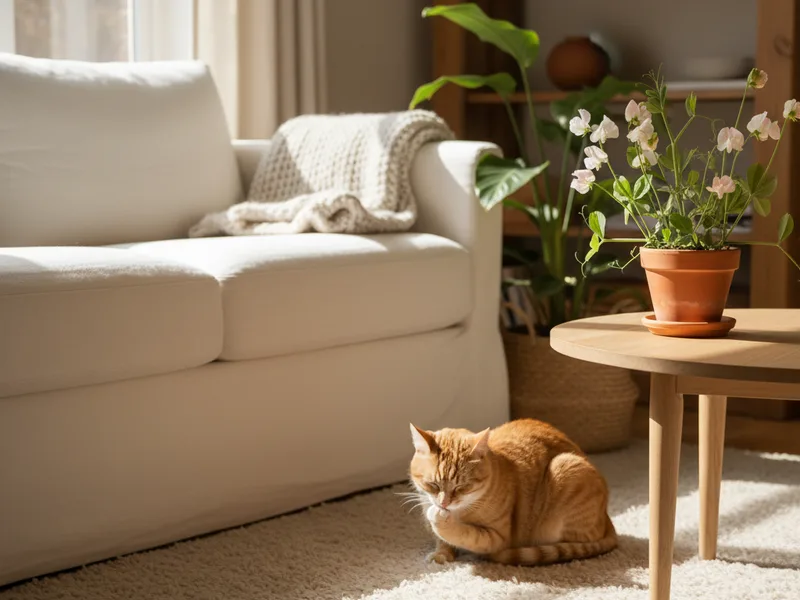
Cats meet sweet peas more often indoors. Sweet pea stems are popular in cut flower bouquets, and a vase on a low table is an easy reach for a cat that likes to chew greenery.
Practical fixes go a long way. Raise or fence the bed where seedlings grow, clear fallen pods quickly, and keep bouquets out of reach. Other cottage garden favorites vary just as much, so check our guide to lavender and pets before you plant.
Sweet peas and pets: your questions
Are sweet pea flowers toxic, or only the seeds?
The whole plant contains the toxic compounds, so flowers, leaves, and stems are not safe either. The seeds and pods hold the highest concentration and carry the most risk.
My dog ate one sweet pea pod. What should I do?
Call your vet and describe what happened. Note roughly how much was eaten and when. Watch for weakness and lethargy, and follow your vet's advice rather than waiting to see what happens.
Are sweet peas the same as the peas I eat?
No. Sweet pea is Lathyrus odoratus, an ornamental climber. Edible peas are Pisum sativum, a different plant. The shared name is the only thing they really have in common.
Is the scent of sweet peas dangerous to pets?
The risk comes from chewing and swallowing the plant, not from smelling it. A fragrant garden or bouquet is not a problem on its own, as long as your pet cannot eat the plant.
Can my cat get sick from a vase of sweet peas indoors?
Yes, if your cat chews the stems, leaves, or flowers. Sweet pea is a common cut flower, so place bouquets where your cat cannot reach them, or skip them in homes with plant nibblers.
What can I grow instead of sweet peas?
Climbing roses, black-eyed Susan vine, and star jasmine all give a similar climbing, flowering effect and are generally considered non-toxic to cats and dogs. See the comparison table above for light needs.