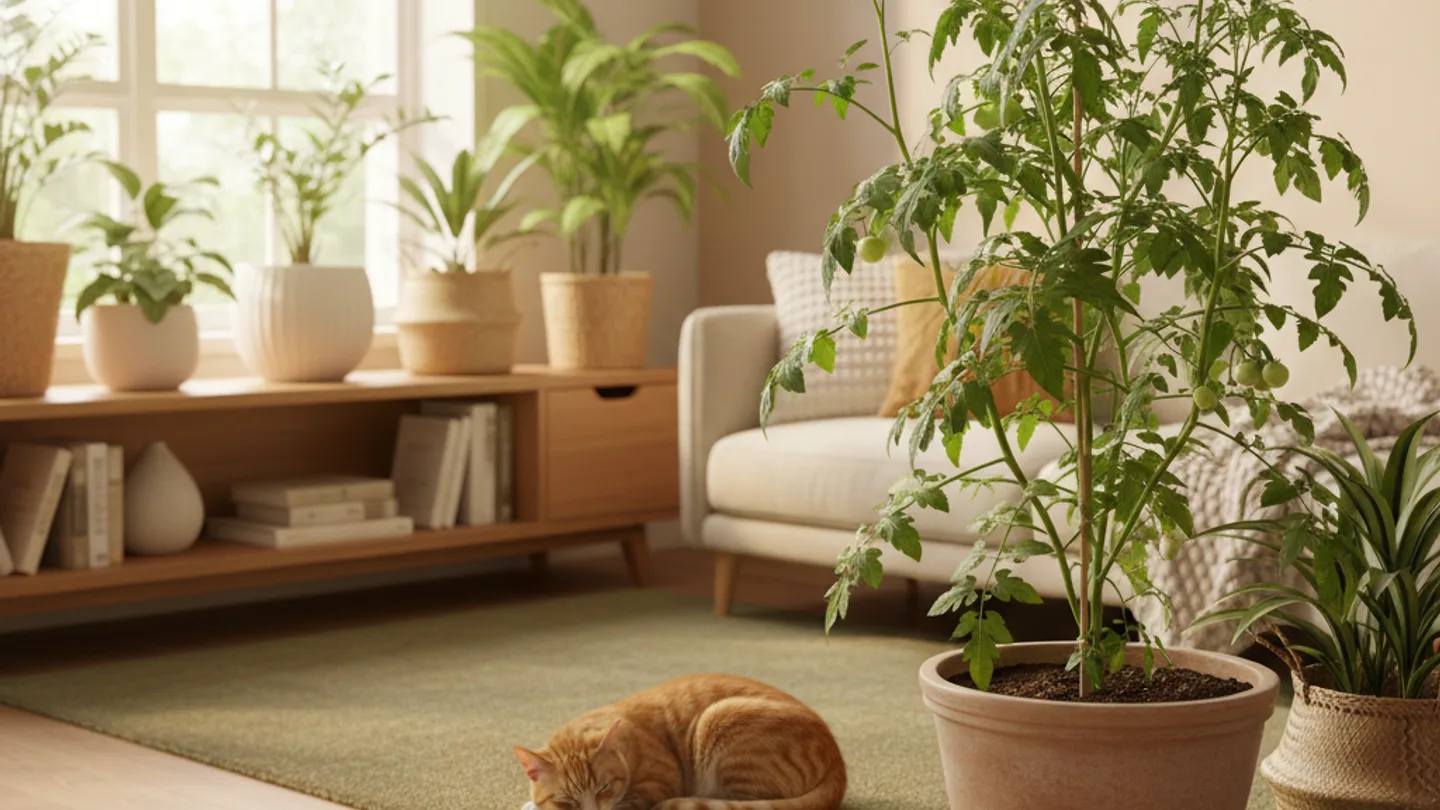
Are Tomato Plants Toxic to Cats and Dogs?
Yes, tomato plants are toxic to both cats and dogs. The leaves, stems, and unripe green fruit contain natural toxins that can cause stomach upset and lethargy if your pet chews on them.
The good news: ripe red tomatoes are generally safe for pets in small amounts. And if you grow tomatoes on a balcony or in a garden, a few simple steps can keep your pet and your harvest safe at the same time.
The short answer
- Tomato plants are toxic to cats and dogs. The leaves, stems, and green unripe fruit are the problem parts.
- The main toxins are solanine and tomatine, natural compounds that can cause GI upset, drooling, and lethargy.
- Ripe red tomatoes are generally considered safe in small amounts.
- Most cases are mild, but large amounts can cause more serious symptoms. Call your vet if symptoms appear.
- You can still grow tomatoes with pets around. Plan your edible garden with access in mind.
Why tomato plants are toxic
Tomatoes belong to the nightshade family, the same plant family as potatoes and eggplants. Like many nightshades, tomato plants produce natural defense chemicals to stop insects and animals from eating them.
The two main compounds are solanine and tomatine. Solanine is a bitter toxin found in the green parts of the plant. Tomatine is a similar compound, concentrated in the leaves, stems, and unripe fruit.
In plain words: these chemicals irritate the digestive system. If your cat or dog chews on the foliage or bites into a green tomato, the body reacts with vomiting or diarrhea as it tries to get rid of the toxin.
The highest concentration sits in the leaves and stems. Green, unripe tomatoes contain less, and fully ripe red tomatoes contain only trace amounts, which is why the ripe fruit is a different story.
What happens if your pet eats tomato plant parts
Most pets that nibble a leaf or two develop mild symptoms. Watch for:
Vomiting and diarrhea
Drooling or foaming at the mouth
Loss of appetite
Lethargy, meaning your pet seems unusually tired or slow
Larger amounts can cause more serious signs, such as weakness, confusion, a slowed heart rate, or dilated pupils. This is uncommon, but it is possible if a dog eats a lot of foliage or several green tomatoes.
Never call a plant completely harmless, and never wait out clear symptoms. If your pet has eaten a known amount of tomato plant material, or shows any of the signs above, contact your vet or a pet poison hotline. Bring a photo or a piece of the plant if you can. It helps the vet confirm what your pet ate.
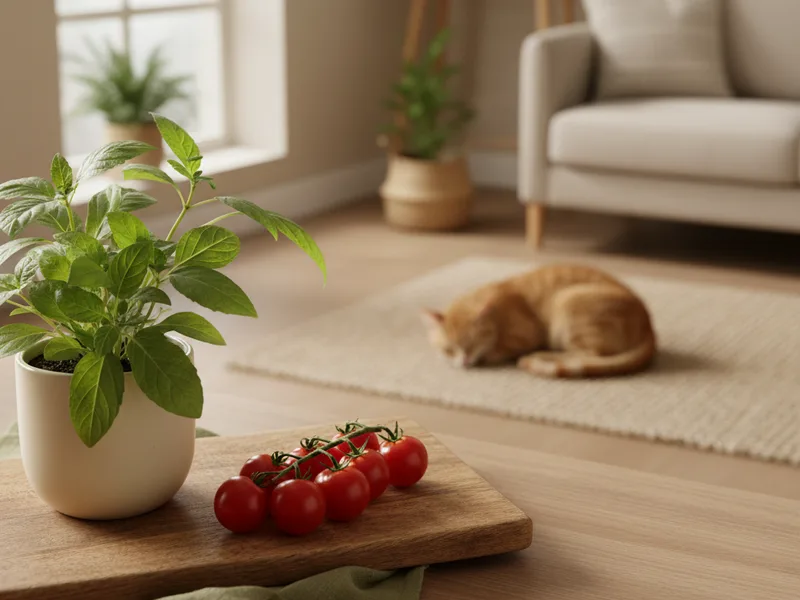
Are ripe tomatoes safe for cats and dogs?
Ripe red tomatoes are generally considered non-toxic to cats and dogs in small amounts. The ripening process breaks down most of the tomatine, so a slice of red tomato is a very different risk than a mouthful of leaves.
That said, tomato is not a necessary part of a pet's diet. A small piece now and then is fine for most healthy dogs. For cats, who are strict meat eaters, it offers little value and most will not be interested anyway.
Skip the ketchup, sauces, and seasoned tomato dishes. These often contain onion, garlic, salt, or sugar, which are a real problem for pets. Plain, ripe, red tomato only, and only a little.
If your pet has a sensitive stomach or a health condition, ask your vet before sharing any human food.
Growing tomatoes with pets: balcony and garden tips
You do not have to give up your vegetable garden. You just need to plan it around your pet.
On balconies, grow tomatoes in tall planters or raised containers your pet cannot easily reach. Hanging baskets work for trailing varieties. Keep pruned leaves and stems in a closed bag or bin, not on the ground where a curious dog will find them.
In yards, a simple low fence or mesh barrier around the vegetable bed keeps most dogs out. Cats are harder to fence, so for outdoor cats the safer route is raised beds combined with supervision, or moving tomatoes to a spot the cat rarely visits.
Harvest green tomatoes promptly if a frost or storm is coming, and pick up any fallen fruit. A dropped green tomato at ground level is exactly the kind of thing a dog will sample.
If you use a greenhouse or cold frame, treat it as a pet-free zone. Concentrated plant material in an enclosed space raises the chance of a big exposure.

Planning a pet-safe edible garden
A pet-safe edible garden starts with plant choice. Many popular edibles are generally considered safe for cats and dogs, including basil, rosemary, thyme, cucumbers, zucchini, lettuce, and strawberries.
Others need the same caution as tomatoes. Potatoes and eggplants are nightshades with toxic green parts. Onions, garlic, chives, and leeks are all toxic to cats and dogs, even in small amounts, so grow them behind a barrier or skip them.
Group the risky plants together in one fenced or raised section, and keep the safe herbs and vegetables in open areas your pet can walk past. That way your pet gets freedom, and you get your harvest.
Curious about herbs indoors? Our guide on whether lavender is toxic to cats and dogs covers another popular plant for sunny windowsills.
Common questions about tomato plants and pets
Is a tomato plant toxic to dogs if it only eats one leaf?
One leaf usually causes mild symptoms at most, such as slight stomach upset or drooling. Watch your dog for the next 24 hours. If vomiting, diarrhea, or lethargy appears, call your vet.
Are cherry tomato plants also toxic to cats?
Yes. Cherry tomato plants contain the same toxins as full-size varieties. The leaves, stems, and unripe fruit are all toxic to cats, so treat them with the same caution.
My dog ate a green tomato. What should I do?
A single green tomato often causes mild GI upset, but it contains more toxin than a ripe one. Watch for vomiting, diarrhea, or unusual tiredness and call your vet if symptoms appear or if your dog ate several.
Can cats eat ripe tomatoes?
A small piece of ripe red tomato is generally considered safe, but cats gain little from it and most will not want it. Never offer tomato sauce or seasoned tomato products, which may contain onion or garlic.
Which vegetable garden plants are most dangerous for pets?
Onions, garlic, chives, and leeks are toxic to cats and dogs even in small amounts. Nightshades like tomatoes, potatoes, and eggplants have toxic leaves, stems, and unripe fruit. Plan access barriers around these.
Are tomato plant flowers toxic?
Yes. The flowers are part of the green plant material and contain the same toxins as the leaves and stems. Keep pets from chewing any part of the plant besides the ripe fruit.