Is Lucky Bamboo Toxic to Cats and Dogs?
Lucky bamboo is toxic to cats and dogs. Despite the name, it is not bamboo at all. It is a dracaena, Dracaena sanderiana, and dracaenas contain compounds that can make your pet sick.
The good news: true bamboo is generally considered non-toxic to cats and dogs. So if you love the look, you have safe options.
This guide covers why lucky bamboo is a risk, the symptoms to watch for, what to do if your pet takes a bite, and pet-safe swaps that give you the same calm, green look.
Why lucky bamboo is toxic: it is a dracaena, not bamboo
Lucky bamboo is usually sold in a small vase of water, often with curled or braided stalks. It looks like bamboo, but botanically it belongs to the dracaena family, the same group as the corn plant and the dragon tree.
The ASPCA lists dracaena species as toxic to both cats and dogs. The problem compounds are saponins. Saponins are natural, soap-like chemicals the plant makes to protect itself. When a pet chews or swallows them, they irritate the mouth, stomach and intestines.
True bamboo, the tall grass in the Bambusoideae family, is a completely different plant. It is generally considered non-toxic to cats and dogs. The shared name is marketing, not botany, and it trips up a lot of well-meaning pet owners.
Symptoms of lucky bamboo poisoning
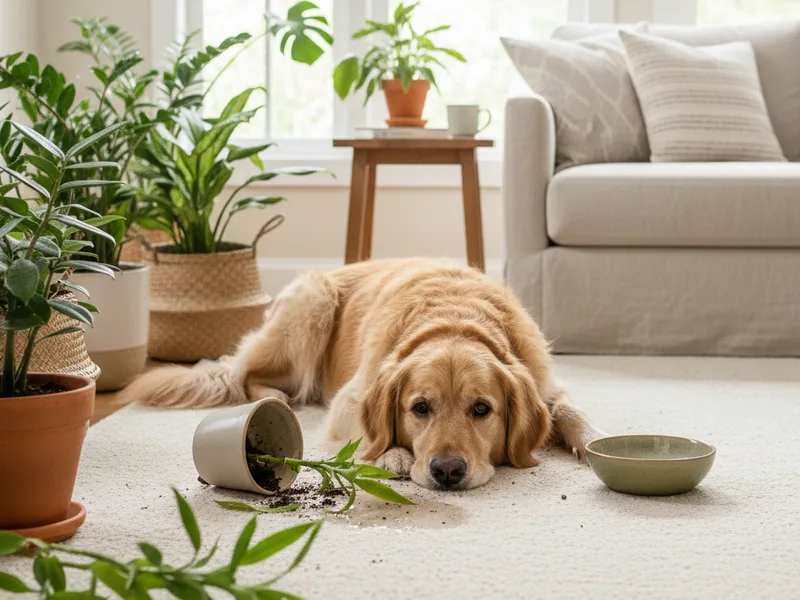
Most cases are mild to moderate, but they are uncomfortable for your pet and worth taking seriously. Keep sentences in mind, not panic: know the signs and act on them.
Watch for vomiting, sometimes with blood, drooling, loss of appetite and low energy or depression. These are the classic signs of dracaena ingestion in both cats and dogs.
Cats can show one extra symptom: dilated pupils. If your cat's eyes look unusually wide and dark after chewing on a plant, treat that as a real warning sign, not a quirk.
No plant incident should be waved off as harmless. If symptoms appear, contact your vet. Tell them what plant it was, roughly how much is missing and when it happened.
The short version
- Lucky bamboo is toxic to both cats and dogs.
- It is a dracaena, not true bamboo. Its saponins irritate the mouth and digestive tract.
- Typical symptoms are vomiting, drooling and appetite loss. Cats may also get dilated pupils.
- Call your vet if your pet shows symptoms after chewing the plant.
- True bamboo, bamboo palm and parlor palm are pet-safe swaps with a similar look.
What to do if your pet eats lucky bamboo
Move your pet away from the plant
Gently remove any leaf or stalk pieces from your pet's mouth. Put the plant somewhere your pet cannot reach, or move your pet to another room.
Note what was eaten
Check the plant for bite marks. Estimate which part is missing and how much, and note the time. This helps your vet judge the situation.
Call your vet
Describe the plant, the amount and any symptoms. If your vet is closed, call an animal poison line such as the ASPCA Animal Poison Control Center or the Pet Poison Helpline.
Follow the advice you are given
Do not make your pet vomit unless a professional tells you to. Keep an eye on vomiting, drooling and energy levels for the rest of the day.
Desk plants and gifts: where lucky bamboo causes trouble
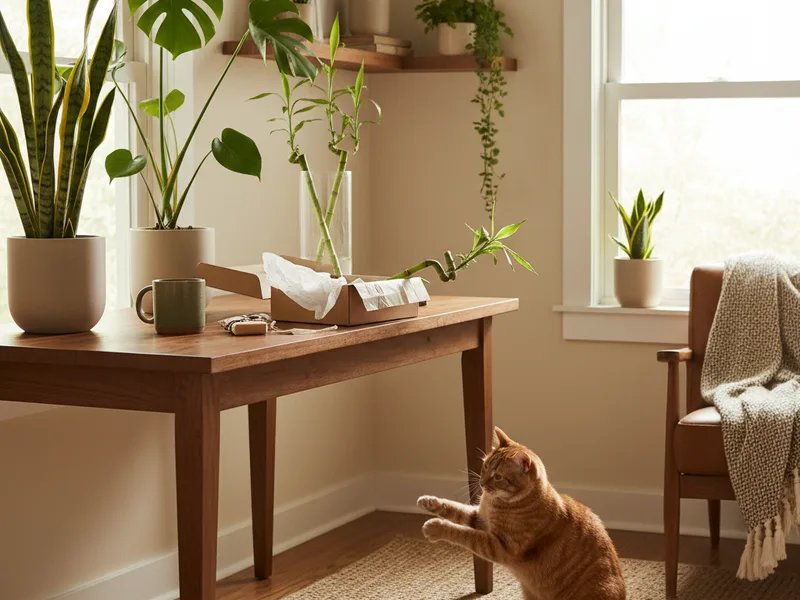
Lucky bamboo thrives in low light and small vases, which makes it a classic desk plant. That is exactly the problem. A home office desk puts the stalks right at cat height, and cats treat dangly green leaves on a desk as an invitation.
It is also one of the most gifted plants in the US, for housewarmings, new jobs and Lunar New Year. The person receiving it may have no idea it is a dracaena, or that dracaenas are toxic to pets. If you give plants to a pet owner, pick a safe swap or at least add a note.
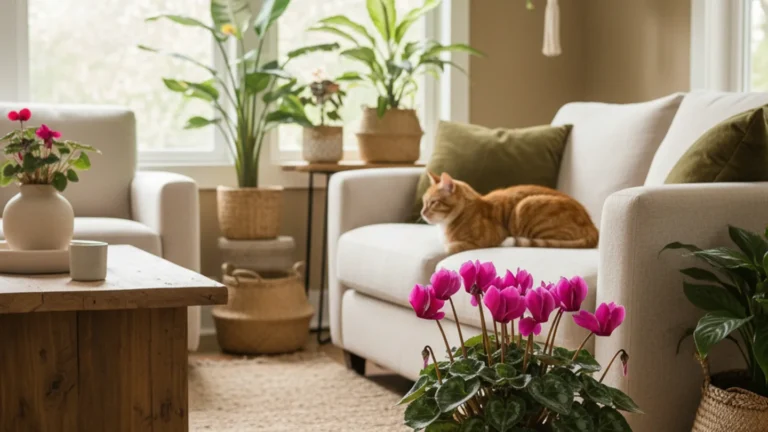
Putting the vase on a high shelf sounds easy, but cats climb. A safer move is to swap the plant, or keep it in a room your pets cannot enter. The same logic applies to other popular plants with hidden risks, like monstera on the office shelf or a gifted cyclamen on the windowsill.
| Plant | Toxic to cats and dogs? | Light needs | Look and feel |
|---|---|---|---|
| Lucky bamboo (Dracaena sanderiana) | Yes, toxic to both | Low to bright indirect light | Straight or curled stalks, often grown in water |
| True bamboo (Bambusa and relatives) | Generally considered non-toxic | Bright indirect light, some direct sun | Real bamboo canes with slim leaves |
| Bamboo palm (Chamaedorea seifrizii) | Generally considered non-toxic | Medium to bright indirect light | Slender canes with soft, feathery fronds |
| Parlor palm (Chamaedorea elegans) | Generally considered non-toxic | Low to medium light | Compact, lush green fronds for desks and shelves |
| Money tree (Pachira aquatica) | Generally considered non-toxic | Medium to bright indirect light | Braided trunk, a popular gift plant |
Common questions about lucky bamboo and pets
Is lucky bamboo toxic to cats?
Yes. Lucky bamboo is a dracaena, and its saponins can cause vomiting, drooling and appetite loss in cats. Cats may also develop dilated pupils. If your cat shows symptoms after chewing the plant, call your vet.
Is lucky bamboo toxic to dogs?
Yes, dogs are affected too. The same saponins irritate a dog's mouth, stomach and intestines, leading to vomiting and drooling. Contact your vet if your dog has eaten part of the plant and seems unwell.
Is the water in a lucky bamboo vase dangerous?
The plant itself is the main risk, but the stalks sit in that water, so it can pick up plant compounds. Do not let pets drink from the vase. A lid, a heavy cover or a room your pets cannot enter all work.
Is real bamboo safe for cats and dogs?
True bamboo, the grass family plant, is generally considered non-toxic to cats and dogs. Check the label before you buy. If it says Dracaena sanderiana, you are holding lucky bamboo, not real bamboo.
What is a good pet-safe swap for lucky bamboo?
Bamboo palm gives you tall, slender canes. Parlor palm fits the same low-light desk spot. Money tree works as a gift with a similar braided look. All three are generally considered non-toxic to cats and dogs.
Can I keep lucky bamboo if I put it up high?
It is risky, especially with cats. Cats climb shelves, desks and bookcases with ease. Swapping the plant for a safe look-alike is simpler and safer than trying to out-place a curious cat.