Is Snake Plant Toxic to Cats and Dogs?
Yes, snake plants are toxic to cats and dogs. The plant contains saponins, natural chemicals that irritate the stomach. The good news: most cases are mild and pass on their own.
Snake plant (Sansevieria trifasciata, also sold as mother-in-law's tongue) is one of the most popular houseplants in the US. It is tough, upright and happy in low light. Here is what happens if your cat or dog chews a leaf, when to call the vet, and a safe swap with the same bold look.
Snake plant and pets: the short answer
- Snake plants are mildly toxic to both cats and dogs. The cause is saponins in the leaves.
- Chewing usually leads to nausea, vomiting or diarrhea. Serious poisoning is rare.
- Call your vet if vomiting or diarrhea keeps going, or if your pet seems weak or refuses food.
- A ponytail palm or cast iron plant gives a similar upright look and is generally considered non-toxic.
- Want to keep your snake plant? Put it on a high shelf or in a room your pet cannot enter.
Why snake plants are toxic: saponins in plain words
Saponins are natural chemicals that many plants make to protect themselves from insects and fungi. In snake plants they sit in the leaves, from the base to the tip.
When a cat or dog chews and swallows a leaf, saponins irritate the lining of the stomach and intestines. That irritation is what causes the nausea and vomiting.
Saponins work differently from the toxin in some other popular plants. Pothos and Monstera contain calcium oxalate crystals, tiny sharp crystals that scratch the mouth and throat on contact. Snake plant saponins mainly upset the stomach after swallowing.
Why are serious cases rare? Two reasons. First, the leaves are tough and taste bitter, so most pets stop after one bite. Second, saponins irritate the gut but do not attack organs like the kidneys or liver. A pet would need to eat a large amount to become seriously ill.
That puts the snake plant in a very different category from true lilies, which can cause kidney failure in cats, or sago palm, which can cause liver failure in dogs. Mildly toxic still means toxic though. A chewed leaf followed by symptoms is always worth a call to your vet.
Symptoms to watch for
Signs a cat has chewed a snake plant
Symptoms usually start within a few hours of chewing. The most common signs are drooling, vomiting and diarrhea. Some cats lick their lips a lot or swallow repeatedly, which points to nausea.
A cat that ate a small amount may just seem quiet or skip a meal. Most cats are back to normal within about a day. Kittens and small cats can get sick from less plant material, so watch them more closely.
Signs a dog has eaten snake plant
Dogs show the same basic signs: nausea, vomiting, diarrhea and drooling. Some dogs also seem restless or lick their lips. Puppies and small breeds feel the effects sooner than large dogs.
Most dogs recover within a day with rest and fresh water. If vomiting or diarrhea continues, or your dog seems weak, call your vet.
What to do if your pet eats a snake plant
Move your pet and the plant apart
Take any leaf pieces out of your pet's mouth. Move the plant to a spot your pet cannot reach, or move your pet to another room.
Offer fresh water
A few sips of water help wash the bitter sap out of the mouth. Do not force your pet to drink.
Estimate how much was eaten
Look at the leaf. One chewed tip is very different from several missing blades. Note what time it happened.
Call your vet
Describe the plant, the amount and any symptoms. After hours, call an emergency clinic or an animal poison control service. Do not make your pet vomit unless a vet tells you to.
Watch closely for 24 hours
Most pets feel sick for a few hours and then recover. Ongoing vomiting, diarrhea, weakness or refusing food means it is time for the vet.
When to call the vet right away
Most snake plant nibbles end with a queasy pet and a chewed leaf. Some situations need faster action.
Call your vet the same day if vomiting or diarrhea keeps going, if there is blood in the vomit or stool, or if your pet is shaking, very quiet or unsteady on its feet.
Also call if a kitten, puppy or small dog ate more than a bite. Small bodies have less margin.
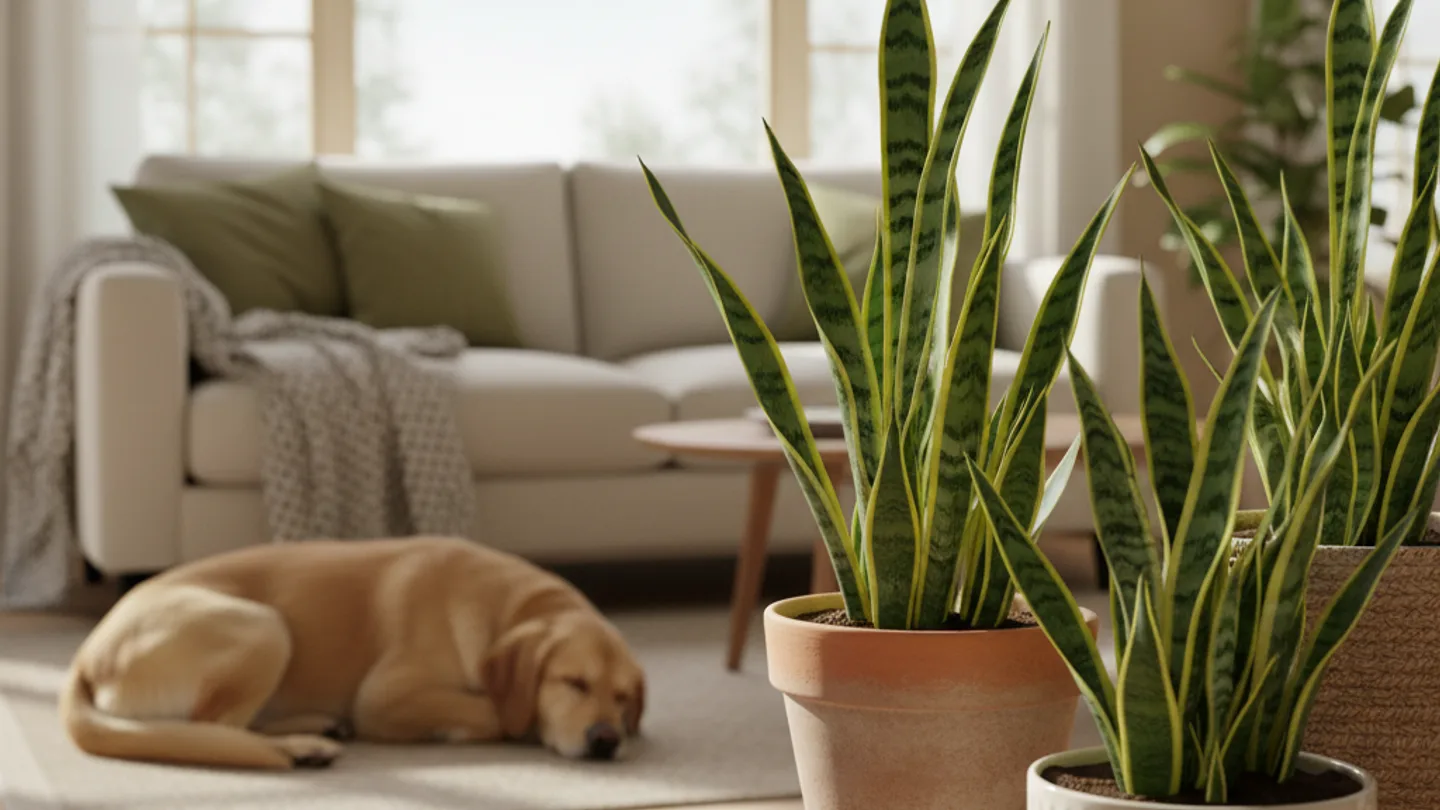
A photo of the plant or a piece of the chewed leaf helps the vet confirm what your pet ate. Snake plant is easy to recognize: stiff, upright blades with green banding, sometimes with yellow edges.
| Plant | Safe for cats and dogs? | Light | Look |
|---|---|---|---|
| Snake plant | Mildly toxic | Low to bright indirect light | Tall, stiff, sword-shaped blades |
| Ponytail palm | Generally considered non-toxic | Bright light | Sculptural trunk with long, strap-like leaves |
| Cast iron plant | Generally considered non-toxic | Low light | Broad, deep green leaves on upright stems |
| Parlor palm | Generally considered non-toxic | Low to medium light | Soft, feathery fronds in a full clump |

Want to keep your snake plant anyway?
You do not have to throw your snake plant out. Mild toxicity plus smart placement works for many homes.
Put the pot on a high shelf or a sturdy plant stand. Then look at the spot from your cat's point of view. If a bookcase or couch leads there, your cat will find it.
A closed door works too. A snake plant in a home office or bedroom your pet never enters is a low risk plant.
If your cat chews every plant it can reach, be honest with yourself. The calm choice is a swap, like the ponytail palm above. Same shape, no worry.
Snake plant and pets: your questions
Is a snake plant toxic to cats?
Yes. Snake plants are mildly toxic to cats because of the saponins in their leaves. Expect drooling, vomiting or diarrhea after chewing. Call your vet if symptoms keep going or your cat seems weak.
Is a snake plant toxic to dogs?
Yes, to dogs as well. The same saponins irritate a dog's stomach and cause nausea, vomiting and diarrhea. Small dogs and puppies show symptoms sooner than large dogs.
How much snake plant is dangerous for a pet?
There is no exact number, and it depends on your pet's size. Most pets get sick only after eating a fair amount. One bite usually means a mild, short stomach upset. A small animal that eats several leaves needs a call to the vet.
What happens if my cat eats a piece of snake plant?
Usually a few hours of nausea, drooling, vomiting or soft stool. Most cats recover within about a day with rest and water. Call your vet if vomiting continues, if there is blood, or if your cat stops eating.
Is there a pet-safe plant that looks like a snake plant?
The ponytail palm is the closest match for that bold, upright look. The cast iron plant works in low light corners. Both are generally considered non-toxic for cats and dogs.
Can I keep a snake plant in a home with pets?
Yes, if the plant is truly out of reach. Think high shelves with no climbing route, or a room your pet cannot enter. For a determined chewer, a safe swap is the calmer option.
Are snake plants toxic to rabbits, birds or other pets?
Saponins can irritate the stomach of many animals, not just cats and dogs. Keep snake plants away from all pets, and ask your vet what is safe for your specific animal.