Are Paperwhites Toxic to Cats and Dogs?
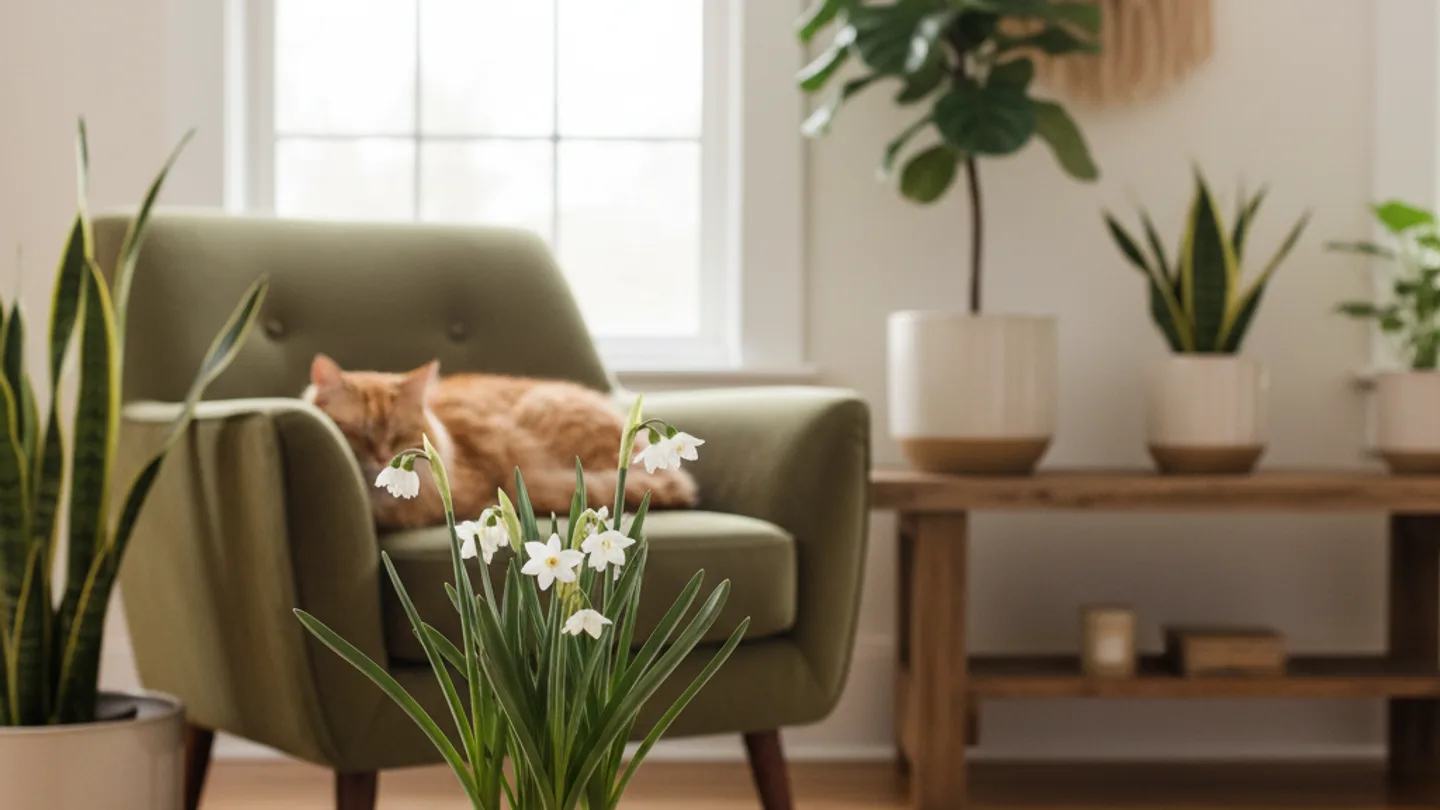
Paperwhites are toxic to both cats and dogs.
These fragrant white narcissus are a holiday favorite, but every part of the plant contains lycorine, a compound that upsets the stomach and can cause more serious problems in larger amounts. The bulbs hold the highest concentration, which matters because paperwhites are usually grown indoors as loose bulbs in shallow bowls or vases.
Here is what that means for your pets, what to watch for, and which winter blooms give you the same look without the risk.
The short version
- Paperwhites are toxic to cats and dogs. They belong to the narcissus family, like daffodils.
- All parts of the plant contain lycorine. The bulbs are the most dangerous part.
- Typical symptoms are vomiting, drooling and diarrhea. Large amounts can cause more serious effects.
- The water from a forcing vase is also a hazard, because compounds can leach into it.
- Pet-safe winter swaps include moth orchids, Christmas cactus and African violets.
- If your pet chews a paperwhite or drinks the vase water, call your vet or a pet poison hotline.
Why paperwhites are risky for pets
Paperwhites are a type of narcissus, the same plant family as daffodils and jonquils. Like all narcissus, they contain lycorine. Lycorine is a natural alkaloid, a bitter compound the plant makes to defend itself. In pets, it strongly irritates the stomach and intestines.
The whole plant is toxic: flowers, leaves, stems and bulbs. But the bulb holds the highest concentration. That is why nibbling a leaf usually leads to a miserable stomach, while chewing or swallowing a bulb can be much worse.
Paperwhites also contain tiny needle-shaped crystals of calcium oxalate in their tissues. Calcium oxalate crystals are tiny sharp crystals that can irritate your pet's mouth and throat, which is why drooling and pawing at the mouth are often the first signs.
The holiday windowsill problem
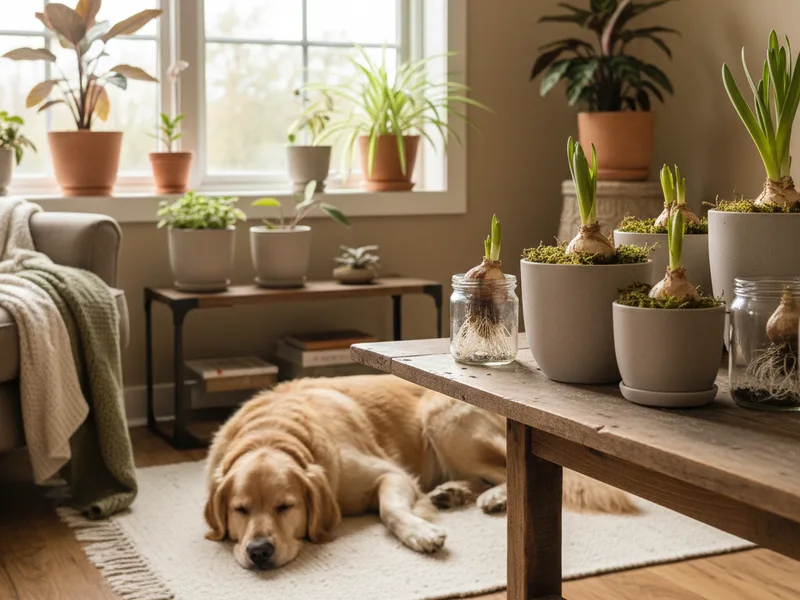
Paperwhites are rarely planted in garden beds in the US. Most people buy them in November or December as loose bulbs, then 'force' them indoors. Forcing means coaxing the bulb to bloom out of season, usually in a shallow bowl of pebbles and water on a sunny windowsill.
This tradition creates three specific risks for pet owners.
First, the bulbs sit exposed. Before the green shoots appear, a paperwhite bulb looks like a small onion or a chew toy, and it sits at cat and dog height. Dogs in particular may dig into the bowl and mouth or swallow a whole bulb, which is the most toxic part.
Second, curious cats bat at the tall, floppy stems and chew the strap-like leaves. The plant often stands on the exact windowsill your cat already owns.
Third, there is the vase water. Water that paperwhite bulbs have sat in can pick up irritating compounds from the bulb. A cat that drinks from the forcing bowl can get an upset stomach even without touching the plant itself. Empty and refresh the water carefully, out of reach, or skip forcing bowls entirely.
Symptoms if your cat or dog eats a paperwhite
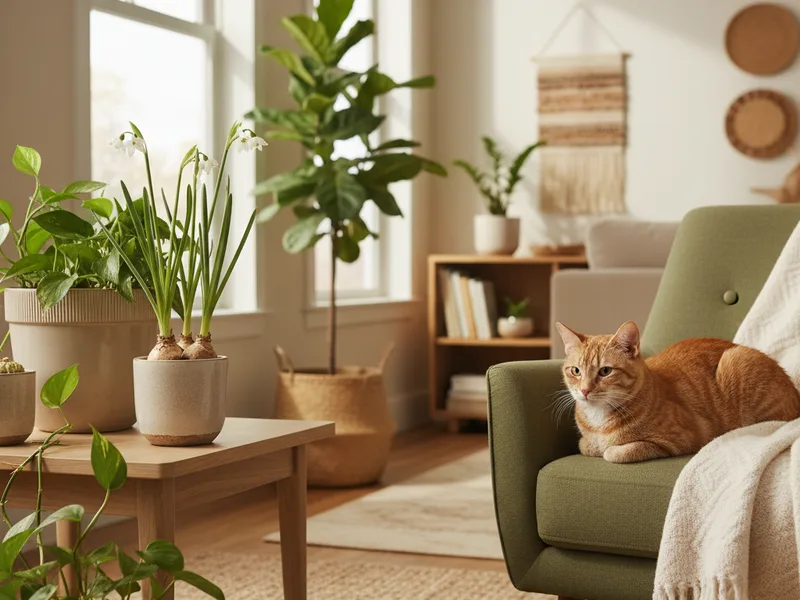
Most cases involve a nibble of a leaf or flower, and most of those stay mild. Signs usually show up within a few hours.
Watch for drooling or pawing at the mouth, vomiting, diarrhea, loss of appetite and low energy. The mouth irritation comes from the oxalate crystals, and the stomach upset comes from the lycorine.
Eating a bulb is a different situation. Because the bulb is the most concentrated part, larger amounts can cause a fast heartbeat, tremors, changes in blood pressure and severe vomiting and diarrhea. This is the scenario where you call the vet right away, even if your pet looks fine so far.
Never wait for symptoms to get worse on their own. If you saw your pet chew a paperwhite, or you find a tipped-over bowl with a missing bulb, call your veterinarian, the ASPCA Animal Poison Control Center or the Pet Poison Helpline. Tell them what plant it was and roughly how much is gone.
Pet-safe winter blooms that give the same look
You do not have to give up winter flowers. You just need swaps that are generally considered non-toxic to cats and dogs while still blooming on a bright windowsill in December and January.
Moth orchids (Phalaenopsis) give you elegant white blooms for months and are widely listed as non-toxic to both cats and dogs. They like the same bright, indirect light as a forcing bowl.
Christmas cactus blooms in winter with pink, red or white flowers, suits small spaces, and is generally considered non-toxic. It is also famously long-lived.
African violets stay compact, flower through winter under bright light, and are considered non-toxic to cats and dogs. A row of three gives a windowsill the same fresh, flowering feel as paperwhites.
One honest note: 'non-toxic' never means a free pass to chew. Any plant can cause a mild stomach upset if your pet eats enough of it, so keep even safe plants out of easy reach and call your vet if symptoms appear.
Already forcing bulbs this year? Do this
If the bowls are already on the windowsill, you have options short of throwing them out.
Move the bowls to a room with a door you can close, or to a high spot your cat genuinely cannot reach. Remember that cats jump higher than most people expect.
If you have a dog that counter-surfs, the bulb stage is the danger window. Consider gifting the bulbs to a pet-free household and starting fresh with a moth orchid instead.
And if a bulb goes missing, assume the dog ate it until proven otherwise. Call your vet with the plant name and the rough amount.
Common questions about paperwhites and pets
Are paperwhites toxic to cats?
Yes. Paperwhites are toxic to cats. They contain lycorine, and the bulbs hold the highest concentration. Even a small nibble can cause drooling, vomiting and diarrhea, so keep forced bowls where your cat cannot reach them.
Are paperwhites toxic to dogs?
Yes, dogs face the same risk, and in practice a higher one. Dogs are more likely to dig up and swallow a whole bulb, which is the most toxic part of the plant. Swallowed bulbs can cause severe vomiting, tremors and heart rhythm changes, so call your vet promptly.
Is the water from a paperwhite vase dangerous?
Treat it as risky. Water the bulbs sit in can pick up irritating compounds, and cats are known to drink from forcing bowls. Change the water out of reach and wipe up spills right away.
Are other narcissus, like daffodils, toxic too?
Yes. Paperwhites are a narcissus, and the whole family, including daffodils and jonquils, contains lycorine. The same rule applies: bulbs are the worst part, and pets should not chew any of it.
What should I do if my pet eats part of a paperwhite?
Remove any plant pieces from the mouth, note what part and roughly how much was eaten, and call your veterinarian or a pet poison hotline such as the ASPCA Animal Poison Control Center or the Pet Poison Helpline. Do not induce vomiting unless a professional tells you to.
What can I grow instead for winter fragrance?
For fragrance, that is the hardest part to replace safely. Moth orchids, Christmas cactus and African violets give you winter blooms without the toxicity, but they are not strongly scented. If scent matters most, consider cut flowers in a closed room rather than a forced toxic bulb in reach. Always check a plant's status before buying; our guide to [cyclamen](is-cyclamen-toxic) covers another common winter windowsill plant.