Are Sunflowers Toxic to Cats and Dogs?
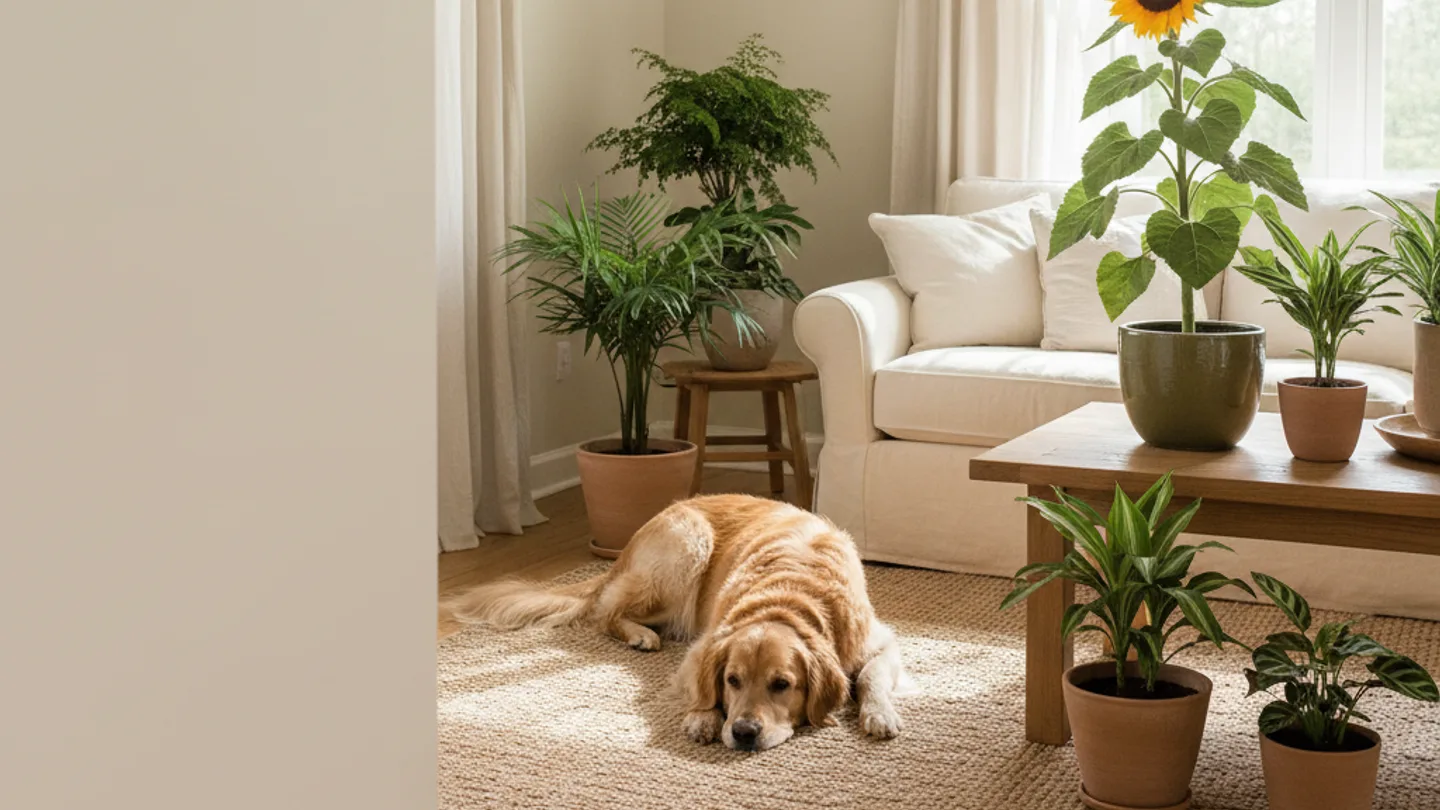
Good news: sunflowers are generally considered non-toxic to cats and dogs. If your dog grabs a petal or your cat chews a leaf, the plant itself is not a poisoning emergency.
The main caveat is volume. A big serving of any plant can sit badly in a small stomach, and sunflower snacks for people come with extra problems like salt and shells. Here is how to keep the sunny bouquet and skip the worry.
The short version
- Sunflowers are generally considered non-toxic to cats and dogs.
- Eating a lot of any plant can still cause mild vomiting or diarrhea.
- The bigger seed risks are salt, seasonings, and sharp shell pieces, not sunflower poison.
- Keep bouquets where pets cannot pull them down, and call a vet if symptoms are strong, repeated, or your pet seems unwell.
- For the same sunny mood, look at gerbera daisies, zinnias, snapdragons, petunias, and roses, then double check the exact species before buying.
Verdict first
Are sunflowers toxic to dogs and cats?
If you came here asking, are sunflowers toxic to dogs, the answer is reassuring: they are generally considered non-toxic. The same is true for cats.
That means the petals, leaves, and stems are not the kind of plant toxin that makes some ornamentals so risky. It does not make the plant a snack. It means a curious nibble usually stays a small problem.
This is the pattern we use across Pawproof Plants: verdict first, then the exceptions. For plants with a different answer, see our guides to cyclamen, monstera, and lavender.
| Flower | Pet safety note | Light | Why it fits |
|---|---|---|---|
| Gerbera daisy | Generally considered non-toxic. Big mouthfuls can still upset stomachs. | Bright sun | Bold daisy face in warm colors. |
| Zinnia | Generally considered non-toxic. | Full sun | Bright summer color for beds and cutting. |
| Snapdragon | Generally considered non-toxic. | Sun to part sun | Tall, happy spikes near the back of a pot or border. |
| Petunia | Generally considered non-toxic. | Sun | Soft color for railing boxes and porch pots. |
| Rose | Generally considered non-toxic. Watch thorns. | Sun | Classic cheerful blooms, best where pets will not brush past thorns. |
When a safe plant can still cause a tummy ache
Non-toxic is not the same as edible. Leaves and petals are fibrous, and many pets chew first and swallow fast. A few bites may pass with no drama. A stolen bouquet can be different.
Watch for mild vomiting, soft stool or diarrhea, drooling, lip smacking, or a short dip in appetite. These signs are often about irritation or volume, not poisoning. Offer water, remove the plant, and keep the next meal simple if your vet agrees.
Call your vet sooner for repeated vomiting, blood, weakness, a swollen belly, refusal to drink, or symptoms in a puppy, kitten, senior pet, or pet with a health condition. If you know your pet ate seasoned snacks or a lot of shells, say that on the phone.
Quick plan
If your pet ate sunflower
Move the plant and snacks
Pick up fallen petals, seeds, and shells. Put bouquets and garden clippings behind a closed door or high enough that your pet cannot pull them down.
Estimate the amount
Note what part was eaten, about how much is missing, and when it happened. Keep the plant label or snack bag handy.
Offer water and watch
Let your pet rest. Watch for vomiting, diarrhea, drooling, belly discomfort, or low energy through the rest of the day.
Call your vet with details
Call sooner for repeated symptoms, blood, weakness, refusal to drink, or if a small, young, senior, or medically fragile pet is involved.
Sunflower seeds, shells, and snack mixes
For seeds, the question is less about poison and more about the format. Plain sunflower seeds are not the same as a salted bag from the gas station. Salt makes pets thirsty fast, and too much can become a real problem.
Shells are the other issue. They are rough, they can wedge between teeth or scrape the mouth and throat, and a pile of shell pieces can be hard on the gut. Many pets also swallow snacks before the shell is fully cracked.
Skip sharing seasoned sunflower snacks, including salty, spicy, smoky, or sweet coated mixes. If you want to share a seed, ask your vet first, keep it plain and unsalted, remove the shell, and treat it as a rare extra rather than a routine treat.
Sunflower questions pet owners ask
Are sunflowers toxic to dogs?
No, sunflowers are generally considered non-toxic to dogs. The usual risk is an upset stomach after eating a lot, or problems from salted snacks and shells.
Are sunflowers toxic to cats?
Sunflowers are generally considered non-toxic to cats too. A chew on a petal or leaf is usually low risk, but a large amount can still cause vomiting or diarrhea.
What happens if my cat eats sunflower leaves?
Many cats have no issue after a small nibble. If your cat ate a lot, watch for drooling, vomiting, soft stool, or low appetite, and call your vet if symptoms repeat or your cat seems unwell.
Can dogs eat sunflower seeds?
Only with care. Ask your vet first, choose plain and unsalted seeds, remove the shell, and keep the amount tiny. Do not share salted or seasoned snack mixes.
Are sunflower petals safe in a vase?
The petals are generally considered non-toxic. The bigger household risk is a pet pulling the whole arrangement down, so place it where it cannot be tipped.
When should I call the vet?
Call for repeated vomiting, blood, weakness, a swollen belly, refusal to drink, or any symptom in a puppy, kitten, senior pet, or pet with a health condition. Mention salt, seasonings, or shells if those were eaten.