Colorful Pet-Safe Plants: Pattern and Color Without the Risk
Croton is one of the most colorful houseplants you can buy. It is also toxic to cats and dogs. If you have been eyeing one on Instagram and reluctantly putting it back, this list is for you.
Every plant below is generally considered non-toxic to both cats and dogs, with bold foliage that rivals the drama of a croton. Verdict first, care and styling tips after, so you can scan fast on your phone.
One honest note up front: non-toxic does not mean zero risk. Any plant can cause a mild stomach upset if your pet eats enough of it. If your pet shows symptoms after chewing on a plant, call your vet.
The short version
- Croton is toxic to cats and dogs. Its sap can irritate the mouth, skin and stomach.
- Calathea, polka dot plant, nerve plant, purple passion plant and bromeliads are all generally considered non-toxic to cats and dogs.
- All five deliver strong color or pattern, so you do not have to choose between style and safety.
- Match the plant to your light: bromeliad and purple passion want bright light, calathea and nerve plant prefer lower, indirect light.
- Even non-toxic plants can cause mild stomach upset if eaten in quantity, so placement still matters.
Why croton is off the table
Croton (Codiaeum variegatum) is toxic to both cats and dogs. The milky sap contains compounds that can irritate the mouth and stomach, and it can also irritate skin on contact.
If your pet chews a croton leaf, you may see drooling, vomiting or diarrhea. It is rarely life-threatening, but it is unpleasant and entirely avoidable.
The good news: the look you want, saturated color and dramatic pattern, exists in plenty of pet-safe plants. Here are five of the best.
Calathea: living stained glass
Verdict: calathea is generally considered non-toxic to both cats and dogs.
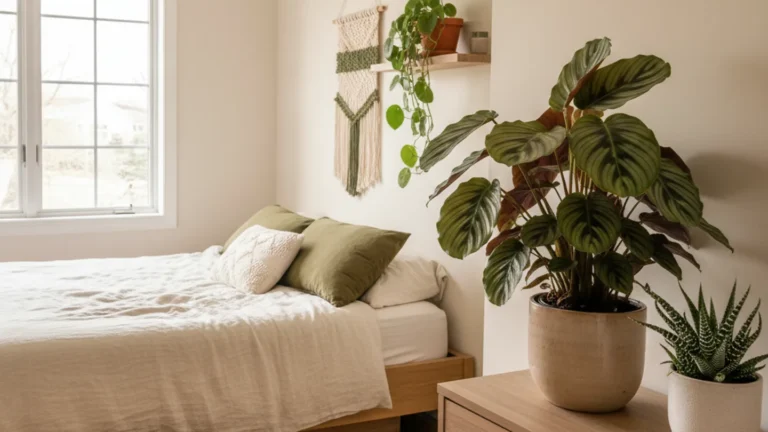
If croton envy is really pattern envy, calathea is your answer. Varieties like Calathea ornata and Calathea medallion carry hand-painted stripes, feathered markings and purple undersides that move as the leaves rise and fold through the day.
Care: calathea likes medium to low indirect light, consistent moisture and higher humidity. A bathroom with a window or a spot a few feet from an east-facing window works well. Use filtered or distilled water if your tap water is hard, because the leaf edges can brown.
Styling tip: calathea's bold pattern does the talking, so keep the pot simple. A matte white or terracotta pot on a plant stand lifts the foliage to eye level and keeps it out of casual chewing range. Group it with plainer green plants so the pattern stands out instead of competing.
Polka dot plant: confetti in a pot
Verdict: the polka dot plant (Hypoestes phyllostachya) is generally considered non-toxic to cats and dogs.
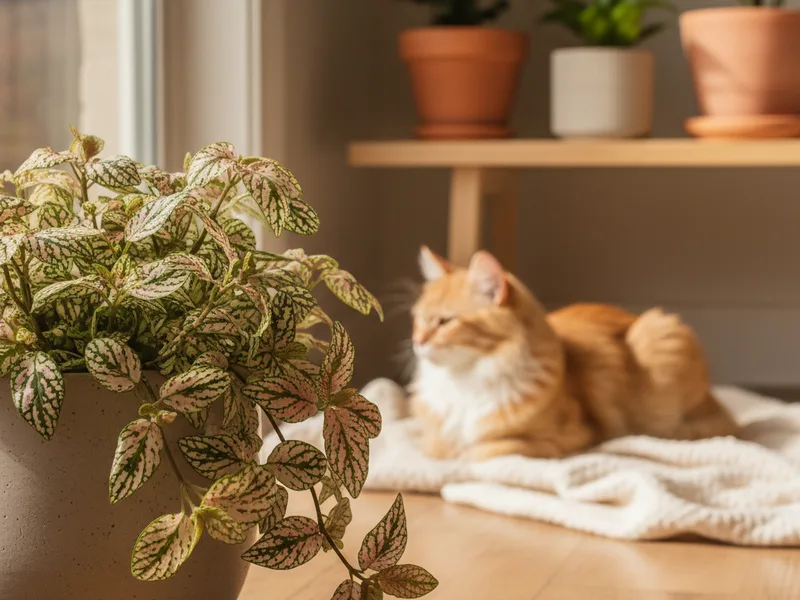
This is the most playful plant on the list. Its green leaves are splashed and dotted with pink, white or red, like someone flicked paint at them. It delivers bright color in a small package, which makes it great for shelves and desks.
Care: bright, indirect light keeps the pink vivid. In low light the color fades toward green. Water when the top inch of soil dries out, and pinch the stems back now and then to keep the plant bushy instead of leggy.
Styling tip: polka dot plant shines as an accent. Tuck one into a shelf between books, or plant three together in a wide bowl for a fuller, more saturated look. The pink varieties pair beautifully with dark green foliage plants nearby.
Nerve plant: dramatic veining for low light
Verdict: the nerve plant (Fittonia) is generally considered non-toxic to cats and dogs.
Fittonia's leaves are veined in white, pink or red against deep green, so the pattern reads almost like a mosaic. It stays small and low, which makes it one of the few colorful plants that genuinely thrives in a terrarium.
Care: it prefers low to medium indirect light and dislikes direct sun, which scorches the leaves. Keep the soil lightly moist. Fittonia is famous for fainting, meaning it flops dramatically when thirsty, but it usually perks back up within hours of watering.
Styling tip: use nerve plant as ground cover in a larger planter, or let it spill over the edge of a small pot on a bathroom shelf. Its love of humidity makes it a natural terrarium star, and a closed glass terrarium doubles as a pet barrier.
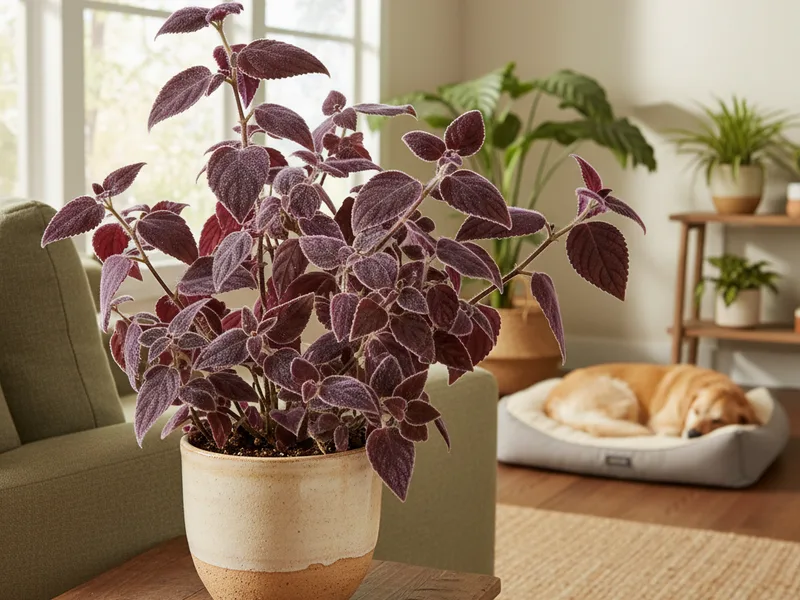
Purple passion plant: velvet and violet
Verdict: purple passion plant (Gynura aurantiaca) is generally considered non-toxic to cats and dogs.
This one wins on texture. The green leaves are covered in soft purple hairs, so the whole plant shimmers violet when the light hits it. It is the closest thing to croton's saturated, almost unreal color on the pet-safe list.
Care: give it bright, indirect light to keep the purple intense. Water at the base and avoid soaking the leaves, because water sitting on the fuzzy foliage can cause spotting. Pinch the tips to keep it compact, since it trails if left alone.
Styling tip: purple passion looks best where light can graze across the leaves, like a plant stand near a bright window. Let it trail from a hanging planter high enough that curious cats cannot use it as a swing. One plant per pot, because the velvety texture gets lost in a crowd.
Bromeliad: a bloom that lasts for months
Verdict: bromeliads are generally considered non-toxic to cats and dogs.
If what you loved about croton was the bold red, orange and pink, a bromeliad gives you that color in flower form. Guzmania and similar bromeliads send up a bright central bloom that can hold its color for months, not weeks.
Care: bromeliads like bright, indirect light and tolerate average home humidity better than most tropicals. Water into the central cup of the plant rather than the soil, and empty and refresh that cup every week or two so it stays clean.
Styling tip: a bromeliad is a natural centerpiece. Set one on a dining table or kitchen counter as a living alternative to cut flowers. The stiff, glossy leaves look sculptural on their own, so a simple pot in a neutral color is all it needs.
| Plant | The color you get | Light it wants | Care level | Best spot |
|---|---|---|---|---|
| Calathea | Striped and feathered patterns, purple undersides | Medium to low indirect | Moderate | Bathroom with a window, east-facing room |
| Polka dot plant | Pink, white or red speckles | Bright indirect | Easy to moderate | Shelves, desks, plant clusters |
| Nerve plant | White, pink or red veining | Low to medium indirect | Moderate | Terrariums, humid shelves |
| Purple passion plant | Shimmering purple fuzz | Bright indirect | Easy to moderate | Hanging planter, plant stand near a window |
| Bromeliad | Red, orange or pink long-lasting bloom | Bright indirect | Easy | Table centerpiece, kitchen counter |
Common questions
Is croton toxic to cats and dogs?
Yes. Croton is toxic to both cats and dogs. The sap can irritate the mouth and stomach and may cause drooling, vomiting or diarrhea if chewed. If your pet has eaten croton and shows symptoms, contact your vet.
Are these plants completely harmless if my pet eats them?
No plant is completely harmless. These five are generally considered non-toxic, but any plant material can cause a mild stomach upset if your pet eats enough of it. If symptoms appear, call your vet.
Which colorful pet-safe plant is easiest for a beginner?
Bromeliad is the most forgiving. It tolerates average home conditions, needs watering mainly in its central cup, and its colorful bloom lasts for months with very little effort.
My apartment has low light. Which one still brings color?
Nerve plant and calathea both handle lower, indirect light and keep their pattern. Polka dot plant and purple passion plant need brighter light or their color fades toward green.
How do I keep my cat from chewing even safe plants?
Place plants on stands, shelves or in hanging planters out of easy reach, and give your cat its own pot of cat grass to chew. Many cats lose interest in houseplants once they have a plant of their own.
Building a colorful, pet-safe collection
The simplest approach is to start with one statement plant and build around it. A bromeliad or purple passion plant gives you instant color, then calathea and nerve plant add pattern at lower heights.
Before you buy anything new, check it first. We do the same for the plants you already know, like monstera, pothos and peace lily, all of which are toxic to pets and worth replacing with safer lookalikes.
Color and pet safety are not a trade-off. With these five, you get both.