Nerve Plant Care: Tiny, Dramatic and Safe for Pets
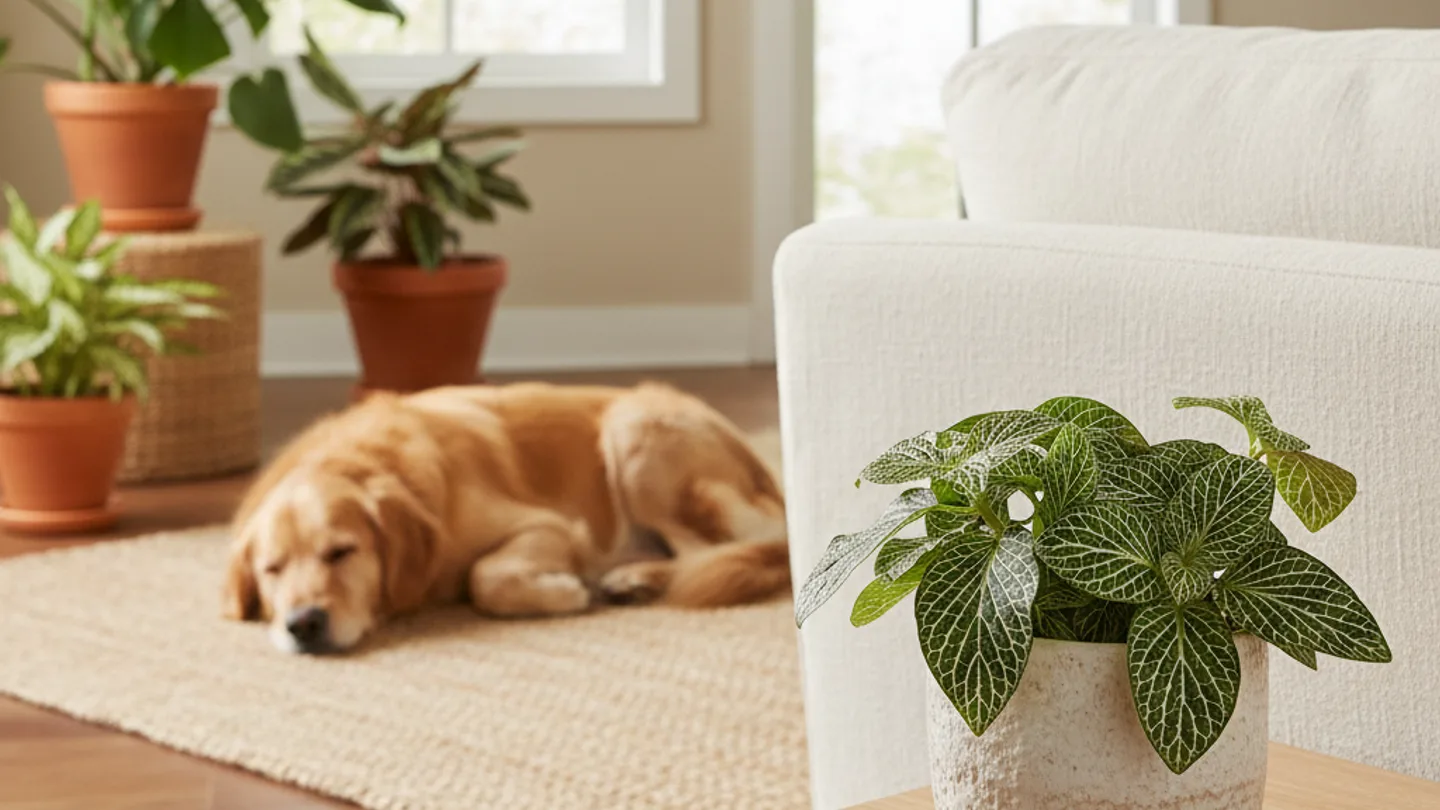
Nerve plants are non-toxic to cats and dogs. That is the answer most people came for, so here it is first.
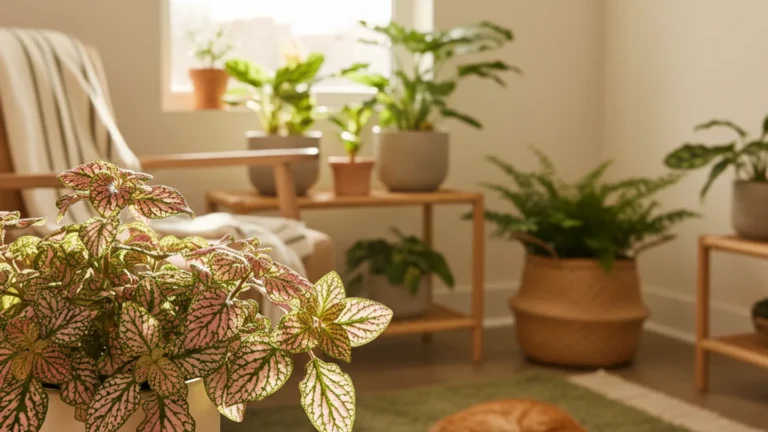
The nerve plant, also called fittonia, is a small tropical plant with striking veined leaves in pink, red or white. It stays compact, loves humidity and has a reputation for fainting dramatically when thirsty.
The good news: that faint looks worse than it is. Water it, and it usually perks back up within hours. Below is everything you need for nerve plant care in a real home with real pets.
Nerve plant care at a glance
- Nerve plants (fittonia) are generally considered non-toxic to cats and dogs.
- They want bright, indirect light and steady moisture. Never let the soil dry out fully.
- High humidity is the secret. Bathrooms, kitchens and terrariums suit them well.
- A collapsed, fainted plant is usually just thirsty. Water it and it often recovers within hours.
- They stay small, so they fit windowsills, desks and small pots.
- Even with a non-toxic plant, a big mouthful of leaves can cause mild stomach upset. Call your vet if symptoms appear.
Is the nerve plant safe for cats and dogs?
Yes. The nerve plant is generally considered non-toxic to both cats and dogs. It contains no known compounds that are poisonous to pets.
That makes it a solid choice if your cat likes to nibble leaves or your dog investigates every new thing on the floor.
A quick note of honesty: non-toxic is not the same as a salad. Eating a lot of any plant can irritate a pet's stomach and cause vomiting or diarrhea. If your pet eats a large amount or shows symptoms, call your vet.
Light: bright but never harsh
Fittonia grows on the rainforest floor, under a canopy. Your goal is to copy that light.
Place it in bright, indirect light. A spot near an east or north-facing window works well. A few feet back from a brighter window works too.
Direct sun scorches the thin leaves and fades the colorful veins. Deep shade makes the plant leggy and dull. It also tolerates lower light better than most houseplants, which is why it works in rooms where fussier plants fail.
Water: consistent, never soggy
This is where nerve plant care gets its dramatic reputation. Fittonia likes evenly moist soil at all times.
Water when the top of the soil starts to feel dry, but before the pot dries out completely. In most homes that means checking every few days.
Use a pot with drainage holes. Soggy soil leads to root rot, which is the one problem a nerve plant will not bounce back from easily.
If you struggle with watering schedules, this plant will train you. It tells you loudly when it is thirsty.
The famous faint
How to revive a fainted nerve plant
Do not panic
A nerve plant that has collapsed flat over the pot looks dead. It usually is not. This is its thirst signal, not a death sentence.
Check the soil
Touch the soil. If it is bone dry, thirst is the cause. If it is wet and the plant still looks limp, skip watering and check the roots for rot instead.
Water thoroughly
Give it a good drink until water runs from the drainage holes. Empty the saucer after a few minutes so the roots never sit in water.
Wait a few hours
Most fainted fittonias stand back up within a few hours, sometimes within the hour. Give it overnight before you worry.
Trim what stays damaged
Leaf tips that dried out during the faint will not recover. Snip them off with clean scissors and adjust your watering routine so it does not happen again.
Humidity: the one thing fittonia really wants
Humidity is the make-or-break factor in nerve plant care. These plants want moist air, far more than the average living room offers, especially in winter when heating dries everything out.
Easy fixes: group it with other plants, set the pot on a tray of pebbles with water below the pot base, or run a small humidifier nearby.
The easiest fix of all is location. A bathroom or kitchen with a window often has naturally humid air. A fittonia on a bathroom shelf is usually a happy fittonia.
Misting helps for a few hours at a time. It is a nice bonus, not a full solution.
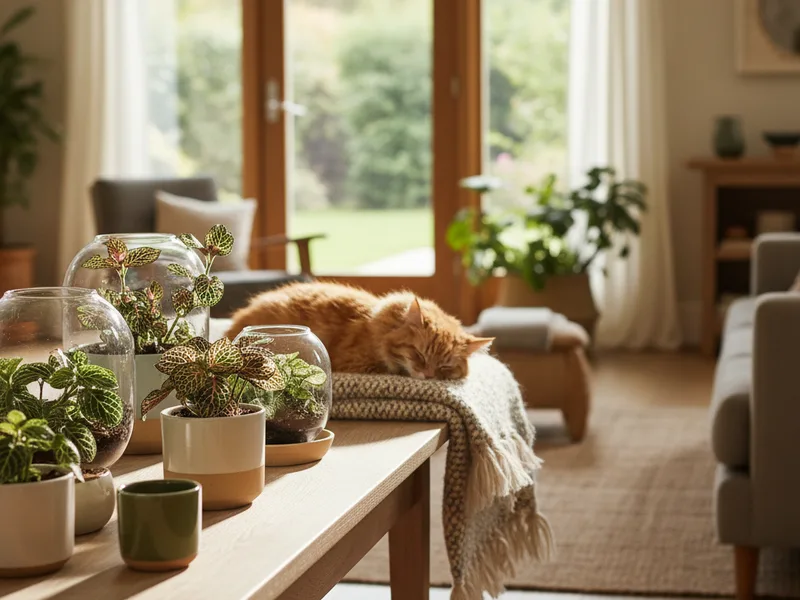
Terrariums and small pots: where nerve plants shine
Few houseplants are as well suited to terrariums as the nerve plant. It stays small, loves the humid air a closed glass container creates and adds bold color at ground level.
In an open terrarium, water sparingly and let air circulate. In a closed one, water even less. The glass traps moisture, so overwatering is the main risk.
Outside a terrarium, fittonia is happiest in a small pot. It rarely grows taller than about 6 inches and spreads slowly. That makes it ideal for desks, windowsills and shelves, including the high shelf your cat cannot reach, even though this plant would forgive the nibble.
Soil, feeding and simple upkeep
Use a standard potting mix that holds some moisture but still drains well. A peat-based or coco coir mix works fine.
Feed lightly during spring and summer, about once a month with a diluted houseplant fertilizer. Skip feeding in fall and winter.
Pinch back the stem tips now and then. Fittonia can get leggy, and pinching keeps it compact and bushy.
Small flowers may appear and most owners snip them off. They are plain, and the plant puts its energy into the leaves, which are the whole point.
Common questions about nerve plants and pets
Is the nerve plant toxic to cats?
No. The nerve plant is generally considered non-toxic to cats. A curious nibble is unlikely to cause harm, though eating a large amount of any plant can lead to mild stomach upset. Call your vet if your cat vomits or seems unwell after chewing on it.
Is the nerve plant toxic to dogs?
No, it is also considered non-toxic to dogs. The same rule applies: safe does not mean edible. If your dog eats a lot of the plant or shows symptoms, contact your vet.
Why does my nerve plant keep fainting?
Fainting almost always means thirst. Fittonia collapses when the soil dries out too far. Water it well and it usually recovers within hours. If it happens often, water a little more frequently or move it away from direct sun and heat sources.
Can a nerve plant live in low light?
It tolerates lower light better than most houseplants, but it still needs some brightness to keep its color. Bright, indirect light is ideal. In very dim spots it will survive but grow slowly and lose its vivid veining.
Is a nerve plant a good terrarium plant?
Yes, one of the best. It stays small, loves the humidity inside glass and adds strong color. Just water sparingly, since terrariums hold moisture for a long time.
How often should I water a nerve plant?
There is no fixed schedule, because homes differ. Check the soil every few days and water when the top starts to feel dry. The goal is evenly moist soil, never bone dry and never soggy.