Maidenhair Fern Care: Delicate, Demanding and Pet-Safe
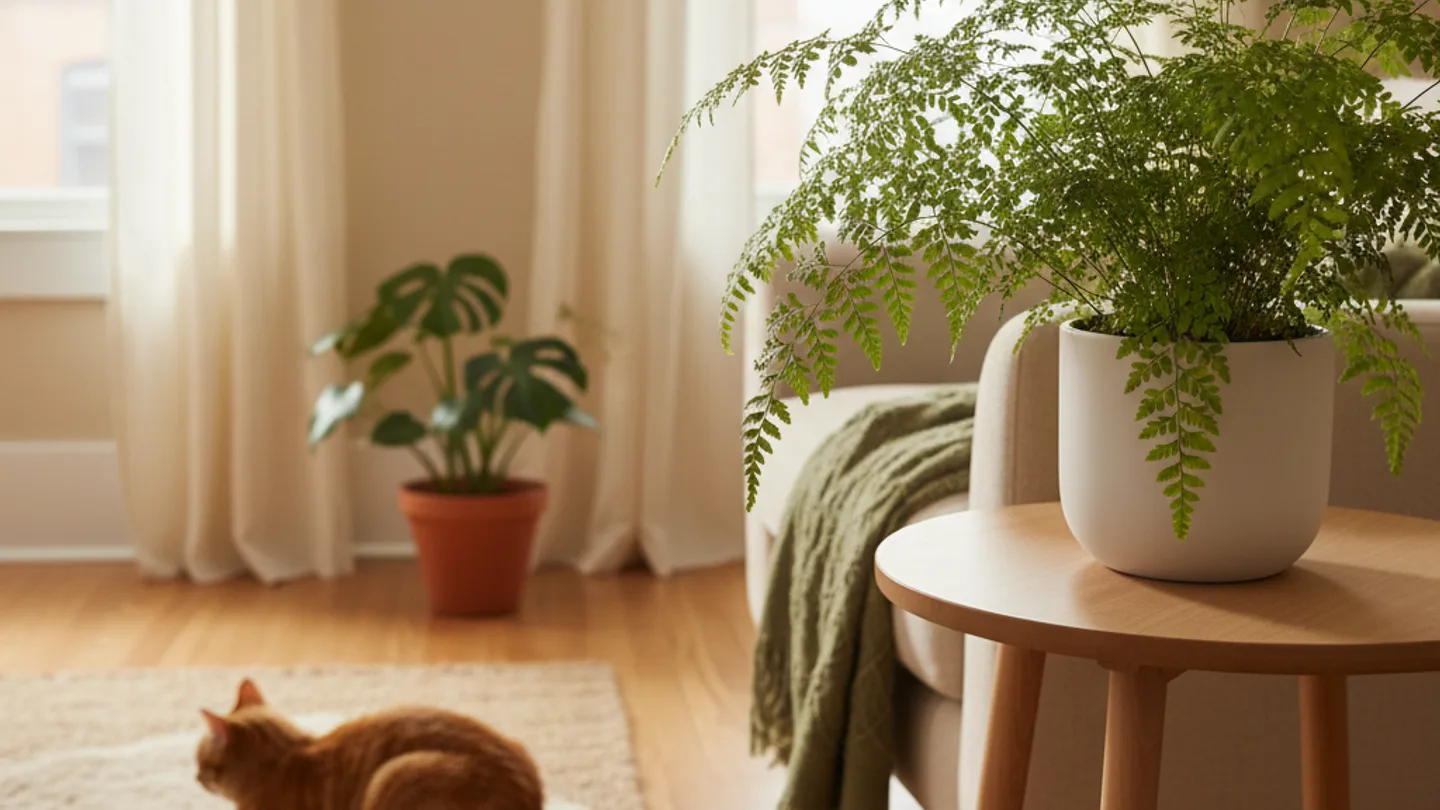
Maidenhair ferns are generally considered non-toxic to cats and dogs. That is the good news, and it is genuine. The bad news: this is one of the most demanding houseplants you can bring home.
The plant looks delicate, and it is. Fan-shaped leaflets on dark, wiry stems dry out fast. It wants constantly moist soil, high humidity and a spot with no drafts at all. Miss any one of those and the leaflets turn brown and crispy, sometimes within days.
This guide gives you an honest difficulty rating, the full care routine and, in case it sounds like too much, three easier ferns that are also safe around pets.
The short version
- Maidenhair ferns are generally considered non-toxic to cats and dogs.
- The soil must stay evenly moist at all times. Letting it dry out even once can cost you whole fronds.
- High humidity is a must. A bright bathroom is often the easiest spot in the house.
- Keep the plant away from drafts, radiators and air conditioning vents.
- Honest difficulty rating: high. This is not a beginner plant.
- Boston ferns, bird's nest ferns and button ferns are easier pet-safe options.
Is the maidenhair fern toxic to cats and dogs?
No. The maidenhair fern (Adiantum) is listed as non-toxic to cats and dogs by the ASPCA. It contains no known compounds that poison pets, so a chewed frond is not an emergency.
Non-toxic is not the same as edible, though. Eating a large amount of any plant can cause mild stomach upset, like drooling or vomiting. Discourage chewing where you can, and call your vet if your pet shows symptoms after nibbling.
Many popular houseplants do not share this verdict. A monstera, for example, is toxic to both cats and dogs. The maidenhair fern is one of the few statement plants you can keep within paw's reach, although a high shelf is still tidier.
Why it is worth the effort
- Safe around cats and dogs, so no stress if a frond gets chewed.
- The lacy, layered look is hard to match with any other pet-safe plant.
- Compact size fits shelves, counters and bright bathroom corners.
- It shows stress quickly, so you can correct your care before real damage sets in.
Why it earns its reputation
- Soil must stay moist at all times. One dry spell can crisp whole fronds.
- Needs high humidity that most living rooms do not have, especially in winter.
- Hates drafts, frequently opened doors, heaters and AC vents.
- Damaged fronds never recover and must be trimmed off.
- A poor fit if you travel often or want a low-effort plant.
Water and humidity: constant moisture is non-negotiable
This is where most maidenhair ferns fail. The soil should stay evenly moist at all times, like a wrung-out sponge. Never let it dry out completely, and never let it sit in water either.
Check the soil every day in warm months. Touch the top. When the very surface starts to feel dry, water slowly at the base with room-temperature water until it runs out of the drainage holes. Empty the saucer after about ten minutes.
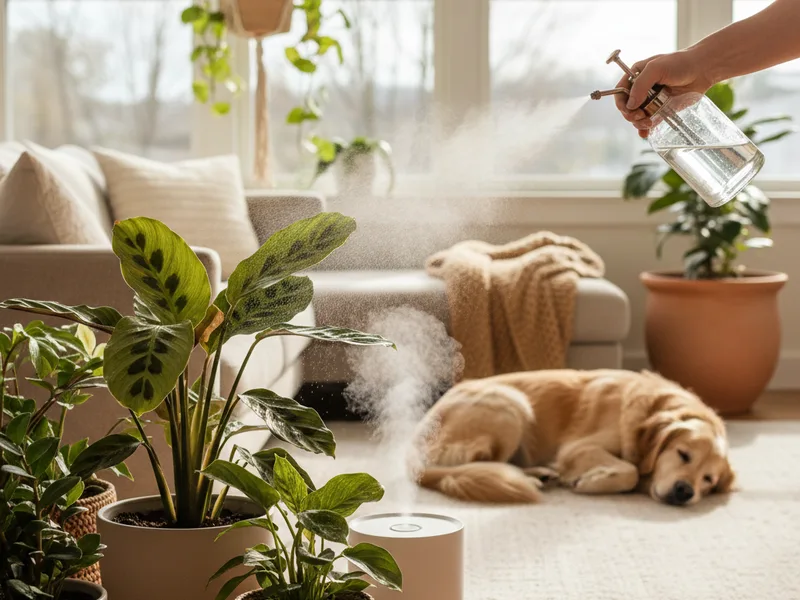
Humidity matters just as much. These ferns come from damp, sheltered places, and dry indoor air crisps the leaflets fast. A bright bathroom or kitchen is often the easiest solution. In other rooms, a small humidifier near the plant is the most reliable fix.
Misting feels helpful, but the effect lasts hours, not days. Treat it as a bonus, not a plan. Grouping plants together raises humidity slightly as well. In winter, when heating dries the air, keep the plant well away from radiators and check it more often.
A simple weekly care routine
Check the soil
Touch the top of the soil every morning. If the surface is starting to feel dry, it is time to water.
Water at the base
Use room-temperature water and water slowly until it runs out of the drainage holes. Avoid soaking the fronds.
Empty the saucer
After about ten minutes, pour off any standing water so the roots do not sit wet.
Boost the humidity
Run a small humidifier nearby, or keep the plant in a bright bathroom or kitchen where the air stays moist.
Trim brown fronds
Cut crispy or yellow fronds off at the base with clean scissors. They will not green up again, and trimming keeps the plant tidy.
Feed lightly in growing season
Once a month in spring and summer, use a balanced houseplant fertilizer at half strength. Skip it in fall and winter.
Light and placement: bright, indirect and draft-free
Give your maidenhair fern bright, indirect light. A spot near a north or east-facing window is ideal. A few feet back from a south or west window works too, especially with a sheer curtain.
Direct afternoon sun scorches the thin leaflets. Deep shade is just as bad: fronds turn pale and growth gets sparse and weak.
Whatever spot you choose, it must be draft-free. Keep the plant away from doors that open often, leaky windows in winter and heating or air conditioning vents. Sudden temperature swings make fronds drop. A steady, mild room is what this plant wants.
| Fern | Light | Water | Humidity | Difficulty |
|---|---|---|---|---|
| Boston fern | Medium to bright indirect | Keep lightly moist; forgives an occasional dry spell | Adapts to average rooms | Easy to moderate |
| Bird's nest fern | Medium indirect | Let the top inch dry between waterings; water the soil, not the center | Likes humidity but copes without it | Easy |
| Button fern | Low to medium indirect | Slightly moist; tolerates short dry periods | Average household humidity is fine | Easy |
Soil, feeding and common problems
Use a rich potting mix that holds moisture but still drains. A standard houseplant mix with coco coir or peat, lightened with some perlite, works well. The pot needs drainage holes.
Repot in spring when the roots fill the pot, and go only one size up. Feed once a month in spring and summer with a balanced houseplant fertilizer at half strength. Skip feeding in fall and winter.
Brown, crispy edges usually mean dry soil or dry air. Yellow fronds often point to soggy soil or harsh direct sun. Sudden leaf drop after you move the plant usually means a draft or a temperature swing.
Damaged fronds do not recover, so cut them off at the base with clean scissors. If the roots stayed healthy, new fronds will unroll from the crown within a few weeks.
Frequently asked questions
Is the maidenhair fern safe for cats and dogs?
Yes. It is generally considered non-toxic to both, and the ASPCA lists it as safe. Large amounts of any plant can still cause mild stomach upset, so call your vet if your pet vomits or seems unwell after chewing.
Why is my maidenhair fern turning brown and crispy?
Almost always dry soil or dry air. Tighten your watering routine, move the plant away from heaters and raise the humidity. Trim off the damaged fronds, because they will not recover.
Can a maidenhair fern live in a bathroom?
Yes, and it is often the best room in the house, as long as the bathroom has a window. The humidity helps the plant thrive. Darkness does not, so a windowless bathroom will not work.
How often should I water a maidenhair fern?
There is no fixed schedule. Check the soil daily and water when the very top starts to feel dry. In summer that may be every day or two. In winter, less often, but never let the soil dry out fully.
Is misting enough to keep the humidity up?
No. Misting lifts humidity for a short time only. A small humidifier or a naturally humid room works far better for this plant.
My cat ate some fronds. What should I do?
Stay calm, because the plant is considered non-toxic. Move the plant out of reach and watch your cat for drooling, vomiting or loss of appetite. If symptoms appear, or you are worried at all, call your vet.