Chew-Proof Greenery: Safe Plants That Survive a Nibbling Cat
Yes, there are plants cats can chew safely. A few non-toxic houseplants are tough enough to handle regular nibbling and regrow quickly after a chewing session. That makes them a smart choice if your cat treats every leaf like a snack.
This list ranks the best chew-tolerant, pet-safe plants by resilience. You will also find simple tips to steer your cat toward cat grass, so your other plants get a break.
The short version
- Spider plants, cat grass and parlor palms are generally considered non-toxic to cats and dogs, and they tolerate nibbling well.
- Cat grass is the fastest to recover, often regrowing within days of being chewed to the base.
- Spider plants are nearly indestructible and even seem to attract cats, so give them their own pot.
- Redirect chewing by placing fresh cat grass near your cat's favorite spots and rotating in new pots.
- Even safe plants can cause mild stomach upset if eaten in large amounts. Call your vet if vomiting or other symptoms persist.
Why some cats chew plants
Cats chew plants for a few reasons. Some do it out of boredom. Some like the texture of grass-like leaves. Others may be trying to add a little fiber to their diet or settle their stomach.
You probably will not stop the habit completely, and that is fine. The practical move is to fill your home with plants that are safe to chew and tough enough to survive it. Then give your cat a better target, like a pot of fresh cat grass.
| Rank | Plant | Pet safety | How well it tolerates chewing | Light needs |
|---|---|---|---|---|
| 1 | Cat grass (wheat, oat or barley grass) | Generally considered non-toxic to cats and dogs | Built for chewing. Regrows from the base in days and can be reseeded cheaply | Bright, indirect light to direct sun |
| 2 | Spider plant (Chlorophytum comosum) | Generally considered non-toxic to cats and dogs | Very tough. Bounces back from heavy nibbling and produces new shoots constantly | Bright, indirect light; tolerates lower light |
| 3 | Parlor palm (Chamaedorea elegans) | Generally considered non-toxic to cats and dogs | Moderate. Handles occasional nibbles but grows slowly, so heavy chewing shows | Low to medium indirect light |
| 4 | Boston fern (Nephrolepis exaltata) | Generally considered non-toxic to cats and dogs | Moderate. Fronds can look ragged after chewing but the plant recovers well | Medium indirect light with higher humidity |
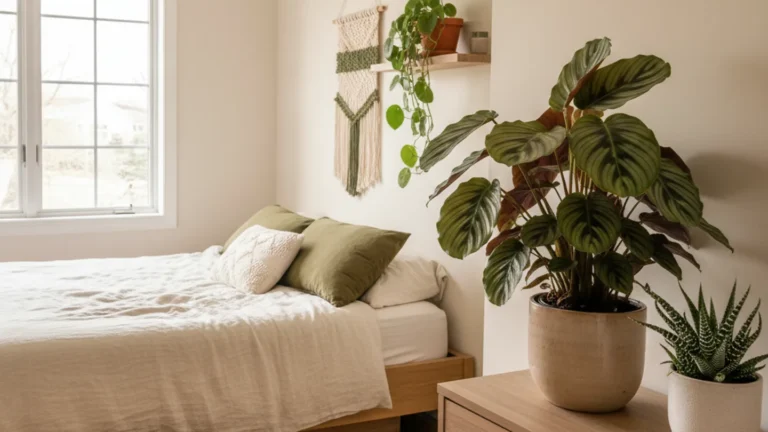
| 5 | Calathea (prayer plant family) | Generally considered non-toxic to cats and dogs | Lowest on this list. Leaves bruise and tear easily, so it is best for light nibblers | Medium indirect light, away from direct sun |
1. Cat grass: the plant your cat is supposed to eat
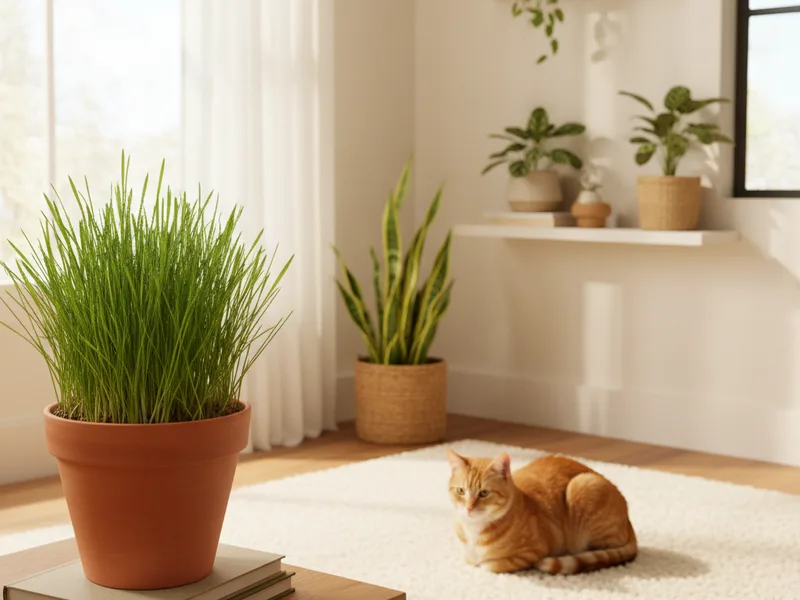
Cat grass is not a single species. It is usually a mix of wheat, oat or barley grass grown from seed. It is generally considered non-toxic to cats and dogs, and it is the one plant you can happily offer up for chewing.
It is also the most resilient option, but in a different way. A single pot does not last forever because cats chew it to the base. The trick is that it grows back fast, often within a week, and a fresh pot from seed costs very little.
Keep two pots in rotation. One sits out for your cat while the other regrows in a sunny spot. That way there is always a fresh patch ready.
2. Spider plant: the nearly indestructible classic
Spider plants are generally considered non-toxic to cats and dogs, and they are famous for surviving almost anything. Nibbled leaves, missed waterings, drafty windows. They keep going.
Cats love the long, arching leaves because they move like a toy. Some cats chew them obsessively. The good news is that a healthy spider plant produces new growth constantly, so it usually outgrows the damage.
If your cat fixates on your spider plant, give it its own pot at cat height and hang a second one out of reach for looks. You get a tidy plant, and your cat gets a legal chewing target.
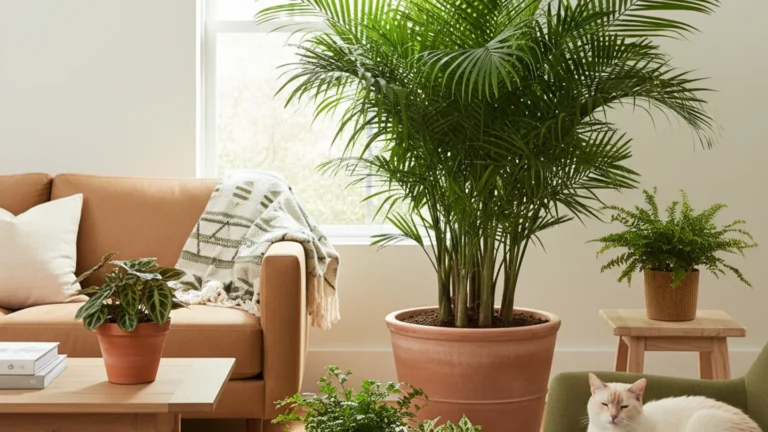
3. Parlor palm: a sturdier leafy look
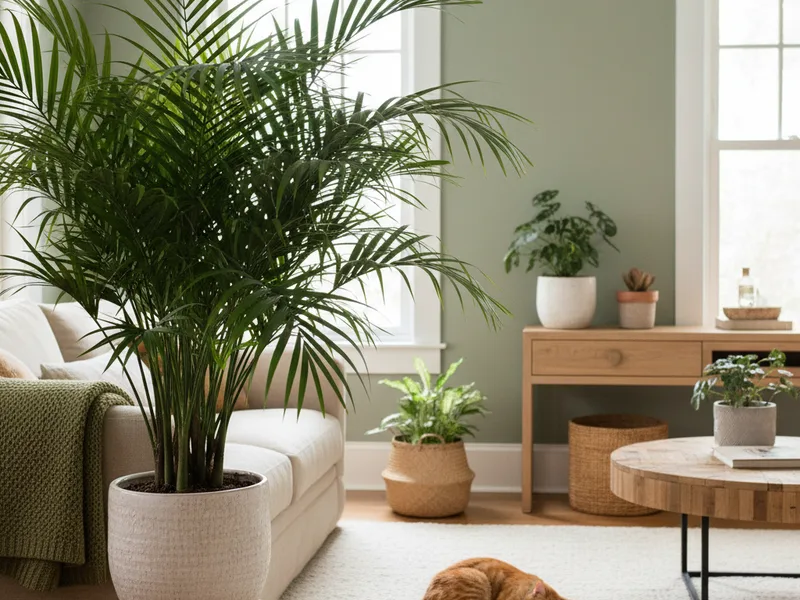
If you want something with a fuller, more tropical shape, the parlor palm is a solid pick. It is generally considered non-toxic to cats and dogs and copes well with the lower light of a typical apartment.
It tolerates occasional nibbling, but it grows more slowly than a spider plant. Heavy, repeated chewing will show on the fronds. This one is better for cats that take a curious bite now and then rather than daily grazers.
Place it near a pot of cat grass so your cat has an easier option right next to it.
How to redirect chewing to cat grass
Put cat grass where the chewing happens
Place a fresh pot next to the plants your cat already targets, or near their favorite lounging spot. Cats take the path of least resistance.
Make the grass the reward
Praise your cat or offer a small treat when they chew the grass. Skip punishment around other plants; it usually just teaches them to chew when you are not looking.
Move tempting plants out of reach
Hang trailing plants or place them on high shelves while the new habit forms. This protects both your cat and the plant.
Keep grass fresh
Cats prefer young, tender blades. Rotate in a new pot every couple of weeks and reseed regularly so the supply never runs out.
Add non-plant enrichment
Extra play sessions and chew toys reduce boredom chewing. A tired cat chews less.
A quick word on safe versus chew-proof
Non-toxic does not mean consequence-free. Even a safe plant can cause mild vomiting or an upset stomach if your cat eats a lot of it. That is normal and usually passes quickly.
What matters more is what your cat is chewing elsewhere. Many popular houseplants are not safe at all. Pothos, for example, contains calcium oxalate crystals. Those are tiny sharp crystals that can irritate your pet's mouth and throat. Read more in our guide is pothos toxic.
If your cat vomits repeatedly, drools heavily or seems unwell after chewing any plant, call your vet. Bring a photo or a piece of the plant so they know what they are dealing with.
Common questions
What plants can cats chew safely?
Cat grass, spider plants, parlor palms, Boston ferns and calatheas are all generally considered non-toxic to cats. Cat grass and spider plants handle heavy chewing best because they regrow quickly.
Is it normal for cats to eat houseplants?
Yes. Many cats nibble plants out of curiosity, boredom or a taste for grass-like textures. The safest approach is to keep only non-toxic plants within reach and offer cat grass as the intended target.
Can a cat get sick from eating a non-toxic plant?
Mildly, yes. Eating a large amount of any plant, even a safe one, can cause vomiting or loose stool. It usually passes on its own, but call your vet if symptoms persist or your cat seems unwell.
How often should I replace cat grass?
Plan on a fresh pot every two to three weeks, depending on how much your cat chews. Keeping two pots in rotation means there is always fresh grass available.
My cat ignores cat grass and chews my other plants. What now?
Try a different grass mix, since some cats prefer oat over wheat or the other way around. Move the other plants out of reach for a few weeks while you build the grass habit, and reward your cat when they use it.