Burro’s Tail Care: A Pet-Safe Trailing Succulent
Burro's tail is non-toxic to cats and dogs. If you want a trailing succulent that will not put your pet at risk, this one is a safe pick.
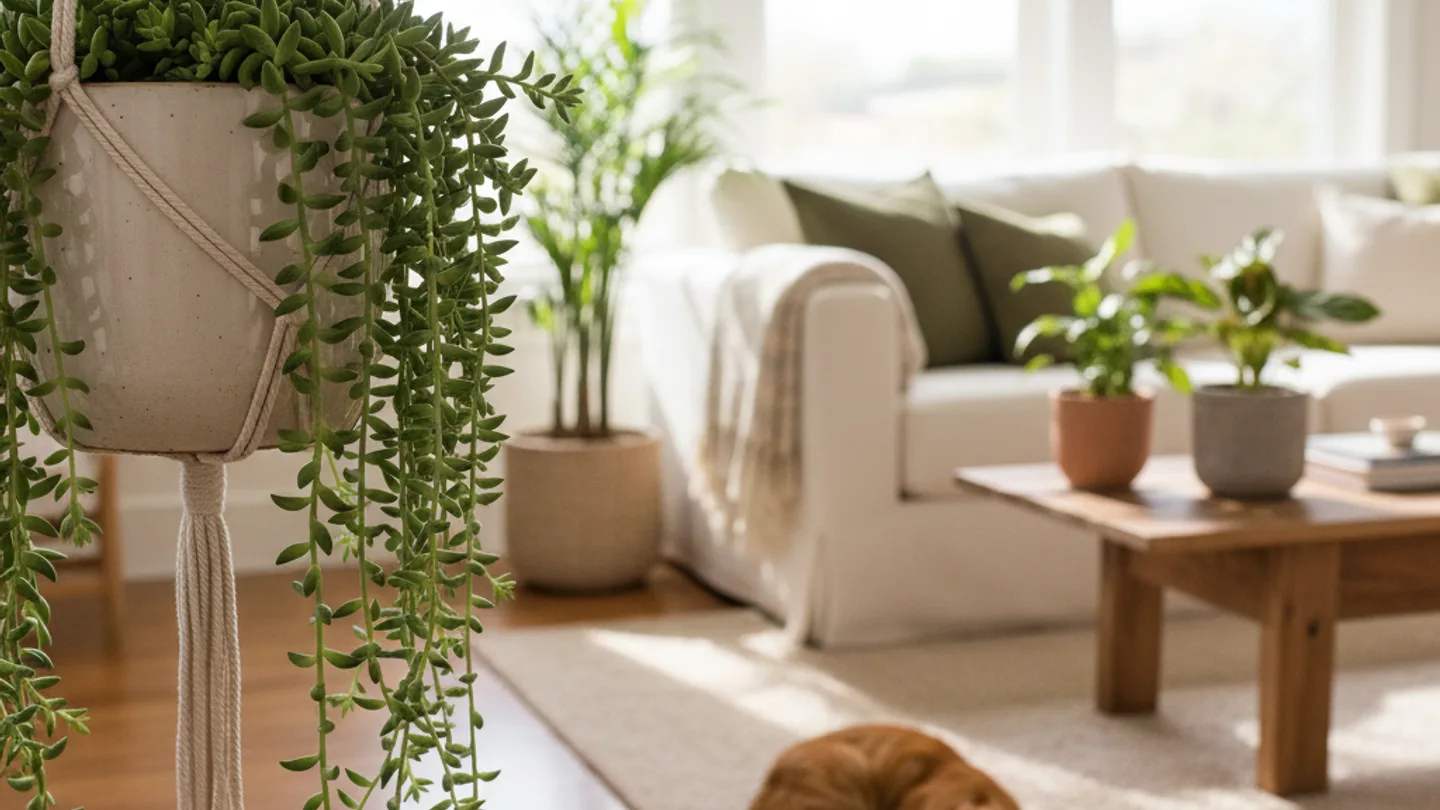
It is also a beautiful plant. Long, rope-like stems packed with plump green leaves spill over the edge of a pot, and a happy plant can trail two feet or more. The catch: those leaves pop off at the lightest touch.
This guide covers burros tail care in plain terms: light, water, gentle handling, and where to hang it so a wagging tail or a curious cat does not turn it into a pile of leaves.
Burro's Tail at a Glance
- Burro's tail is generally considered non-toxic to both cats and dogs.
- Give it bright light, with a few hours of direct sun if you can.
- Water deeply but rarely, and let the soil dry out fully between waterings.
- The leaves fall off at a touch, so handle the plant as little as possible.
- Hang it high, out of range of jumping cats and wagging dog tails.
Is Burro's Tail Safe for Cats and Dogs?
Yes. Burro's tail (Sedum morganianum) is generally considered non-toxic to cats and dogs, so it is a good fit for homes with pets.
Non-toxic does not mean completely harmless. If your pet eats a large amount of any plant, it can still cause mild stomach upset, like vomiting or loose stools. That is a tummy problem, not a poisoning, but it is worth watching.
If your pet eats part of the plant and then seems unwell, call your vet. Better to ask and be told it is fine than to wait and worry.
Light: Bright, With Some Direct Sun
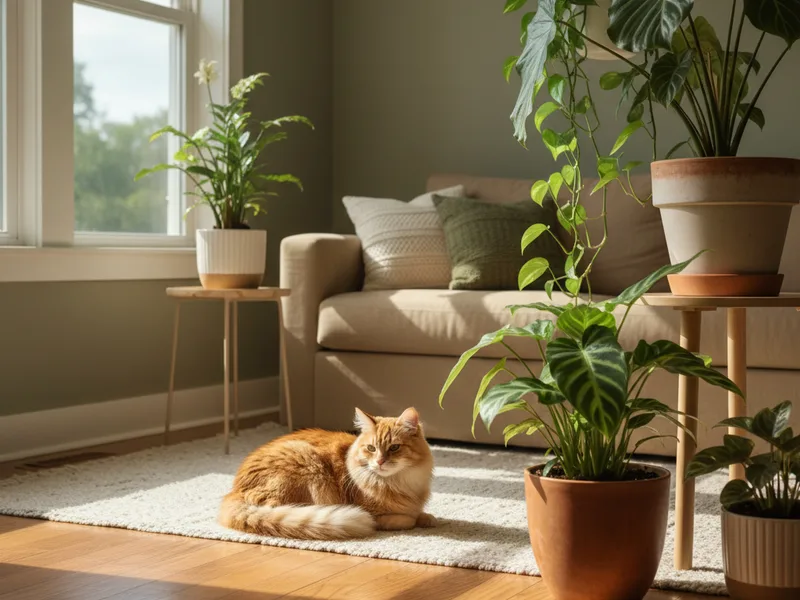
Burro's tail wants bright light. A spot right in front of a south or west facing window is ideal in most US homes. A few hours of direct morning or late afternoon sun keeps the stems plump and tight.
Too little light shows fast. The leaves space out along the stem, the plant looks thin and stretched, and it drops leaves more easily. If your brightest window is still dim, this plant will survive but it will not look its best.
If you move the plant to a brighter spot, do it gradually. Leaves that grew in low light can scorch in sudden harsh afternoon sun.
Water: Less Than You Think
This is a succulent, so the main risk is overwatering. Water deeply, until it runs out of the drainage hole, then leave it alone until the soil is completely dry. In most apartments that works out to roughly every two to three weeks in summer, and even less in winter.
The leaves store water, so a thirsty plant looks slightly wrinkled or deflated. That is your cue to water. Soft, mushy, or yellowing leaves usually mean too much water, not too little.
Always use a pot with a drainage hole. A burro's tail sitting in wet soil will rot at the roots, and there is no saving it at that point.
Handling: The Leaves Drop at a Touch
Here is the part that surprises most new owners. Burro's tail leaves detach with the lightest brush. Moving the pot, repotting it, or even watering carelessly can leave a trail of leaves on the floor.
Handle the plant as little as possible, and when you must, support the stems from underneath and move slowly. Many owners pick one spot, hang the plant, and simply never move it again.
The dropped leaves are not wasted. Each one can root and grow into a new plant if you lay it on dry soil, which at least takes the sting out of the leaf loss.
Placement: Keep It Clear of Tails and Paws
Because the leaves drop so easily, placement matters more with this plant than with most. A hanging planter or a high shelf is the natural choice, since the stems need room to trail anyway.
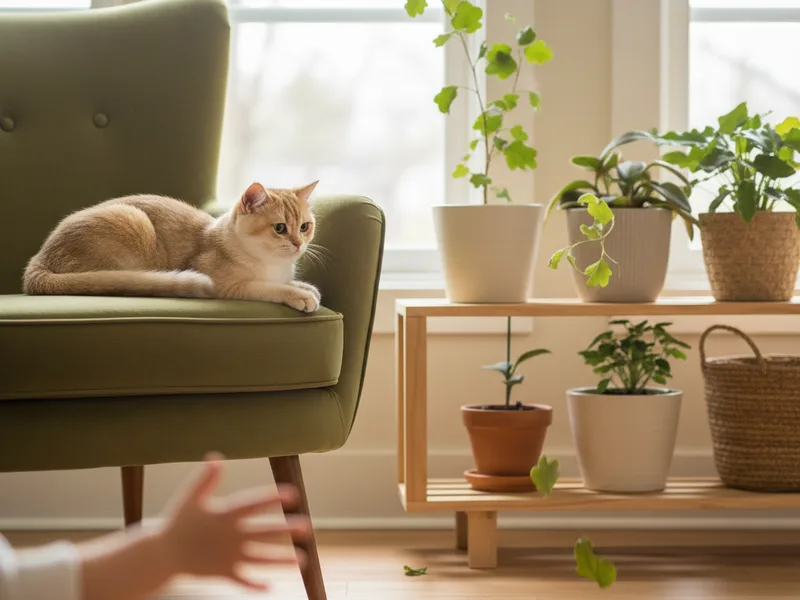
Think about your specific pet. Dogs are usually fine if the plant hangs above nose and tail height, since an excited wag can strip a whole stem. Cats are the bigger challenge, because a dangling, swaying stem looks exactly like a toy.
Hang it where your cat cannot jump to it, not just where it is inconvenient. A determined cat will treat a low hanging burro's tail as an invitation. The plant itself is safe if nibbled, but you will lose leaves every time it gets batted.
How to Repot Without Losing Half the Plant
Wait until it is truly needed
Burro's tail likes being slightly root-bound. Repot only when the roots fill the pot or the soil dries out within a day or two, often every few years.
Water a few days before
Slightly plump, hydrated leaves hold on better than dry, loose ones. Do not repot right after watering though, since wet soil is heavy and pulls at the stems.
Prepare the new pot first
Have a pot with drainage and fresh cactus or succulent mix ready before you touch the plant, so handling time stays short.
Tip and support, never pull
Turn the pot sideways, support the stems with your free hand, and let the root ball slide out. Never lift the plant by its stems.
Settle it in and leave it alone
Set the root ball in the new pot, fill around it, and skip watering for about a week so any damaged roots can heal. Expect a few dropped leaves, and save them for propagation.
Common Questions About Burro's Tail
Is burro's tail toxic to cats or dogs?
No. Burro's tail is generally considered non-toxic to both cats and dogs. Eating a large amount can still cause mild stomach upset, so contact your vet if your pet seems unwell after chewing on it.
Why are the leaves falling off my burro's tail?
The most common cause is simply touch. The leaves detach at the slightest bump. Overwatering can also cause leaf drop, so check that the soil dries out fully between waterings.
How often should I water burro's tail?
Only when the soil is completely dry, roughly every two to three weeks in summer and less in winter. Wrinkled leaves mean it is thirsty, while mushy or yellow leaves mean too much water.
Can my cat play with the trailing stems?
The plant will not poison your cat, but every swat will knock leaves off. Hang it out of jumping range if you want to keep those long, full trails.
What light does burro's tail need indoors?
Bright light, ideally a south or west facing window with a few hours of direct sun. In low light it stretches out, looks sparse, and drops leaves more easily.