Cat Palm Care: Yes, It Really Is Safe for Cats
Good news first: the cat palm (Chamaedorea cataractarum) is generally considered non-toxic to both cats and dogs. Despite the name, it was not named after your cat. The 'cataractarum' in its Latin name refers to the waterfalls of its native Mexican habitat, where it grows along riverbanks.
That makes it one of the few fuller, bushier palms you can bring home without worry. This guide covers cat palm care in real homes: light, water, humidity, and how it differs from the parlor palm and areca palm you may also be considering.
The short version
- The cat palm is non-toxic to cats and dogs, according to the ASPCA's plant lists for Chamaedorea palms.
- The name has nothing to do with cats. It refers to the cataracts, or waterfalls, of its native habitat.
- It wants bright, indirect light, consistently moist soil and higher humidity than most homes have by default.
- Brown leaf tips usually mean dry air or inconsistent watering, not a dying plant.
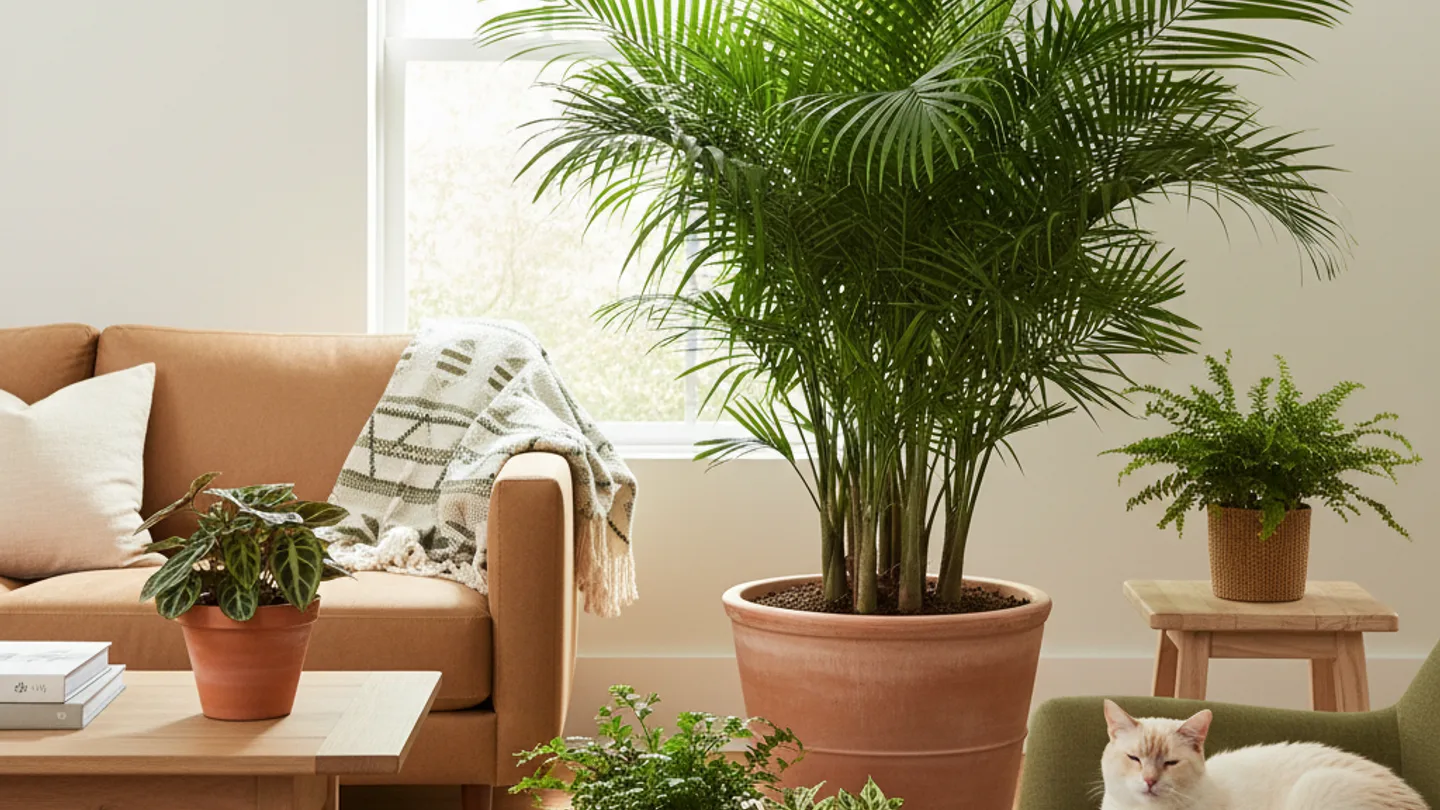
- It grows denser and lower than the areca palm and larger than the parlor palm.
Is the cat palm really safe for cats and dogs?
Yes. Palms in the Chamaedorea family, including the cat palm, are listed by the ASPCA as non-toxic to cats, non-toxic to dogs and non-toxic to horses. There are no calcium oxalate crystals, saponins or other common plant toxins to worry about here.
Calcium oxalate crystals, in case you have seen the term on other plant pages, are tiny sharp crystals that can irritate your pet's mouth and throat. Many popular houseplants like monstera contain them. The cat palm does not.
One honest note: non-toxic does not mean consequence-free. If your cat chews a lot of any plant, the fiber can still cause an upset stomach or vomiting. And persistent plant chewing can be a sign of boredom. If your pet shows ongoing symptoms after nibbling any plant, contact your vet.
About that name
We get the confusion. A plant called 'cat palm' sounds either designed for cats or secretly dangerous for them. It is neither.
The botanical name is Chamaedorea cataractarum. 'Cataractarum' points to the cataracts and waterfalls of southern Mexico, where this palm grows in dense clumps along stream banks. That origin story also explains its care needs: this is a palm that evolved with wet feet and humid air.
So the name is a coincidence, but a happy one. It is one of the easiest pet-safe answers we get to give.
Light: bright but not harsh
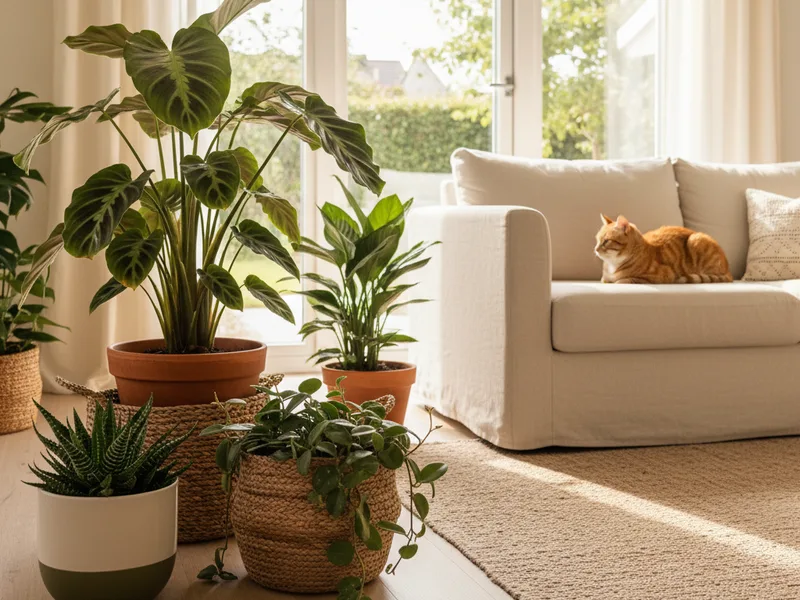
In its native habitat, the cat palm grows under a tree canopy. Indoors, that translates to bright, indirect light.
A spot a few feet from an east or south-facing window works well. It tolerates medium light, but growth slows and the clump can get leggy. Avoid harsh direct afternoon sun, which scorches the fronds.
In a darker apartment, the cat palm will survive for a while but will not thrive. If your space is genuinely low light, consider the parlor palm instead. It copes better with shade.
Water: this palm likes moist soil
Here is where cat palm care differs from most houseplants. Remember those riverbanks? This palm wants soil that stays evenly moist, not soil that dries out between waterings.
Check the top inch of soil. When it just starts to feel dry, water thoroughly until it drains from the bottom. In most homes that means roughly once a week, more often in summer or in a warm, dry room.
Two warnings. First, moist is not soggy. Use a pot with drainage holes and empty the saucer, because standing water causes root rot. Second, brown, crispy leaf tips often mean you are letting it dry out too much, or the water is heavily chlorinated. Filtered or distilled water can help if your tap water is hard.
Humidity: the part most guides skip
Humidity is the make-or-break factor for cat palms in real homes. They prefer humidity around 50 percent or higher, while many heated or air-conditioned homes sit closer to 30 to 40 percent.
Low humidity shows up as brown tips and edges, even when your watering is on point.
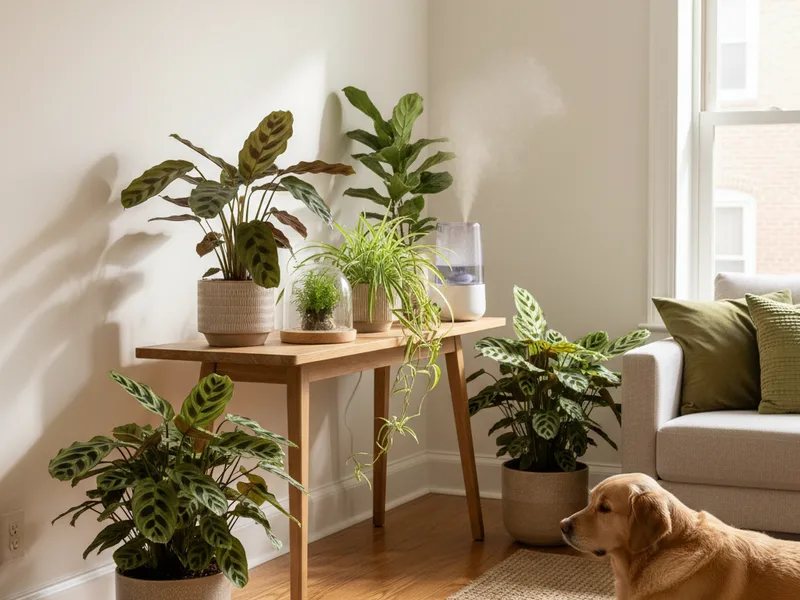
Practical fixes that work in apartments: group the cat palm with other plants, set the pot on a pebble tray with water below the pebble line, or run a small humidifier nearby. Misting gives a brief boost but does not last. Skip misting if your room has poor airflow, since constantly wet foliage can invite fungal issues.
Bathrooms and kitchens with decent light are often the easiest homes for this palm.
| Feature | Cat palm | Parlor palm | Areca palm |
|---|---|---|---|
| Botanical name | Chamaedorea cataractarum | Chamaedorea elegans | Dypsis lutescens |
| Typical indoor size | 3 to 6 feet, dense and bushy | 2 to 4 feet, compact | 6 to 8 feet, upright and feathery |
| Light | Bright, indirect | Low to bright, indirect | Bright, indirect to some direct sun |
| Water | Keep evenly moist | Let top half dry out | Let top inch or two dry out |
| Humidity needs | High | Moderate | Moderate |
| Best for | Humid rooms, floor filler with a lush look | Shelves, desks, low light corners | Bright living rooms, statement plant |
| Pet safety | Non-toxic to cats and dogs | Non-toxic to cats and dogs | Non-toxic to cats and dogs |
Common problems and quick fixes
Brown leaf tips: almost always dry air, inconsistent watering or mineral buildup from tap water. Raise humidity, even out your watering rhythm and try filtered water.
Yellowing fronds near the base: a few older fronds yellowing is normal as the plant grows. Many yellowing at once usually means overwatering or poor drainage.
Pale, stretched growth: not enough light. Move it closer to a window.
Spider mites: dry air invites them. Check the undersides of fronds for fine webbing, rinse the plant in the shower and raise the humidity. Repeat rinses weekly until they are gone.
Common questions about cat palms
Is the cat palm toxic to cats or dogs?
No. The cat palm (Chamaedorea cataractarum) is listed by the ASPCA as non-toxic to cats and dogs. If your pet eats a large amount of foliage it may still get a mild upset stomach, so contact your vet if symptoms appear.
Why is it called a cat palm if it has nothing to do with cats?
The name comes from its botanical name, Chamaedorea cataractarum, which refers to the waterfalls of its native habitat in southern Mexico. The 'cat' is short for cataract, not cat.
How often should I water a cat palm?
When the top inch of soil starts to feel dry, water thoroughly and let the excess drain. In most homes that is about once a week, more often in warm months. Never let the pot sit in standing water.
Cat palm vs areca palm: which should I choose?
Both are pet-safe. Pick the cat palm if you want a dense, lower, bushy plant and can offer higher humidity. Pick the areca palm if you have a brighter spot and want a taller, airier look with slightly less fussy watering.
Why are the tips of my cat palm turning brown?
The most common causes are low humidity, letting the soil dry out too much, or minerals in tap water. Raise the humidity, keep the soil evenly moist and consider filtered water.
Can a cat palm live in low light?
It will survive in medium light but grows slowly and can get leggy. For genuinely low-light rooms, the parlor palm is the better pet-safe choice.