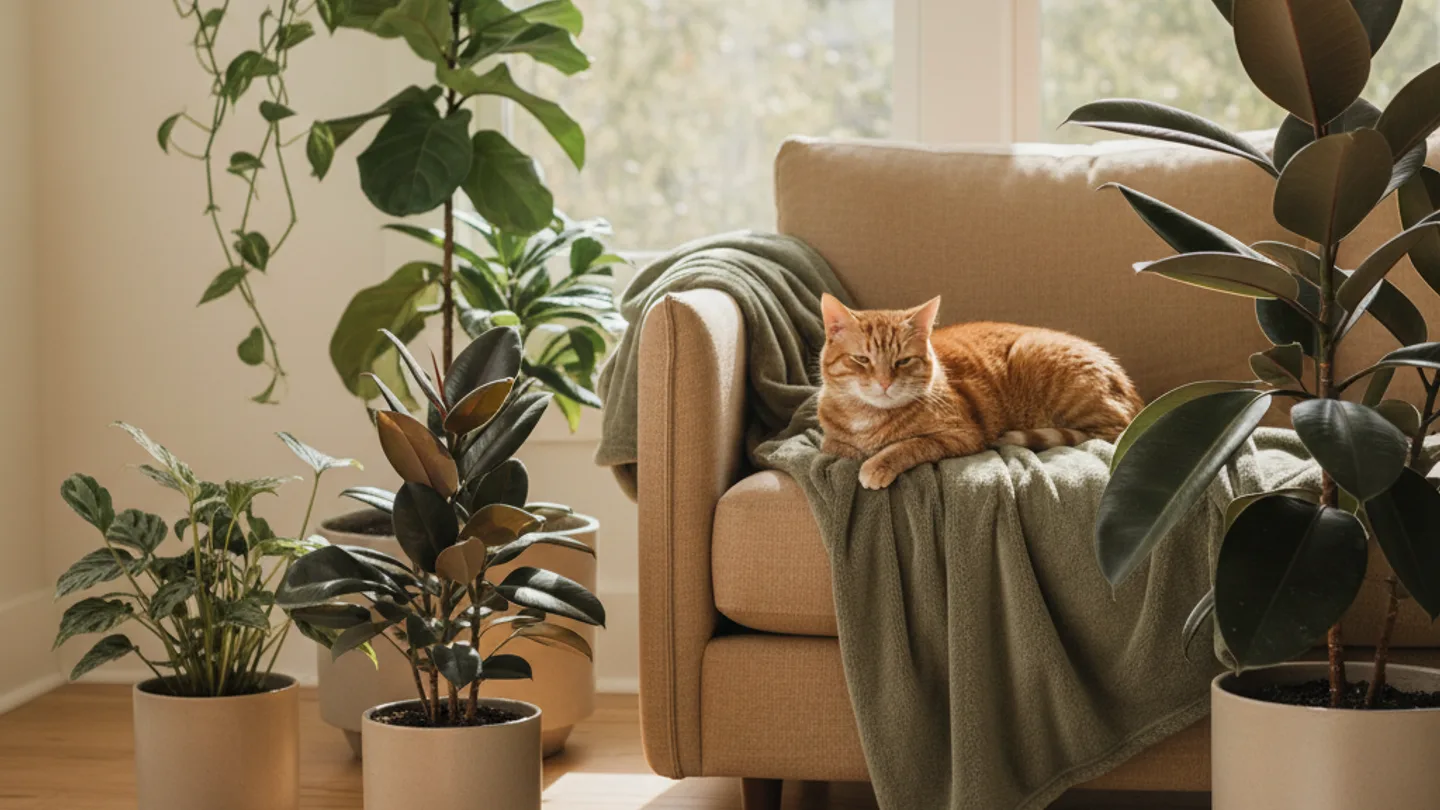
Is Rubber Plant Toxic to Cats and Dogs?
Yes, rubber plants are toxic to cats and dogs. The rubber plant (Ficus elastica) produces a milky white sap that irritates the mouth, skin and stomach of pets that chew on it.
The good news: the reaction is usually mild. Most pets that take a bite drool, paw at their mouth and feel unwell for a short time. It rarely becomes serious, but it is worth knowing what to look for.
Below you will find the symptoms, how severe the risk really is, and a pet-safe lookalike that gives you the same bold, glossy leaves.
The short answer
- Rubber plants (Ficus elastica) are mildly toxic to both cats and dogs.
- The milky sap is the problem. It irritates the mouth, skin and digestive tract.
- Common symptoms: drooling, mouth irritation, vomiting and diarrhea.
- Serious poisoning is rare, but contact your vet if symptoms appear or worsen.
- Safe alternative: the baby rubber plant (peperomia) is generally considered non-toxic and has a similar compact, glossy look.
Why rubber plants are toxic
When a leaf or stem breaks, the rubber plant releases a thick, milky sap. This is latex, a sticky fluid the plant uses to protect itself.
That sap contains compounds that irritate tissue. If your cat or dog chews a leaf, the sap touches the lips, tongue and gums. If it gets on the skin or fur, it can cause redness there too.
Think of it as a built-in warning system. The sap tastes bad and stings, which is why most pets stop after one bite. That also explains why severe cases are uncommon: the plant discourages a big meal.

Symptoms to watch for
Most reactions involve the mouth and stomach. Typical signs include:
Drooling or foaming at the mouth, pawing at the face, redness or swelling of the lips, tongue or gums, vomiting, diarrhea, and loss of appetite.
Skin contact can cause a red, itchy patch where the sap touched. Cats that groom sap off their fur may then get mouth irritation too.
Symptoms usually appear quickly, often within minutes to a few hours of chewing the plant.
How serious is it?
Rubber plant poisoning is usually mild. A small nibble typically leads to drooling and an upset stomach that passes on its own.
The risk rises with the amount eaten. A large portion of leaves can cause repeated vomiting or diarrhea, which can lead to dehydration, especially in small cats and dogs.
Contact your vet if your pet shows symptoms, keeps vomiting, seems lethargic or refuses water. When in doubt, call. You can also reach the ASPCA Animal Poison Control Center or the Pet Poison Helpline for guidance.
What to do if your pet eats a rubber plant
Remove the plant
Move your pet away from the plant and clear any chewed leaves from its mouth if you can do so safely.
Rinse the mouth
Offer fresh water or gently rinse the mouth with a wet cloth to remove sap residue. Do not force water down the throat.
Watch for symptoms
Keep an eye on drooling, vomiting, diarrhea and energy levels over the next few hours. Note what and roughly how much was eaten.
Call your vet if needed
If symptoms are strong, last more than a few hours, or your pet is small, young or already unwell, contact your vet or a pet poison hotline. Bring a photo of the plant for quick identification.
| Feature | Rubber plant (Ficus elastica) | Baby rubber plant (Peperomia obtusifolia) |
|---|---|---|
| Pet safety | Mildly toxic to cats and dogs | Generally considered non-toxic to cats and dogs |
| Look | Large, glossy, oval leaves; grows tall | Thick, glossy, rounded leaves; stays compact |
| Light | Bright, indirect light | Low to bright, indirect light |
| Size | Can reach several feet indoors | Usually stays under 1 foot |
| Care level | Easy | Very easy |
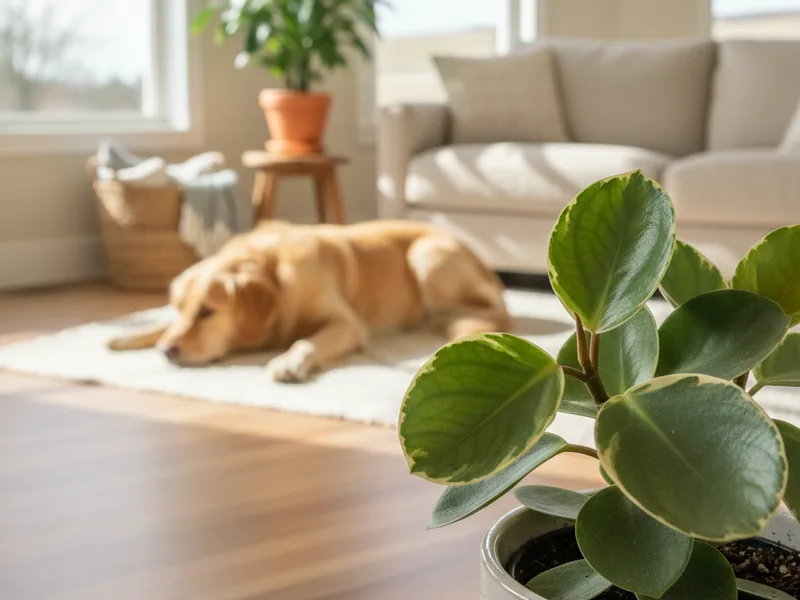
A safe alternative: the baby rubber plant
Love the rubber plant look? The baby rubber plant (Peperomia obtusifolia) is your match. It has the same plump, glossy green leaves in a smaller package, and it is generally considered non-toxic to cats and dogs.
It handles lower light than most ficuses and forgives a missed watering. For a shelf, desk or windowsill in a pet home, it is an easy swap.
If you want more height, place the peperomia on a plant stand. You keep the look without the sap.
Comparing other popular houseplants? The same sap problem shows up in the fig family, but not in some other favorites. Our guides to monstera and pothos explain where those stand.
If you keep your rubber plant
Some pet owners keep a rubber plant and simply manage the risk. That can work if your pet ignores plants.
Place it out of reach: a tall stand, a plant shelf or a room your pet cannot enter. Wipe up dropped leaves quickly, and clean any sap from floors or pots.
Know your pet. Cats that chew greenery and puppies that mouth everything are bad roommates for a ficus. In that case, the peperomia swap is the calmer choice.
Common questions
Is a rubber plant toxic to cats?
Yes. Rubber plants (Ficus elastica) are mildly toxic to cats. The milky sap irritates the mouth and stomach, causing drooling, vomiting or diarrhea. Reactions are usually mild, but call your vet if symptoms appear.
Is a rubber plant toxic to dogs?
Yes, dogs react the same way. Chewing a leaf releases sap that irritates the mouth and digestive tract. Most dogs recover quickly after a small bite, but large amounts or ongoing vomiting warrant a vet call.
Can the sap hurt my pet's skin?
Yes. Direct contact can cause redness and itching on skin or around the mouth. Wipe the area gently with a damp cloth and prevent your pet from licking the spot.
Are all ficus plants toxic to pets?
Most ficus species, including the fiddle leaf fig and weeping fig, contain the same irritating milky sap and are considered toxic to cats and dogs. Treat the whole family with the same caution.
What is a safe plant that looks like a rubber plant?
The baby rubber plant (Peperomia obtusifolia) is generally considered non-toxic to cats and dogs and has similar thick, glossy leaves. It stays compact and tolerates lower light.
My cat licked a rubber plant leaf once. Should I worry?
A single lick usually causes mild, short-lived irritation. Offer fresh water and watch for drooling or vomiting over the next few hours. If symptoms appear or your cat seems unwell, contact your vet.