Is Weeping Fig Toxic to Cats and Dogs?
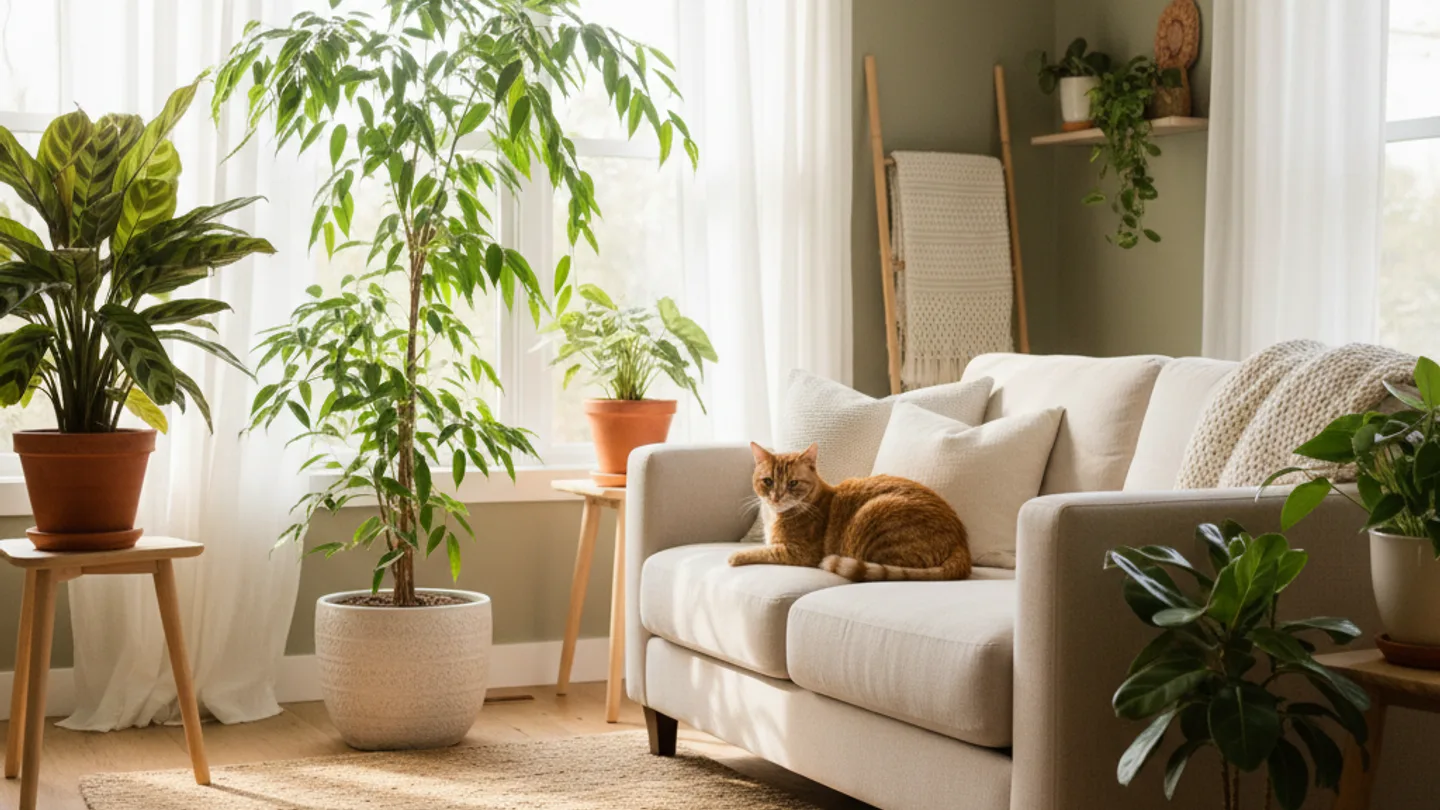
Yes. The weeping fig (Ficus benjamina) is mildly toxic to both cats and dogs. The problem is its milky sap, which irritates the mouth, skin and stomach.
Mildly means what it sounds like. Most pets that chew a leaf end up with drooling, a sore mouth or an upset stomach. It is rarely an emergency, but it is not harmless either.
Here is what the sap does, which symptoms to watch for, why dropped leaves are the real risk, and which pet-safe indoor trees give you the same look.
The short answer
- Weeping fig is mildly toxic to cats and dogs. The milky sap is the problem.
- Chewing usually causes mouth irritation, drooling and stomach upset.
- Sap on fur or skin can cause redness and itching.
- Fallen leaves put the plant within easy reach. Sweep them up fast.
- Call your vet if symptoms appear or your pet ate more than a nibble.
- Want the same look without the risk? Try a money tree, parlor palm or areca palm.
Why the weeping fig irritates pets
The ASPCA lists the weeping fig (Ficus benjamina) as toxic to cats and dogs. The culprit is the milky white sap inside the leaves and stems.
That sap contains irritating compounds, including an enzyme called ficin and substances known as psoralens. In plain words: these are natural chemicals that inflame whatever tissue they touch.
When your cat or dog chews a leaf, the sap hits the mouth and throat first. Sap that gets on fur or skin can irritate that too. Swallowed sap moves on to the stomach and can cause digestive upset.
The good news: most cases are mild. The irritation is unpleasant rather than dangerous. Still, mild does not mean fine, so it is worth limiting access and knowing the signs.

Symptoms to watch for
Mouth irritation comes first. Look for drooling, pawing at the mouth, redness on the lips, gums or tongue, and a sudden lack of interest in food.
Stomach upset can follow: vomiting, diarrhea, a skipped meal or a pet that is quieter than usual.
Skin contact looks different. Sap on fur or skin can leave red, itchy patches, often on the face or paws. Cats that groom the sap off their coat can irritate their mouth a second time.
Most symptoms show up within a few hours and pass on their own. Contact your vet if symptoms last more than a day, get worse, or if your pet ate a large amount.
What to do if your pet chews a weeping fig
Move your pet away
Take your pet away from the plant and gently remove any leaf pieces still in the mouth.
Rinse and wipe
Offer fresh water to drink. Wipe any sap off fur, paws or skin with a damp cloth, then wash your own hands.
Note the details
Write down what was eaten, roughly how much and when. This helps your vet judge the situation.
Watch for symptoms
Keep an eye out over the next hours for drooling, pawing at the mouth, vomiting or diarrhea.
Call your vet
If symptoms appear, your pet ate a lot, or you simply feel unsure, call your vet or an animal poison control line. Give the plant's name: Ficus benjamina.
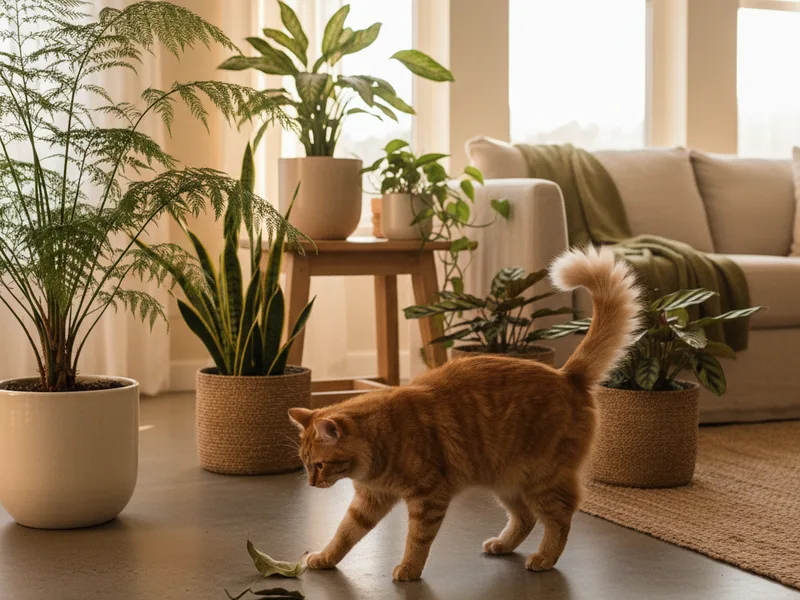
Dropped leaves are the real nibble bait
Weeping figs are famous for dropping leaves. A move to a new spot, a cold draft, a missed watering or lower winter light can trigger a small leaf shower.
Every fallen leaf lands at nose height. For a curious cat or a bored dog, a dry leaf on the floor is an open invitation to chew.
Dropped leaves still contain the irritating sap, fresh or dried. So the risk does not end when the leaf leaves the branch.
If you keep a weeping fig around pets, sweep up fallen leaves daily and check under and behind the pot. Better yet, place the tree where your pet cannot reach it at all.
| Plant | Look | Light | Pet safety |
|---|---|---|---|
| Money tree (Pachira aquatica) | Upright tree shape, often with a braided trunk | Bright, indirect light | Generally considered non-toxic |
| Parlor palm (Chamaedorea elegans) | Soft, feathery fronds on a compact plant | Low to medium indirect light | Generally considered non-toxic |
| Areca palm (Dypsis lutescens) | Airy, arching fronds that grow tall indoors | Bright, indirect light | Generally considered non-toxic |
| Ponytail palm (Beaucarnea recurvata) | Sculptural trunk with a fountain of narrow leaves | Bright light, some direct sun | Generally considered non-toxic |
| Banana plant (Musa) | Big, glossy leaves for a bold statement | Bright light | Generally considered non-toxic |
Keeping a weeping fig when you have pets
Not ready to rehome your ficus? You can lower the risk, even if you cannot remove it completely.
Place the tree where your pet cannot reach it: a room your dog skips, or behind a barrier. Remember that cats climb, so height alone rarely keeps them away.
Vacuum or sweep up fallen leaves every day, especially right after moving the plant or changing its care routine.
If your pet keeps getting to the tree, the kindest option is a swap. One of the safe trees above gives you the same green, vertical shape.
Comparing other statement plants too? Read our verdict on monstera and pet safety before you buy.
Frequently asked questions
Is ficus toxic to cats and dogs?
Yes. The weeping fig and other ficus plants are toxic to cats and dogs alike. The same irritating sap affects both, causing mouth, skin and stomach irritation. It is classed as mildly toxic, so most cases are unpleasant rather than dangerous.
My cat ate one weeping fig leaf. Is that an emergency?
Usually not. One leaf typically causes mild mouth irritation or an upset stomach. Remove access to the plant, offer water and watch your cat for a few hours. Call your vet if vomiting or diarrhea continues, or if your cat seems very uncomfortable.
Are other ficus plants toxic too?
Yes. The fiddle leaf fig (Ficus lyrata) and the rubber plant (Ficus elastica) contain the same kind of irritating sap and are also listed as toxic to cats and dogs. Treat the whole ficus family with the same caution.
Is weeping fig sap harmful on skin or fur?
It can be. Sap on fur or skin may cause redness and itching, and pets that groom it off can irritate their mouth as well. Wipe it off with a damp cloth and wash your own hands afterwards.
What is a safe indoor tree that looks like a weeping fig?
A money tree gives you the same upright, tree-like shape in similar light. Parlor palm and areca palm add leafy height in lower or brighter spots. All three are generally considered non-toxic to cats and dogs.