Is Poinsettia Actually Toxic to Cats and Dogs?
Poinsettia is only mildly irritating to cats and dogs. Its reputation as a deadly holiday plant is a myth.
If your cat chews a leaf or your dog licks the sap, you can expect mild mouth irritation or an upset stomach at most. Serious poisoning is extremely unlikely.
That said, mildly irritating is not the same as harmless. Here is what actually happens, when you should still call your vet, and which holiday plants are truly pet-safe swaps.
The short version
- Poinsettia is only mildly toxic to cats and dogs. The deadly reputation is a myth.
- The milky white sap can irritate the mouth, stomach and skin.
- Realistic symptoms: drooling, lip licking, mild vomiting or diarrhea.
- Most cases need no treatment. Rinse the mouth and offer water.
- Call your vet if vomiting is repeated, your pet seems very unwell, or a large amount was eaten.
- Truly safe holiday swaps include Christmas cactus, moth orchids and haworthia.
Where the scary reputation comes from
The poinsettia panic traces back to an unconfirmed story from 1919 about a child in Hawaii. The story was never verified, but it stuck. For decades, poinsettias were treated as one of the most dangerous holiday plants.
Since then, veterinary toxicology has told a calmer story. Poinsettias do contain irritating compounds, but at low levels. A pet would need to eat an unrealistic amount of plant material to get seriously sick.
So the plant is not innocent, but it is far from the villain of holiday decor.
What the sap actually does
Poinsettia stems and leaves contain a milky white sap. If you break a leaf, you will see it.
That sap contains compounds called diterpenoid euphorbol esters. In plain words: chemicals that irritate tissue. They can bother your pet's mouth, throat and stomach, and they can irritate skin on contact.
The irritation is real but mild. Think of it like getting a spicy or soapy taste in your mouth. Unpleasant, not dangerous in normal household amounts.
Realistic symptoms if your pet nibbles one
Most pets that chew a poinsettia show mild signs, or none at all. The usual ones are drooling, repeated lip licking, and pawing at the mouth.
Some pets vomit once or have soft stool. This usually passes on its own within a few hours.
Sap on the skin or in the eye can cause redness and irritation. Rinse the area gently with lukewarm water.
Cats and dogs react the same way. Neither species faces a special hidden risk from this plant.
Why panic is rarely needed
The amount of irritant in poinsettia is low, and the taste is unpleasant. Most pets take one bite and stop.
Unlike truly dangerous plants such as lilies for cats, poinsettia does not attack the kidneys, heart or nervous system. There is no silent organ damage to worry about.
For comparison, a plant like Monstera causes sharper mouth pain from calcium oxalate crystals, tiny sharp crystals that irritate the mouth and throat. Even that is usually self-limiting. Poinsettia sits a step milder still.
When you should still call the vet
Mild does not mean ignore it. Call your vet or a pet poison hotline if vomiting or diarrhea repeats, if your pet refuses food or water, or if they seem lethargic or in pain.
Also call if a small pet, puppy or kitten ate a large amount, or if sap got into the eyes and rinsing does not help.
When in doubt, make the call. A quick phone consult costs little and buys peace of mind.
| Plant | Look | Light needs | Pet safety |
|---|---|---|---|
| Christmas cactus | Colorful winter blooms in red, pink or white | Bright, indirect light | Generally considered non-toxic to cats and dogs |
| Moth orchid (Phalaenopsis) | Elegant blooms that last for weeks | Bright, indirect light | Generally considered non-toxic to cats and dogs |
| Haworthia | Compact striped succulent, great on tables | Bright light, tolerates lower light | Generally considered non-toxic to cats and dogs |
| Boston fern | Full, feathery green for a lush corner | Indirect light, likes humidity | Generally considered non-toxic to cats and dogs |
| Parlor palm | Soft green fronds, fits small spaces | Low to medium indirect light | Generally considered non-toxic to cats and dogs |
If you still want a poinsettia in the house
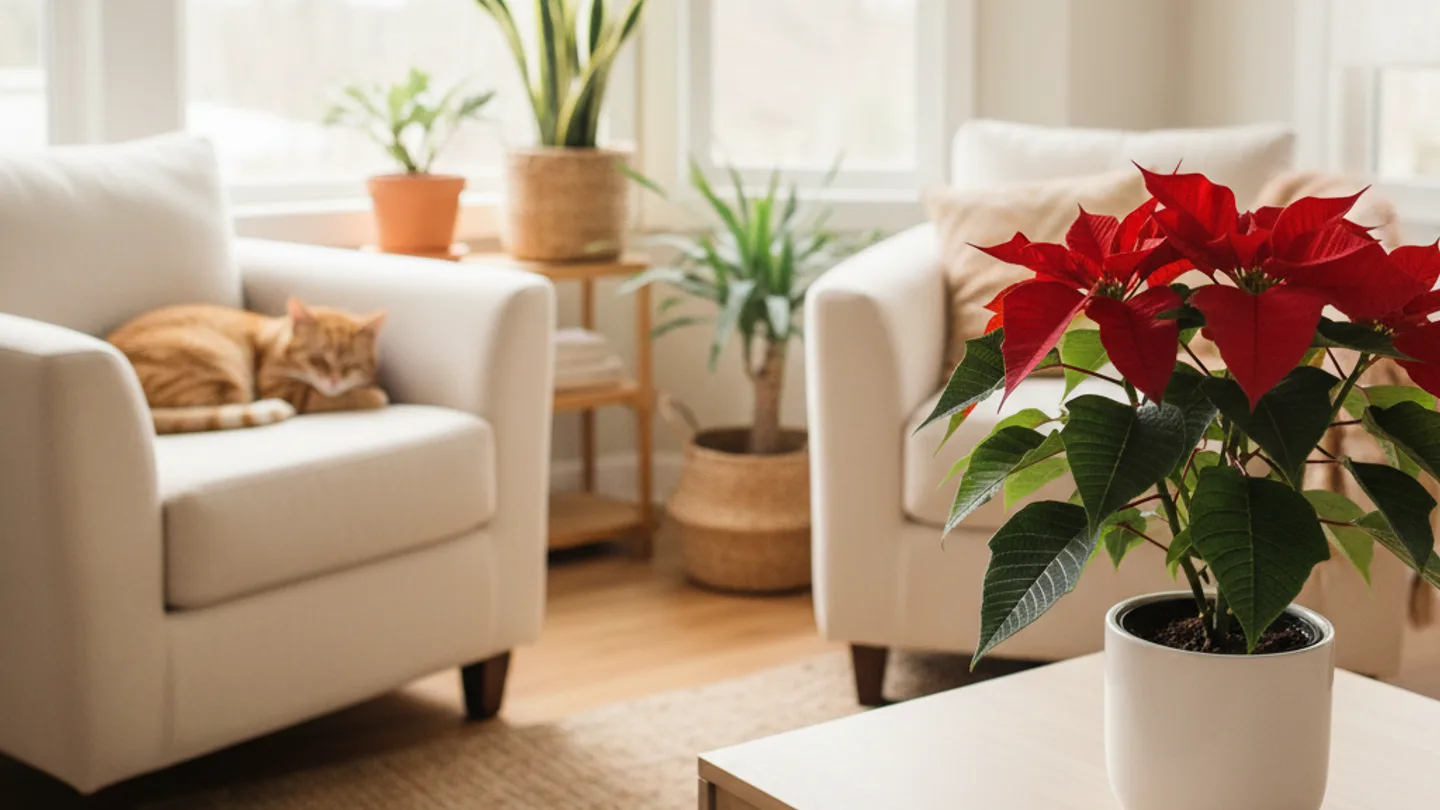
You do not have to ban poinsettias forever. Place them where pets cannot reach: a high shelf, a plant stand, or a room the cat skips.
Pick up fallen leaves quickly. That is the part pets actually find.
And if a nibble happens anyway, stay calm. Rinse your pet's mouth with water, offer fresh drinking water, and watch them for a few hours. In almost every case, that is all it takes.
Common questions about poinsettias and pets
Is poinsettia toxic to cats?
Only mildly. The sap can irritate a cat's mouth and stomach, causing drooling or a single bout of vomiting. Serious poisoning is extremely unlikely, and most cats need no treatment.
Is poinsettia toxic to dogs?
Same story as for cats. Dogs may drool, lick their lips or vomit once after chewing a leaf. It is unpleasant but rarely more than that.
Can a poinsettia kill my pet?
Fatal cases are not a realistic concern. A pet would need to eat far more plant than its bad taste allows. The deadly reputation comes from an unverified story from 1919, not from veterinary evidence.
What should I do right after my pet eats poinsettia?
Remove plant pieces from the mouth, rinse gently with water, and offer fresh water. Watch for repeated vomiting or unusual behavior. Call your vet if symptoms continue or your pet seems unwell.
Are poinsettias safe around babies and toddlers?
The sap can irritate skin and mouths in children too, so keep plants out of reach. The risk is mild irritation, not severe poisoning, but contact a doctor or poison control if a child eats a leaf.
What is a truly pet-safe holiday plant?
Christmas cactus is the closest match: festive winter blooms and generally considered non-toxic to cats and dogs. Moth orchids and haworthia are also safe picks for the season.