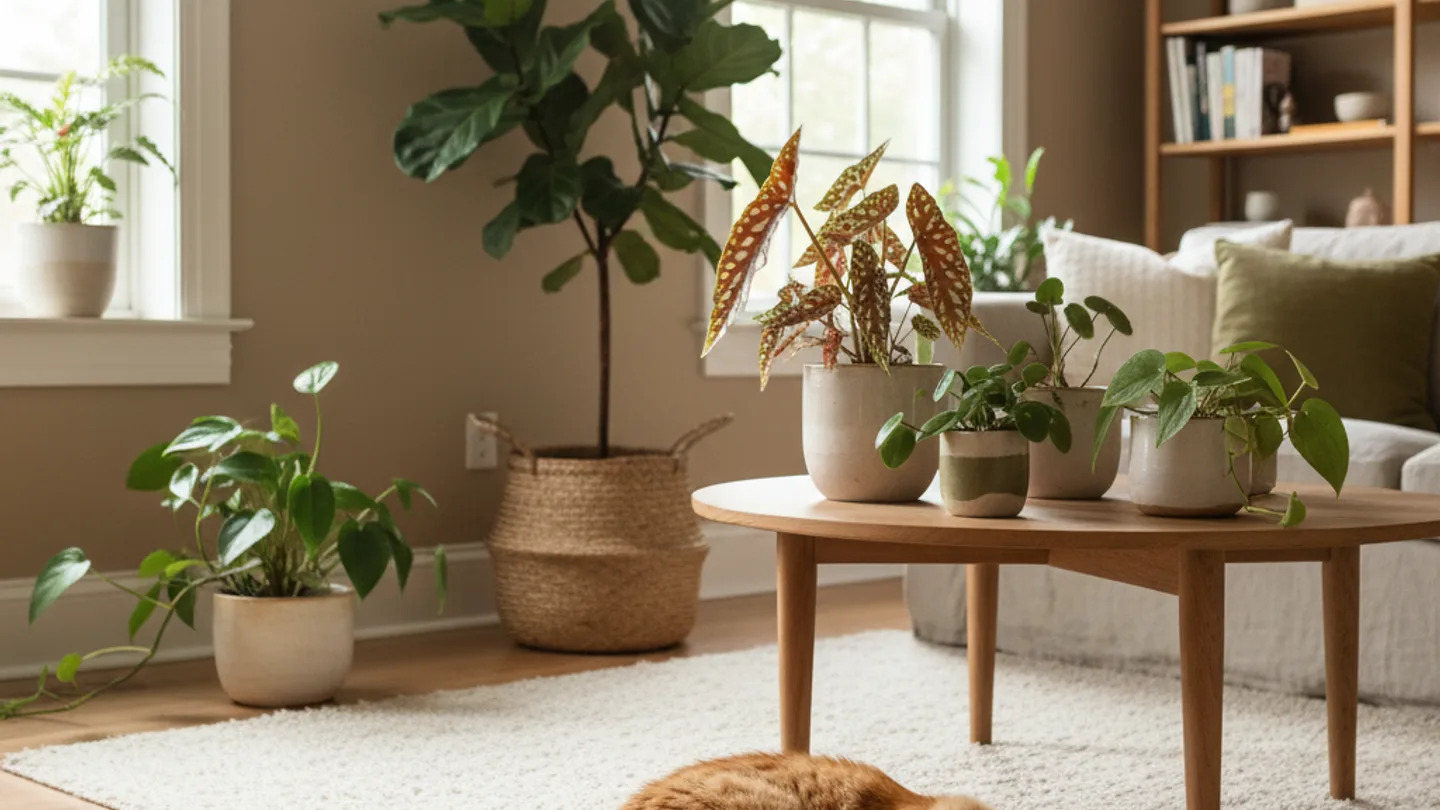
Are Begonias Toxic to Cats and Dogs?
Begonias are toxic to both cats and dogs. That is the short answer, and it applies to the whole plant family, from wax begonias in garden beds to rex begonias on your windowsill.
The good news: most begonia nibbles cause mild to moderate symptoms, not emergencies. The highest concentration of the irritating compounds sits in the tubers and roots, which pets rarely reach. Below you will find what happens if your pet eats begonia, how indoor and outdoor begonias differ in risk, and safe plants that give you the same colorful foliage.
The short version
- Begonias are toxic to cats and dogs, according to the ASPCA.
- The irritating compounds, called soluble oxalates, are most concentrated in the tubers and roots.
- Typical symptoms are mouth irritation, drooling and vomiting.
- Indoor rex begonias are a bigger everyday risk for cats than outdoor garden beds.
- Pet-safe swaps with a similar look include peperomia, calathea and polka dot plant.
Why begonias are toxic
Begonias contain soluble oxalates. In plain words, these are tiny sharp crystals that can irritate your pet's mouth, tongue and throat on contact. When swallowed, they can also upset the stomach.
The roots and tubers hold the highest concentration. Tubers are the thick underground storage parts of the plant, and tuberous begonias are especially common in summer garden beds and hanging baskets.
The leaves and stems contain less of the irritant, but they are not risk free. A curious cat chewing a rex begonia leaf can still end up with a sore, irritated mouth.
What happens if your pet eats begonia
Most cases are mild to moderate. The irritation starts fast, often within minutes of chewing, which is actually helpful: it usually stops pets from eating a large amount.
Watch for these signs: pawing at the mouth, drooling, lip smacking, vomiting, and in some cases trouble swallowing. Dogs that dig up and chew begonia tubers can have stronger symptoms because the tubers carry the highest oxalate load.
Call your vet if symptoms appear, especially if your pet vomits repeatedly, refuses food, or seems to struggle with swallowing. If you know your pet ate a tuber or a large amount of plant material, do not wait for symptoms. In the US you can also contact the ASPCA Animal Poison Control Center or the Pet Poison Helpline for guidance.
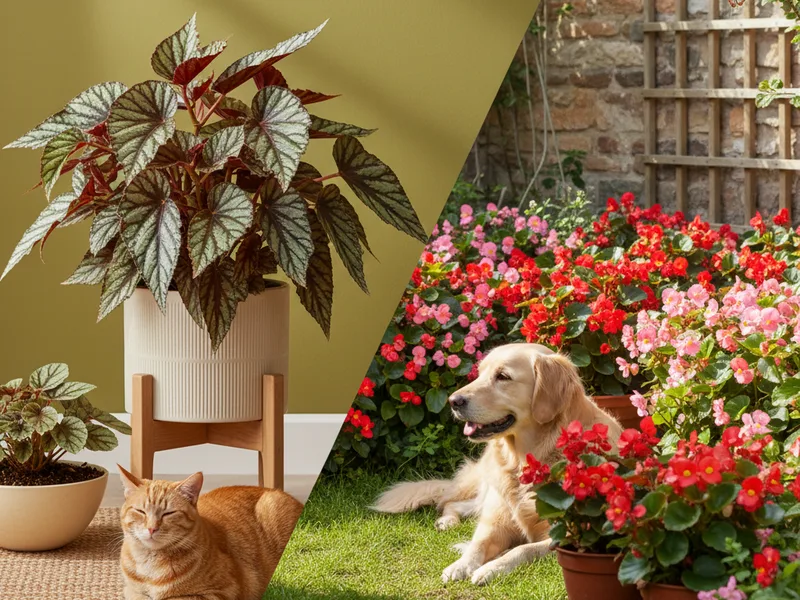
Indoor rex begonias vs garden begonias
Indoors, the main risk is cats. Rex begonias and other fancy-leaf types are popular houseplants, and their textured, colorful leaves sit exactly at cat height on shelves and windowsills. A bored indoor cat may chew them out of curiosity.
Outdoors, the main risk is dogs. Wax begonias and tuberous begonias are bedding favorites, and a dog that digs can reach the tubers, the most toxic part of the plant. Freshly planted beds are the most tempting.
The plant itself is equally toxic in both settings. What changes is which pet is likely to meet it, and which part of the plant they are likely to eat.
| Plant | Why it works as a swap | Light it likes | Pet safety |
|---|---|---|---|
| Peperomia | Thick, patterned leaves in many colors, compact size | Bright indirect light, tolerates medium light | Generally considered non-toxic to cats and dogs |
| Calathea | Bold painted foliage, similar drama to rex begonia | Medium to bright indirect light | Generally considered non-toxic to cats and dogs |
| Polka dot plant (Hypoestes) | Pink, red or white speckled leaves, playful color | Bright indirect light | Generally considered non-toxic to cats and dogs |
| Nerve plant (Fittonia) | Colorful veined leaves, great for terrariums and small pots | Low to medium indirect light | Generally considered non-toxic to cats and dogs |
| Bromeliad | Bright central color, similar impact to flowering begonias | Bright indirect light | Generally considered non-toxic to cats and dogs |
Keeping begonias if you already have them
You do not have to throw out every begonia today. Risk depends on placement and on your pet. A tuberous begonia in a fenced-off garden bed is a different situation from a rex begonia at nose height on a cat's favorite shelf.
Practical steps: move indoor begonias to rooms your cat cannot access, or to hanging planters well out of jump range. For dogs, avoid planting begonias in beds your dog digs in, and store dormant tubers where pets cannot reach them.
If your pet is a persistent plant chewer, swapping to a safe lookalike is the calmer choice. And if you are also wondering about other trendy plants, read our guide on whether Monstera is toxic to cats and dogs.
Common questions about begonias and pets
Are begonias toxic to cats?
Yes. Begonias are toxic to cats. The soluble oxalates in the plant irritate the mouth and throat, and the tubers and roots carry the highest concentration. Contact your vet if your cat chews one and shows symptoms like drooling or vomiting.
Are begonias toxic to dogs?
Yes, they are toxic to dogs as well. Dogs that dig up garden begonias are at the highest risk, because the tubers underground are the most irritating part. Watch for drooling, vomiting and pawing at the mouth.
Which part of the begonia is most dangerous?
The tubers and roots. They hold the highest concentration of soluble oxalates. Leaves and stems contain less, but chewing them can still cause mouth irritation and stomach upset.
Is rex begonia safe for cats?
No. Rex begonia is a true begonia and is toxic to cats and dogs. Because it is a popular indoor plant with tempting textured leaves, it is one of the more common begonias for cats to chew.
What should I do if my pet eats begonia?
Remove any plant material from your pet's mouth and rinse the mouth gently with water if your pet allows it. Call your vet for advice, especially if you see vomiting, heavy drooling or trouble swallowing. In the US, the ASPCA Animal Poison Control Center and the Pet Poison Helpline can also guide you.
Are there pet-safe plants that look like begonias?
Yes. Peperomia, calathea, polka dot plant, nerve plant and bromeliads all offer colorful or patterned foliage and are generally considered non-toxic to cats and dogs. Match the swap to your light level for the best result.