Are Geraniums Toxic to Cats and Dogs?
Yes, geraniums are toxic to both cats and dogs. The common garden geranium, whose botanical name is Pelargonium, contains two natural compounds called geraniol and linalool that can make your pet sick.
This matters more than you might think, because geraniums are everywhere in summer. They fill window boxes, balcony planters and porch pots across the US, often right at nose height for a curious cat or dog.
Below you will find what happens if your pet eats a geranium, which symptoms to watch for, and which pet-safe flowers give you the same bright color without the risk.
The short answer
- Geraniums (Pelargonium species) are toxic to cats and dogs.
- The toxic compounds are geraniol and linalool, natural oils found in the plant.
- Typical symptoms are vomiting, low mood and loss of appetite. Skin contact can cause irritation.
- Poisoning is usually mild, but call your vet if your pet has eaten a geranium or shows symptoms.
- Balconies and window boxes are high-risk spots because geraniums sit within easy reach.
- Pet-safe swaps with a similar look include petunias, marigolds grown from seed, snapdragons and roses.
Why geraniums are toxic to pets
Scented geraniums and common bedding geraniums belong to the Pelargonium family. They produce two aromatic compounds: geraniol and linalool. These give the plant its distinctive smell, the one many people love and most pets do not.
Geraniol and linalool are natural essential oil compounds. In plain words: they are the plant's built-in defense against insects, and your pet's body does not handle them well. When a cat or dog chews the leaves or flowers, these compounds can irritate the stomach and intestines.
The good news is that geranium poisoning is usually mild. Most pets need to eat a fair amount before serious problems start, and the strong smell puts many animals off after one bite. Still, mild does not mean harmless, and smaller pets and cats can react more strongly.
One more thing to know: true geraniums in the botanical sense, the hardy cranesbills in the genus Geranium, are a different group of plants. The summer bedding plants sold as geraniums in US garden centers are almost always Pelargonium, and those are the ones this article is about.

Symptoms to watch for
If your cat or dog has eaten part of a geranium, the most common signs are vomiting, a noticeable low mood and loss of appetite. Your pet may seem tired, withdrawn or simply not interested in food.
Skin contact can also cause problems. Geraniol and linalool can irritate the skin, so brushing against a dense planter or lying in a flower bed may lead to redness or itching, especially on the belly and paws.
Less common signs include drooling and mild stomach upset beyond a single episode of vomiting. Cats may groom the irritating compounds off their fur, which can add mouth irritation to the picture.
Most cases stay mild and pass within a day. Call your vet if vomiting repeats, if your pet refuses food for more than a few hours, or if you know a large amount was eaten. When in doubt, a quick call to your vet or a pet poison helpline is always the right move.
What to do if your pet eats a geranium
Remove the plant material
Gently take any leaves or petals out of your pet's mouth and move your pet away from the plant. Note roughly how much was eaten.
Rinse if there is skin or mouth contact
Wipe the mouth with a damp cloth or offer fresh water. If skin looks red or your pet keeps licking one spot, rinse the area with lukewarm water.
Watch for symptoms
Keep an eye on your pet for the next 24 hours. Look for vomiting, low mood, loss of appetite and signs of skin irritation.
Call your vet when in doubt
Contact your vet or a pet poison helpline if symptoms appear, if a large amount was eaten, or if your pet is small, young, old or already unwell. Bring a photo or a piece of the plant for identification.

Why balconies and window boxes are a risk zone
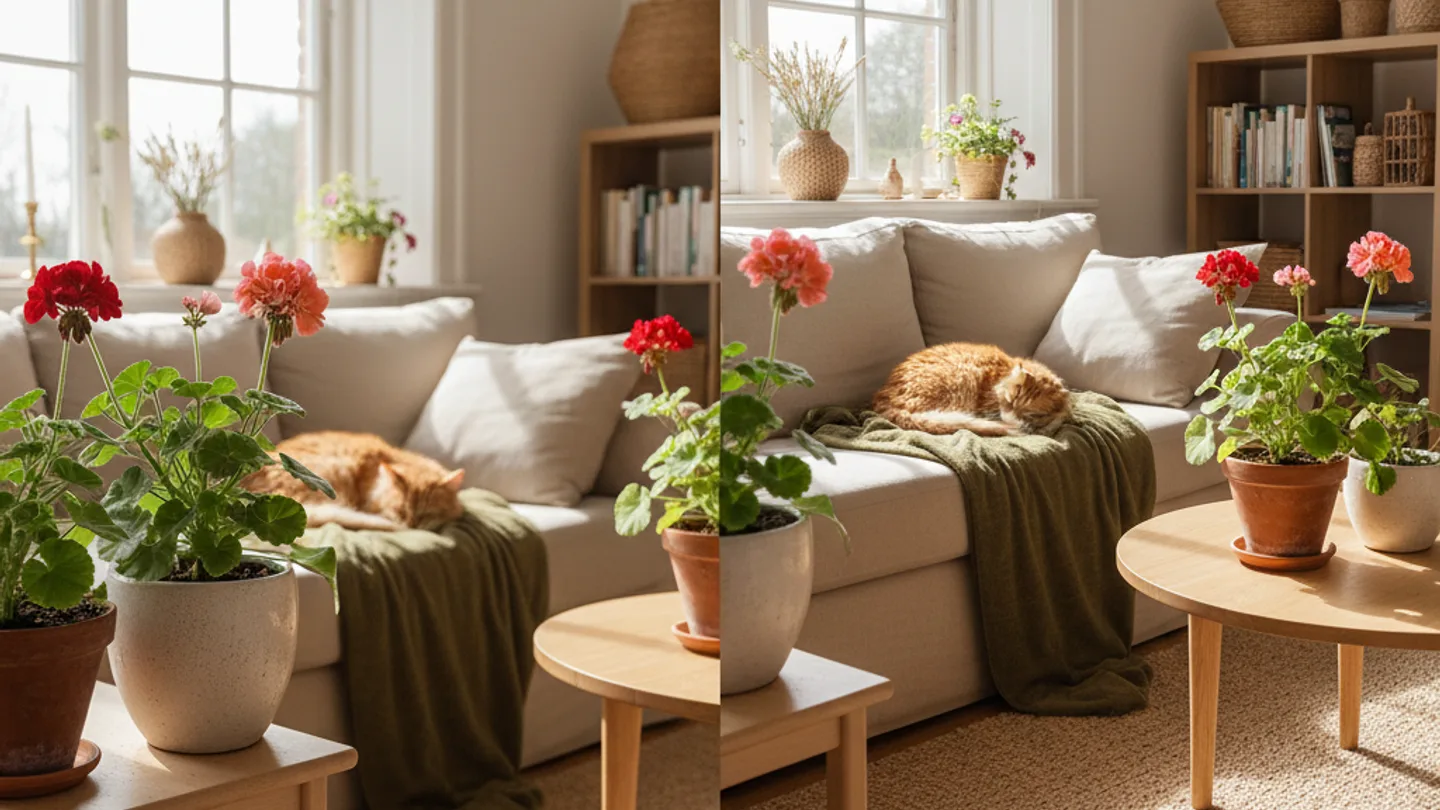
Geranium poisoning is rarely about a houseplant in the corner. It is about placement. Window boxes and balcony rail planters put geraniums exactly where cats sit and where dogs sniff past every day.
Cats love a sunny railing spot, and a window box full of geraniums is often right next to their favorite perch. One bored afternoon can be enough for a chew. Dogs on balconies or porches meet the same plants at muzzle height.
If you rent an apartment with a shared balcony or your neighbor's window box hangs over your patio, your pet can still reach the plants. It is worth a friendly word with neighbors, or simply keeping your pet's favorite lookout spot away from the planter.
A practical fix: swap the geraniums in reach for pet-safe flowers, and keep any Pelargonium you cannot part with in hanging baskets well out of jumping and stretching range.
| Pet-safe swap | Look and color | Light needs | Good for |
|---|---|---|---|
| Petunias | Bright trumpet flowers in pink, purple, red and white, similar summer bedding feel | Full sun | Window boxes and railing planters |
| Snapdragons | Upright spikes in many colors, cottage garden style | Full sun to part shade | Pots and balcony planters |
| Marigolds (grown from seed or plants) | Cheerful orange and yellow pompons | Full sun | Sunny balconies; note the ASPCA lists Tagetes as mildly irritating, so keep snacking in check |
| Roses | Classic blooms in every color, scented options available | Full sun | Pots on patios and balconies |
| Zinnias | Bold daisy-like flowers, long blooming season | Full sun | Sunny planters and cutting gardens |
| Camellias | Glossy leaves and rose-like flowers | Part shade | Shadier balconies and entrances |
Choosing a swap that fits your space
Match the swap to your light, not just the color. Geraniums thrive in full sun, and so do petunias, snapdragons and zinnias, so a sunny south or west facing balcony has plenty of safe options.
For part shade, roses in a large pot or a camellia give you structure and flowers without the worry. Both are generally considered non-toxic to cats and dogs.
Remember that even a pet-safe plant can cause a mild stomach upset if your pet eats a lot of it. Non-toxic means the plant has no known toxic compounds, not that it is a snack. If your pet is a determined chewer, place planters where they are admired rather than sampled.
Curious about another popular plant? Read our guide on whether Monstera is toxic to cats and dogs for the same verdict-first approach.
Common questions about geraniums and pets
Are geraniums toxic to dogs?
Yes. Geraniums (Pelargonium) are toxic to dogs. The compounds geraniol and linalool can cause vomiting, low mood, loss of appetite and skin irritation. Most cases are mild, but call your vet if your dog has eaten a geranium or shows symptoms.
Are geraniums toxic to cats?
Yes, they are toxic to cats as well. Cats can show the same symptoms as dogs, and grooming the plant's oils off their fur can add mouth irritation. Keep window boxes with geraniums away from your cat's favorite perch.
What part of the geranium is poisonous?
The whole plant contains geraniol and linalool, including the leaves, stems and flowers. Scented varieties tend to have higher concentrations of these aromatic compounds.
How much geranium is dangerous for a pet?
There is no exact toxic dose, because it depends on your pet's size and the amount eaten. Most poisonings are mild, but small pets can react to smaller amounts. If you know a large amount was eaten, call your vet rather than waiting for symptoms.
Are scented geraniums more dangerous?
Scented Pelargonium varieties contain more of the aromatic oils that cause problems, so they are best kept well out of reach. The basic advice is the same for all types: treat every geranium as toxic to cats and dogs.
What can I plant instead of geraniums on my balcony?
Petunias, snapdragons, zinnias and roses are generally considered non-toxic to cats and dogs and thrive in the same sunny spots. For part shade, consider a camellia in a pot.