
Is Anthurium Toxic to Cats and Dogs?
Anthurium plants are toxic to both cats and dogs. That includes the popular flamingo flower with its glossy red blooms and the darker queen anthuriums you see all over Instagram.
The problem is calcium oxalate crystals, tiny sharp crystals in the leaves, stems and flowers. When a cat or dog chews the plant, these crystals irritate the mouth and throat right away. It is painful, but it is rarely life-threatening, and most pets recover fully with basic care.
Below you will find the symptoms to watch for, what to do if your pet takes a bite, and pet-safe plants that give you the same bold red accent without the risk.
Key takeaways
- Anthurium is toxic to cats and dogs, in every part of the plant.
- The cause is calcium oxalate: tiny sharp crystals that irritate the mouth, tongue and throat.
- Typical symptoms are mouth pain, drooling, pawing at the face and vomiting.
- Most cases are mild and pass within a day, but call your vet if swelling or swallowing problems appear.
- Pet-safe red-accent swaps include the hoya, certain orchids and the lipstick plant.
Why anthurium is toxic to pets
Anthurium contains insoluble calcium oxalate crystals. In plain words: the plant is packed with microscopic needle-shaped crystals. When your cat or dog bites into a leaf or flower, these needles shoot into the soft tissue of the mouth and tongue.
That causes instant pain and a burning feeling. It is the plant's built-in defense, and it works fast. Most pets stop chewing after the first bite because it hurts immediately.
This is actually good news. Because the pain starts at once, most cats and dogs spit the plant out and rarely swallow a large amount. Serious poisonings are uncommon. Still, it is smart to know what can happen and when to call the vet.
Symptoms after chewing an anthurium
The first signs show up within minutes, right around the mouth:
– Intense mouth pain and pawing at the face
– Heavy drooling, sometimes with foam
– Swelling of the lips, tongue or gums
– Vomiting, especially in dogs
– Loss of appetite or refusing water because swallowing hurts
In rare cases, when a pet swallows a bigger piece, the swelling can reach the throat. Watch for trouble swallowing, gagging or noisy breathing. That is the moment to call your vet right away.
Cats often chew the shiny leaves. Dogs, especially puppies, are more likely to grab a fallen flower or leaf from the floor. Both are exposed to the same crystals.
What to do if your pet eats anthurium
Stay calm. In most cases the irritation is painful but passes within 12 to 24 hours.
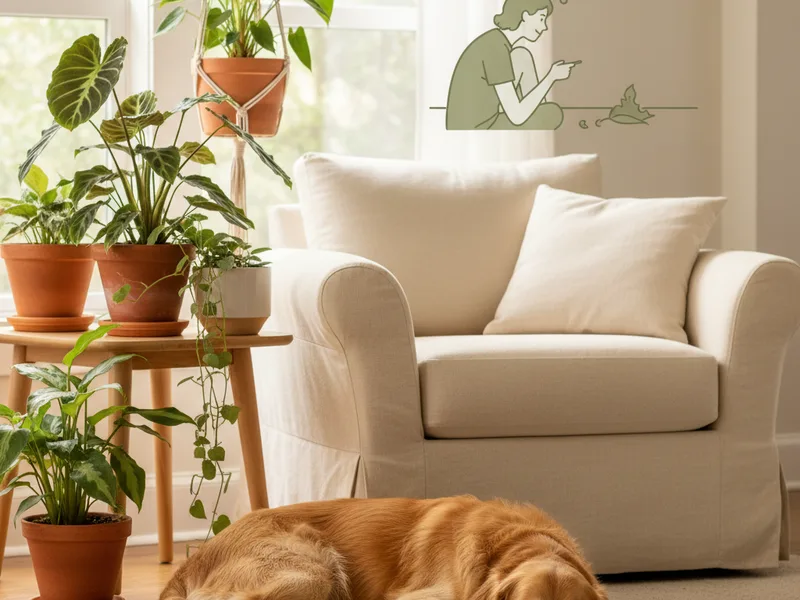
Gently rinse your pet's mouth with cool water, or offer water or ice cubes to lick. This helps wash away the crystals. Remove any plant pieces you can safely reach.
Call your vet if the drooling does not stop, if your pet vomits repeatedly, or if you see swelling around the throat. Bring the plant name with you: it helps your vet act faster. Never induce vomiting on your own unless a vet tells you to.
A common scenario: anthurium as a gift plant
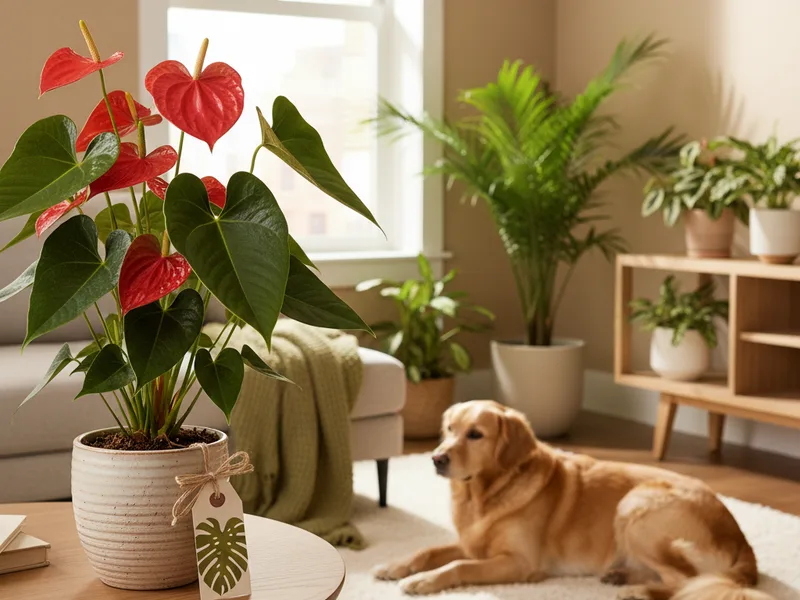
Anthuriums are classic gift plants. They show up in Valentine's Day bouquets, housewarming gifts and holiday arrangements because the heart-shaped red blooms look festive and last for weeks.
The problem: gift plants arrive unannounced, and they often land on a coffee table or kitchen counter, exactly at cat height. The recipient may not even know the plant's name, let alone that it is toxic.
If you receive an anthurium and you have pets, place it somewhere truly out of reach, like a high shelf your cat cannot jump to, or a room that stays closed. Hanging planters are rarely enough for determined cats. And if you are the one giving the gift, pick one of the safe swaps below when you know the household has pets.
| Plant | Red accent | Light needs | Pet safety |
|---|---|---|---|
| Hoya (wax plant) | Red-tinged blooms and new growth | Bright, indirect light | Generally considered non-toxic |
| Moth orchid (Phalaenopsis) | Red and pink varieties available | Bright, indirect light | Generally considered non-toxic |
| Lipstick plant (Aeschynanthus) | Tubular red flowers | Bright, indirect light | Generally considered non-toxic |
| Bromeliad (Guzmania) | Long-lasting red center bloom | Medium to bright indirect light | Generally considered non-toxic |
| African violet | Deep red and pink varieties | Bright, indirect light | Generally considered non-toxic |
Keeping anthurium if you have pets
Some plant lovers do not want to give up their anthurium, and that is understandable. If you keep one, treat placement as a safety feature, not a styling choice.
Use a closed room, a tall plant cabinet or a shelf with no launch points nearby. Cats can jump five to six feet, so 'high' has to mean really high. Clean up fallen leaves and spent flowers the same day, since the crystals stay active after the leaf drops.
If your pet has a habit of chewing everything green, a swap is the calmer choice. You can read more about another popular but toxic plant in our guide on Monstera and pets.
Frequently asked questions
Is anthurium toxic to cats?
Yes. Anthurium is toxic to cats. All parts of the plant contain calcium oxalate crystals that cause mouth pain, drooling and vomiting when chewed. Most cats recover fully, but contact your vet if symptoms are severe or last more than a day.
Is anthurium toxic to dogs?
Yes. Dogs react the same way as cats: instant mouth irritation, drooling, pawing at the face and sometimes vomiting. Puppies are at higher risk because they chew more freely.
Which part of the anthurium is toxic?
All of it. The leaves, stems, roots and the glossy flowers all contain calcium oxalate crystals. The flowers and fallen leaves are the most common culprits because they end up within reach.
Can anthurium poisoning be fatal?
Fatal cases are very rare. The immediate mouth pain stops most pets from swallowing much. The real danger is throat swelling after eating a larger amount, which can block breathing. Call your vet at once if your pet struggles to swallow or breathe.
What plant looks like anthurium but is pet-safe?
For a bold red bloom, try a Guzmania bromeliad or a red moth orchid. Both are generally considered non-toxic to cats and dogs and thrive in similar bright, indirect light.
My cat only licked an anthurium leaf. Should I worry?
A quick lick usually causes nothing or very mild irritation, since the crystals release on chewing. Offer fresh water and watch for drooling or pawing at the mouth over the next few hours. If symptoms appear, call your vet.