Are Daisies Toxic to Cats and Dogs? It Depends on the Daisy
Are daisies toxic to cats and dogs? Some are, and some are not. It depends which daisy you mean. Gerbera daisies are generally considered non-toxic to cats and dogs. Common daisies, Shasta daisies and their chrysanthemum relatives are toxic to both.
The confusion is in the name. Daisy is a nickname shared by many different plants, and shops do not always use botanical names. A plant labeled simply as a daisy can be a safe pick or a problem, depending on the species.
This guide sorts the most common daisy types into safe and unsafe, explains what happens if your pet eats one, and shows which daisies to choose for your home and your bouquets.
The short answer
- Gerbera daisies are generally considered non-toxic to cats and dogs.
- Common daisies, Shasta daisies, oxeye daisies, painted daisies and chrysanthemums (mums) are toxic to both cats and dogs.
- Toxic daisies contain natural irritants. Eating them can cause drooling, vomiting, diarrhea and irritated skin.
- Most cases are mild to moderate, but you should still call your vet when your pet eats a toxic daisy.
- In mixed bouquets, chrysanthemums often hide under the name daisy. A Gerbera-only bunch is the safe choice.
The name problem
One name, many plants
Daisy is not one plant. It is a common name for dozens of species in the aster family, called Asteraceae. That family includes Gerbera daisies, Shasta daisies, oxeye daisies, painted daisies and chrysanthemums, among others.
They share a look: white or colored petals around a button-shaped center. But they are different species with different chemistry. That is why one daisy can sit safely on your table while another sends your cat to the vet.
Shops and florists add to the mix-up. Chrysanthemums are often sold simply as daisies or daisy mums, and care tags rarely use botanical names. If you cannot confirm which daisy you have, treat it as unsafe until you can.
| Daisy type | Botanical name | Cats | Dogs |
|---|---|---|---|
| Gerbera daisy | Gerbera jamesonii | Generally considered non-toxic | Generally considered non-toxic |
| African daisy | Osteospermum spp. | Generally considered non-toxic | Generally considered non-toxic |
| Common (English) daisy | Bellis perennis | Toxic | Toxic |
| Shasta daisy | Leucanthemum x superbum | Toxic | Toxic |
| Oxeye daisy | Leucanthemum vulgare | Toxic | Toxic |
| Painted daisy | Tanacetum coccineum | Toxic | Toxic |
| Chrysanthemum (mum) | Chrysanthemum spp. | Toxic | Toxic |

Toxic daisies: what they can do to your pet
The toxic group includes the common daisy, the Shasta daisy, the oxeye daisy, the painted daisy and the chrysanthemum, often sold as mums. All parts of these plants count: flowers, leaves and stems.
They contain pyrethrins and sesquiterpene lactones. In plain words: pyrethrins are natural compounds the plant makes to keep insects away, and sesquiterpene lactones are bitter substances that irritate tissue. For your pet, that means an irritated mouth and stomach, and sometimes irritated skin from brushing against the plant.
Typical symptoms after eating a toxic daisy are drooling, vomiting, diarrhea and a poor appetite. Larger amounts can cause wobbliness. Skin contact can lead to redness or itching.
Most daisy poisonings stay mild to moderate and pass with veterinary care. That is not a guarantee, though. Small pets, kittens and puppies can get sicker from the same amount, so call your vet instead of waiting it out.
If it already happened
What to do if your pet eats a daisy
Move your pet away from the plant
Take the plant out of the room or move your pet. Gently clear any plant pieces from your pet's mouth if you can do that safely.
Work out what was eaten
Identify the daisy type if you can, which parts were eaten and roughly how much. Keep the plant label or a piece of the plant for your vet, and note the time.
Call a professional
Call your vet, the ASPCA Animal Poison Control Center at (888) 426-4435 or the Pet Poison Helpline at (855) 764-7661. A consultation fee may apply for the hotlines. Describe the plant and the amount eaten.
Do not make your pet vomit on your own
Only induce vomiting if a vet tells you to. Done wrong, it can make things worse.
Watch for symptoms
Look for drooling, vomiting, diarrhea, tiredness, skin irritation or wobbliness over the next hours. Note when each symptom starts and call the vet again if anything changes.

Gerbera daisies: the pet-safe daisy
Gerbera daisies (Gerbera jamesonii) are generally considered non-toxic to cats and dogs. They give you the classic daisy look, a bright button of petals in pink, orange, red, yellow or white, without the toxicity problem.
Unlike a Monstera, which is toxic to both cats and dogs, a Gerbera can sit in a sunny window in a pet household. The African daisy (Osteospermum) is also generally considered non-toxic and gives a similar look for pots and borders. If you are ever unsure about an exact species, confirm it with your vet before bringing it home.
Non-toxic does not mean a free snack. Any plant material can cause mild stomach upset if your pet eats a lot of it, so keep pots out of reach of determined chewers and pick up fallen leaves and petals.
Care is apartment-friendly. Give a Gerbera a bright spot near a window, water when the top inch of soil feels dry, and do not let the pot sit in water. No greenhouse conditions needed.
Frequently asked questions
Are daisies toxic to cats?
Most common daisies are. Common daisies, Shasta daisies, oxeye daisies, painted daisies and chrysanthemums are toxic to cats. Gerbera daisies are the exception: they are generally considered non-toxic. If your cat eats a toxic daisy, call your vet.
Are daisies toxic to dogs?
The same split applies. Common daisies, Shasta daisies, oxeye daisies, painted daisies and mums are toxic to dogs and can cause drooling, vomiting and diarrhea. Gerbera daisies are generally considered non-toxic.
My dog ate a daisy on a walk. What should I do?
Stay calm and identify the plant if you can. Note how much was eaten and when. Then call your vet for advice, especially if it was a common daisy, oxeye daisy or mum. Watch for drooling, vomiting or diarrhea over the next hours.
Are the leaves and stems toxic too, or just the flowers?
All parts of toxic daisies contain the irritating compounds: flowers, leaves and stems. Treat the whole plant as unsafe, including fallen leaves and petals.
Are the little daisies in my lawn a problem?
Lawn daisies belong to the toxic group. A dog eating one or two will usually face nothing worse than mild stomach upset, but that is not a guarantee. Discourage grazing, and call your vet if your dog eats a lot of them or shows symptoms.
Can I keep a daisy bouquet in a home with cats?
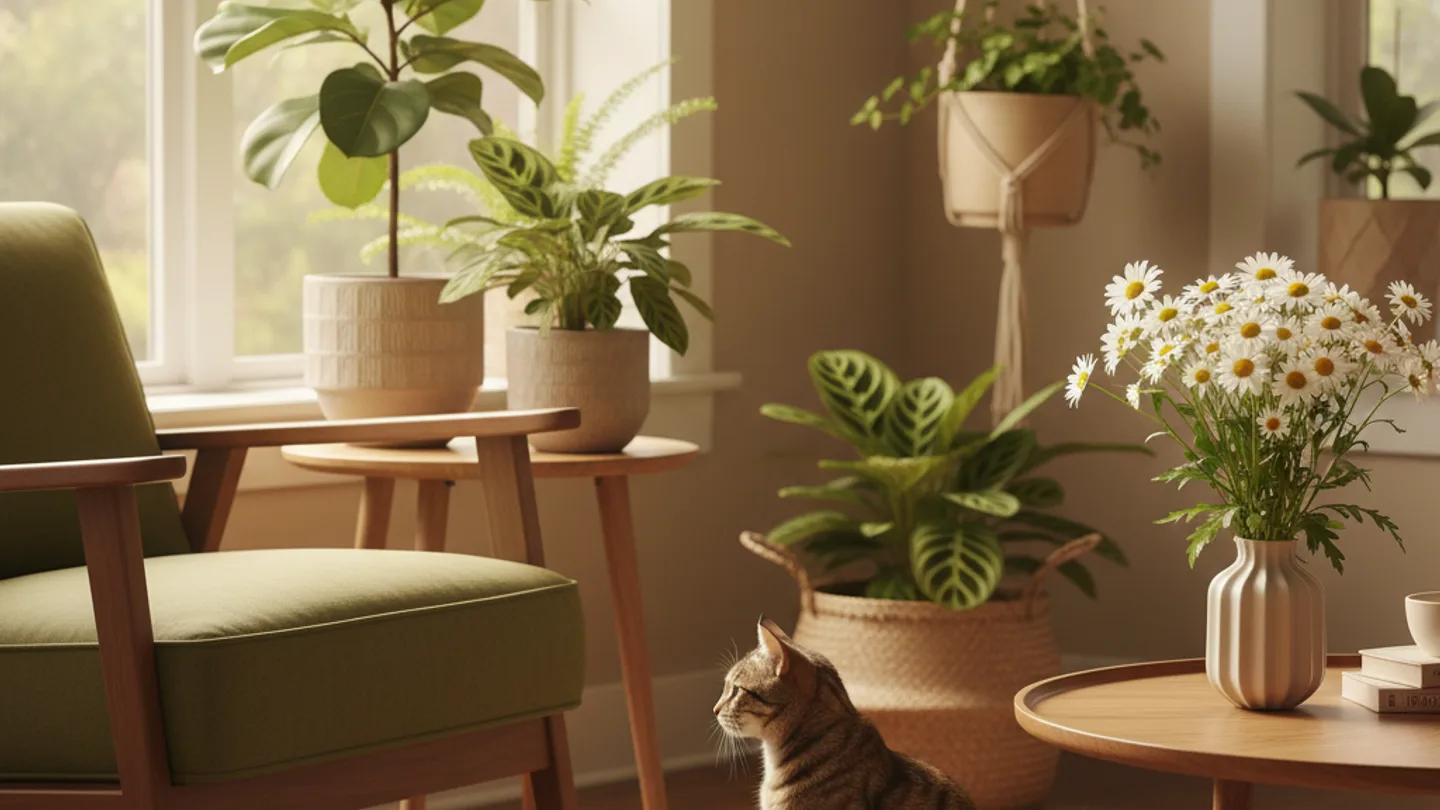
Yes, if it is a Gerbera-only bouquet placed where your cat cannot chew it. Mixed bouquets often contain mums or lilies, which are toxic or worse for cats, so check every stem or keep the vase in a pet-free room.
Cut flowers
Daisies in bouquets: what to check before one enters your home
Buying cut flowers? Gerbera daisies are your safe daisy. The catch is that many mixed bouquets sold as daisy bouquets contain chrysanthemums, because mums are the classic florist's daisy. Those are toxic to cats and dogs.
Ask the florist which species are in the bunch, or choose a single-variety bunch of Gerberas. If you receive a bouquet as a gift and cannot identify every stem, keep it in a room your pets cannot enter.
Check the whole bouquet, not just the daisies. True lilies, a common bouquet flower, are extremely dangerous to cats and can cause kidney failure even in small amounts. Other gift plants raise similar questions, for example lavender and cyclamen, so it pays to check every species in the vase.
Finally, some practical habits: place vases where pets cannot reach, clear fallen petals and leaves quickly, and never let pets drink vase water. Flower food and the juices from cut stems can irritate the stomach.