
Is Baby’s Breath Toxic to Cats and Dogs?
Baby's breath is mildly toxic to both cats and dogs. The good news: a nibble usually leads to nothing worse than mild vomiting or diarrhea. The bad news: those tiny white flowers show up in almost every bouquet, so the risk is easy to miss.
This guide covers why baby's breath irritates pets, what symptoms to watch for, and why it deserves extra attention in lily arrangements and dried bouquets. You will also find pet-safe filler swaps that give you the same soft, cloud-like look.
The short answer
- Baby's breath is mildly toxic to cats and dogs.
- Most cases cause mild vomiting or diarrhea and pass on their own.
- The plant contains saponins, natural compounds that irritate the stomach and gut.
- Dried baby's breath keeps its toxicity, so dried arrangements are not a safe workaround.
- Baby's breath often hides in lily bouquets, and lilies are far more dangerous to cats.
- Pet-safe fillers like waxflower and statice give a similar look without the risk.
- Call your vet if symptoms are severe, last more than a day, or your pet ate a large amount.
Why baby's breath is toxic to pets
Baby's breath (Gypsophila) contains saponins. Saponins are natural soap-like compounds the plant makes to protect itself. When your cat or dog chews or swallows them, they irritate the lining of the mouth, stomach and intestines.
That irritation is what causes the classic symptoms: drooling, vomiting and diarrhea. In most healthy pets, a small amount leads to a short, mild upset stomach that clears up within a day.
Mildly toxic does not mean harmless. A small pet that eats a large amount, or a pet that keeps vomiting, can become dehydrated. Puppies, kittens, seniors and pets with existing health issues have less margin for error.
Symptoms to watch for
If your pet has chewed on baby's breath, the most common signs are:
Vomiting, diarrhea, drooling, loss of appetite and mild lethargy. Symptoms usually appear within a few hours of eating the plant.
Most mild cases resolve on their own. Remove any plant material from your pet's reach, offer fresh water and keep an eye on them for the next 24 hours.
Call your vet if vomiting or diarrhea is repeated or severe, if your pet seems weak or refuses water, or if you know they ate a large amount. When in doubt, a quick call to your vet or a pet poison hotline is always the safer choice.
The bigger risk: baby's breath in lily bouquets
Baby's breath rarely arrives alone. It is the classic filler in rose and lily bouquets, and that is where the real danger sits.
True lilies are extremely toxic to cats. Even a small amount of pollen, a few licks of vase water or a bite of a leaf can cause kidney failure in cats. This is one of the few plant warnings where strong language is justified.
If someone sends you a bouquet, check it before it hits the table. Pull out any lilies if you have cats, and pull out the baby's breath if you have a dog or cat that chews on flowers. Better yet, place the whole arrangement somewhere your pet cannot reach, or rehome it with a pet-free friend.
Vase water is another quiet risk. Flowers release compounds into the water as they sit, and many pets will drink from a vase. Empty and refill vases where pets cannot get to them, or skip the vase entirely.
Dried baby's breath is still toxic
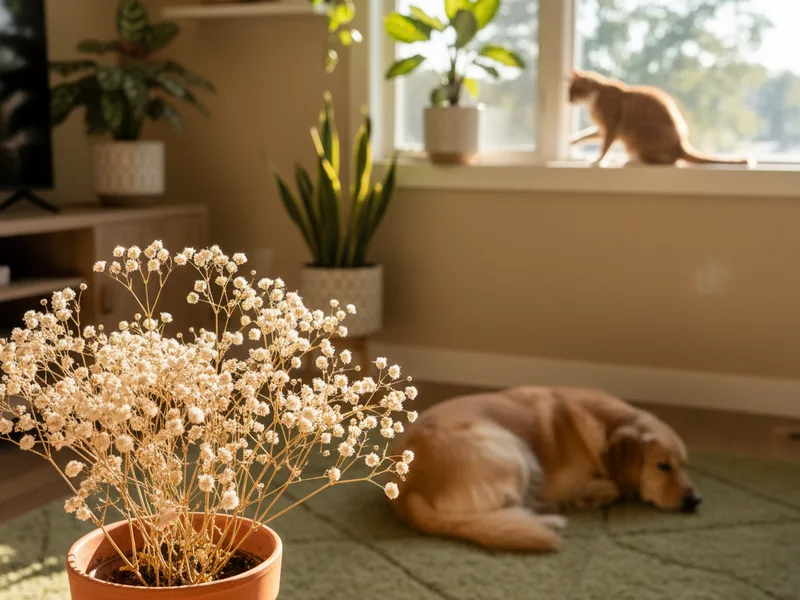
Drying does not remove the saponins. Dried baby's breath keeps its toxicity, so that dried arrangement on your shelf is not a safe workaround.
Dried stems can actually be more tempting. They rustle, they are at cat height on mantels and shelves, and they crumble into easy-to-swallow pieces. Cats that ignore fresh flowers will sometimes bat dried ones around like toys and chew what breaks off.
Treat dried baby's breath like the fresh version: out of reach, or out of the house if your pet is a known chewer.
| Filler flower | Look | Pet safety | Good to know |
|---|---|---|---|
| Waxflower | Tiny clustered blooms on airy stems, very similar feel | Generally considered non-toxic to cats and dogs | Sturdy, long-lasting in vases, works fresh or dried |
| Statice | Small papery flowers in soft colors | Generally considered non-toxic to cats and dogs | Dries beautifully and holds its color for months |
| Snapdragon (as filler) | Vertical spikes with small blooms | Generally considered non-toxic to cats and dogs | Adds height and structure to bouquets |
| Freesia | Delicate blooms with a light scent | Generally considered non-toxic to cats and dogs | Great for smaller arrangements and gift bouquets |
| Roses (as the main flower) | Classic focal bloom | Generally considered non-toxic to cats and dogs | Watch the thorns, and skip floral foam where pets can reach it |
How to ask for a pet-safe bouquet
Florists hear this request more often than you might think. When you order, say two things: no lilies, and no baby's breath. Then name what you do want, for example roses with waxflower, or freesia with statice.
If you are sending flowers to a friend with pets, add a note to the order. A good florist will build the arrangement around safe stems, and your gift will not come with a hidden vet visit.
At home, the simplest rule is placement. Even generally non-toxic flowers can cause a mild stomach upset if a pet eats enough of them, so keep arrangements on high shelves or in rooms your pet cannot access.
Common questions
Is baby's breath toxic to cats?
Yes, baby's breath is mildly toxic to cats. It contains saponins, which irritate the stomach and gut. Most cats that nibble it develop mild vomiting or diarrhea that passes within a day. Call your vet if symptoms are severe or last longer.
Is baby's breath toxic to dogs?
Yes, it is mildly toxic to dogs as well. The typical outcome is a short bout of vomiting or diarrhea. Dogs that eat a large amount, or small dogs and puppies, deserve a call to the vet.
Is dried baby's breath safe for pets?
No. Drying does not remove the saponins, so dried baby's breath stays toxic. Dried stems also crumble easily and can tempt cats to play and chew. Keep dried arrangements out of reach.
My cat ate baby's breath from a lily bouquet. What should I do?
Treat it as urgent because of the lilies, not the baby's breath. True lilies can cause kidney failure in cats, even in tiny amounts, including pollen and vase water. Call your vet or an animal poison hotline right away and tell them exactly what was in the bouquet.
What can I use instead of baby's breath in a bouquet?
Waxflower and statice are the closest matches for that soft, airy look, and both are generally considered non-toxic to cats and dogs. Freesia and snapdragons also work well as pet-safe fillers.
Is baby's breath poisonous to humans?
Baby's breath can cause mild irritation if eaten and its sap may irritate sensitive skin, but it is not considered highly dangerous to people. Keep it away from small children who might chew on stems, and wash hands after handling large bunches.