
Are Orchids Toxic to Cats and Dogs?
Are orchids toxic to cats? No, and dogs are in the clear too. Moth orchids (Phalaenopsis), the ones you see in every supermarket, garden center and Instagram feed, are generally considered non-toxic to both cats and dogs. That is a reassuring answer for one of the most gifted houseplants in the US.
Safe does not mean zero risk, though. The petals and leaves are fine, but the bark in the pot, leftover fertilizer water and a few rarer orchid types deserve a second look. Here is what to watch for.
The short version
- Moth orchids (Phalaenopsis) are generally considered non-toxic to cats and dogs.
- The ASPCA lists Phalaenopsis orchids as non-toxic to both.
- The bigger risks sit in the pot: bark chips, fertilizer water and mold.
- A few rare orchids and orchid lookalikes are less documented, so check the exact species name.
- Even a safe plant can cause mild stomach upset if your pet eats a lot of it.
- Call your vet if you see vomiting, diarrhea or drooling after your pet has snacked on any plant.
Moth orchids are safe for cats and dogs
The moth orchid, or Phalaenopsis, is the orchid almost everyone brings home. It has wide flat leaves, a curved stem and flowers that last for weeks. The ASPCA lists it as non-toxic to cats and dogs, so a curious nibble on a petal is not an emergency.
That makes orchids a rare bright spot among popular gift plants. Unlike cyclamen, another gift-shop favorite that is toxic to pets, a moth orchid is a safe pick for a home with cats or dogs.
Safe still does not mean harmless. No plant is. Eating a large amount of any plant material can irritate your pet's stomach, so it is still smart to keep an eye on a known leaf-chewer.
Which orchids are safe, and which to check
Common shop orchids
The orchids most often sold in US shops are generally considered non-toxic to cats and dogs. That includes moth orchids (Phalaenopsis) and other common types such as Cattleya, Dendrobium and Oncidium.
If your orchid came from a supermarket, florist or garden center, it is almost always one of these. Check the plant tag for the Latin name to be sure.
Rarer orchids and lookalikes
There are tens of thousands of orchid species, and the rare ones are far less documented. Lady's slipper orchids and wild-collected species are worth a check before you let a pet near them.
Some plants are also sold with the word orchid in the name without being true orchids. If the tag only says something vague like orchid mix, treat it as unknown until you have the exact name.
Find the exact name first
Start with the plant tag and look for the Latin name. Then look up that exact name on a trusted toxicity list, such as the ASPCA's plant database, before placing it within reach.
No tag, or a name you cannot find? Keep the plant on a high shelf or in a room your pet cannot enter, and ask your vet if you are unsure.
The flower is fine. Watch the pot.
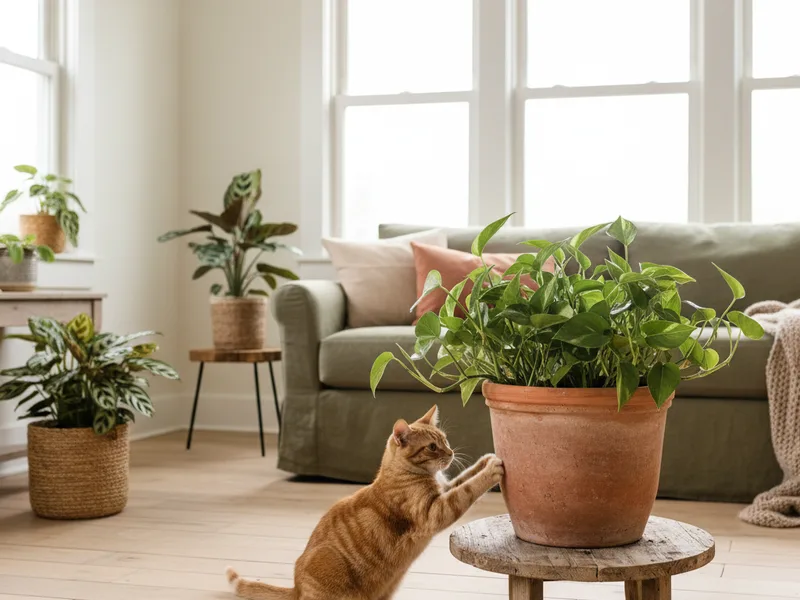
With orchids, the plant is rarely the problem. The pot is. Most orchids grow in chunky bark chips instead of soil, and some dogs love to snack on those chips. Bark is not toxic, but swallowed pieces can irritate the stomach, and a large amount can cause a blockage.
Damp bark can also grow mold, especially in a warm room. Moldy potting mix is not something you want your pet licking or eating, so replace the bark when it breaks down or smells musty.
Then there is the water. Many people keep their orchid in a decorative outer pot, and runoff water collects in the bottom. If you feed your orchid with diluted fertilizer, that leftover water contains fertilizer too. A pet drinking from the saucer can get a mild stomach upset.
The fix is simple. Empty the cache pot and saucer after watering, skip leaf-shine sprays, and keep fertilizer bottles out of reach. The orchid itself can stay.
Just in case
Stay calm and move the plant
Take the orchid away and gently check your pet's mouth for leftover pieces. A bite of a petal or leaf from a moth orchid is not an emergency.
Check what was actually eaten
Petal or leaf? Low concern. A mouthful of bark, or water from the saucer? Note roughly how much, because that matters more than the plant itself.
Offer fresh water
Wipe your pet's mouth if needed and put down a bowl of clean water. This helps rinse away any sap or fertilizer residue.
Watch for symptoms
Over the next 24 hours, look for vomiting, diarrhea, drooling, or a pet that stops eating. Mild stomach upset usually passes on its own.
Call your vet when in doubt
Call your vet or a pet poison helpline if symptoms appear, if your dog ate a large amount of bark, or if you are not sure which orchid type you have. Bring the plant tag if you can.

Orchids and pets in a real home
Moth orchids like bright, indirect light. An east or west facing windowsill works well in most apartments. They prefer a thorough watering about once a week, with all excess water drained away, which also happens to remove the fertilizer-water problem.
If your cat is a dedicated leaf-chewer, height is your friend. A high shelf, a plant stand or a hanging planter keeps the orchid out of reach and away from temptation. That matters even with safe plants: unlike Monstera, an orchid will not poison your cat, but a shredded orchid is still a sad orchid.
For dog owners, the main job is the pot. Keep the orchid where your dog cannot dig into the bark, and clean up fallen chips quickly. With those two habits, orchids and pets get along fine.
Frequently asked questions
Are orchids toxic to cats?
No. Moth orchids (Phalaenopsis) are generally considered non-toxic to cats, and to dogs as well. The plant itself is safe. The things to watch are the bark in the pot, leftover fertilizer water and a few rare orchid species.
My dog ate bark from the orchid pot. What now?
Orchid bark is not toxic, but it can irritate the stomach, and a large amount can cause a blockage. Take the pot away, watch for vomiting, diarrhea or a loss of appetite over the next 24 hours, and call your vet if symptoms appear or your dog ate a lot.
Are all orchid types safe for pets?
The common shop orchids, like Phalaenopsis, Cattleya, Dendrobium and Oncidium, are generally considered non-toxic. Rarer species and plants sold without a clear species name are less documented, so check the exact Latin name before placing them within reach.
Is it a problem if my cat drinks water from the orchid pot?
Plain runoff water is low risk, but water that contains diluted fertilizer can cause a mild stomach upset. The easy fix is to empty the saucer and the decorative outer pot after every watering.
Can a non-toxic orchid still make my pet sick?
Yes. No plant is completely harmless. Eating a large amount of any plant material can cause vomiting or diarrhea. If your pet shows symptoms after snacking on a plant, contact your vet.
What other flowering plants are safe around pets?
Besides moth orchids, plants like African violets are generally considered non-toxic to cats and dogs. Whatever you buy, check the exact species name first, because many popular flowering plants are toxic. Orchids are one of the safer choices.