Is Sago Palm Toxic to Cats and Dogs? A Serious Warning
Sago palm is severely toxic to both cats and dogs. Every part of the plant is poisonous, and the seeds are the most dangerous of all.
This is not a plant where a small nibble means an upset stomach. Sago palm contains cycasin, a toxin that can cause liver failure and death. If your pet has eaten any part of a sago palm, treat it as an emergency and contact your vet or an animal poison control line right away.
Below you will find what makes this plant so dangerous, the symptoms to watch for, what to do if exposure happens, and palm alternatives that are safe to keep in a home with pets.
The short answer
- Sago palm is severely toxic to cats and dogs.
- The toxin cycasin can cause liver failure and death.
- The seeds contain the highest concentration of toxin, but every part of the plant is poisonous.
- Every exposure is an emergency vet visit, even if your pet seems fine at first.
- Safe palm swaps exist, including parlor palm, areca palm and ponytail palm.
Why sago palm is so dangerous
Sago palm is not a true palm. It is a cycad, an ancient plant family, and it is sold under names like sago palm, king sago and cycad. You will find it in garden centers, as a landscape plant in warmer states, and as a potted houseplant.
The plant contains cycasin. In plain words, cycasin is a toxin that the body converts into a substance that attacks the liver. The liver cleans the blood and supports many vital functions, so when it fails, the consequences are severe.
All parts of the plant are toxic: the leaves, the trunk and the roots. The seeds, sometimes called nuts, carry the highest concentration of cycasin. Dogs are often drawn to the seeds because of their size and texture, which makes seed ingestion especially common and especially dangerous.
Cats are at risk too. Even chewing on a leaf can deliver enough toxin to cause serious illness.
Symptoms of sago palm poisoning
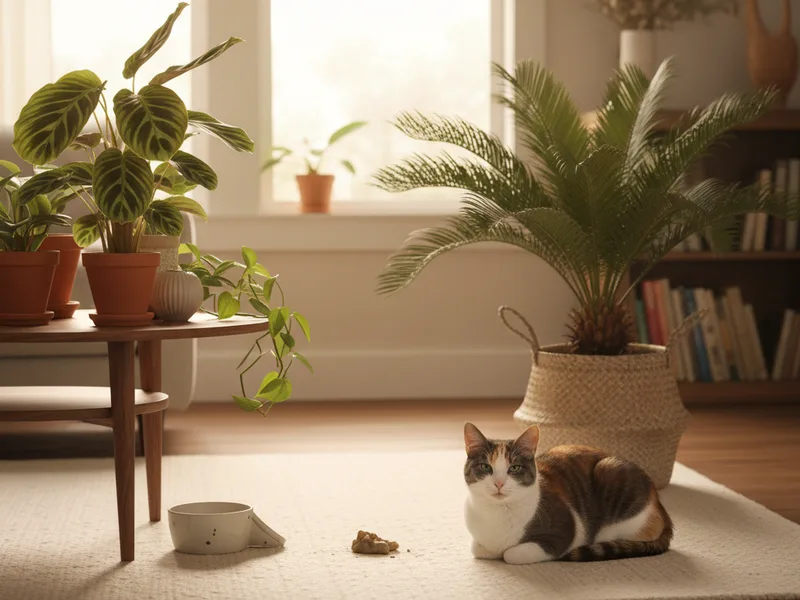
Symptoms can start within hours, but liver damage can take a day or more to become obvious. That delay is part of what makes this plant so dangerous: a pet can seem only mildly ill at first while the liver is already being damaged.
Early signs often include vomiting, diarrhea, drooling, loss of appetite and lethargy. The vomit or stool may contain blood.
As the liver is affected, you may see weakness, wobbliness, tremors or seizures. The gums and whites of the eyes can turn yellow, a sign called jaundice. The belly may become swollen or painful.
Without fast treatment, sago palm poisoning can lead to liver failure and death. Do not wait for severe symptoms before acting.
Act immediately
What to do if your pet eats sago palm
Remove any plant material
Take any remaining pieces of plant out of your pet's mouth and move your pet away from the plant. Keep a sample of the plant or a photo so the vet can confirm what was eaten.
Call your vet or poison control right away
Contact your veterinarian, an emergency animal clinic or a pet poison control line immediately. Do this even if your pet looks fine. Early treatment gives the best chance of a good outcome.
Do not wait for symptoms
Never wait to see how things develop. Liver damage can progress while a pet still seems only mildly unwell. Follow the instructions you are given and get your pet examined as soon as possible.
Follow up on aftercare
Treatment often involves decontamination, fluids, medication to protect the liver and blood tests over the following days. Keep every follow-up appointment your vet recommends.
Keeping your home safe
The safest choice is simple: do not keep sago palm in a home with cats or dogs. If you already have one, remove it, including any fallen seeds in the pot or yard.
Check labels when you shop. Sago palm may be sold as king sago, cycad or under its botanical name Cycas revoluta. When in doubt, look the plant up before you buy.
If you are unsure about another plant in your home, such as a Monstera, check its safety before your pet does.
| Plant | Look | Light needs | Pet safety |
|---|---|---|---|
| Parlor palm | Classic feathery palm, compact and tidy | Low to medium indirect light | Generally considered non-toxic to cats and dogs |
| Areca palm | Full, arching fronds, larger floor plant | Bright indirect light | Generally considered non-toxic to cats and dogs |
| Ponytail palm | Sculptural trunk with a fountain of narrow leaves | Bright light, tolerates some direct sun | Generally considered non-toxic to cats and dogs |
| Majesty palm | Tall, elegant fronds for a statement corner | Bright indirect light, likes consistent moisture | Generally considered non-toxic to cats and dogs |
About these alternatives
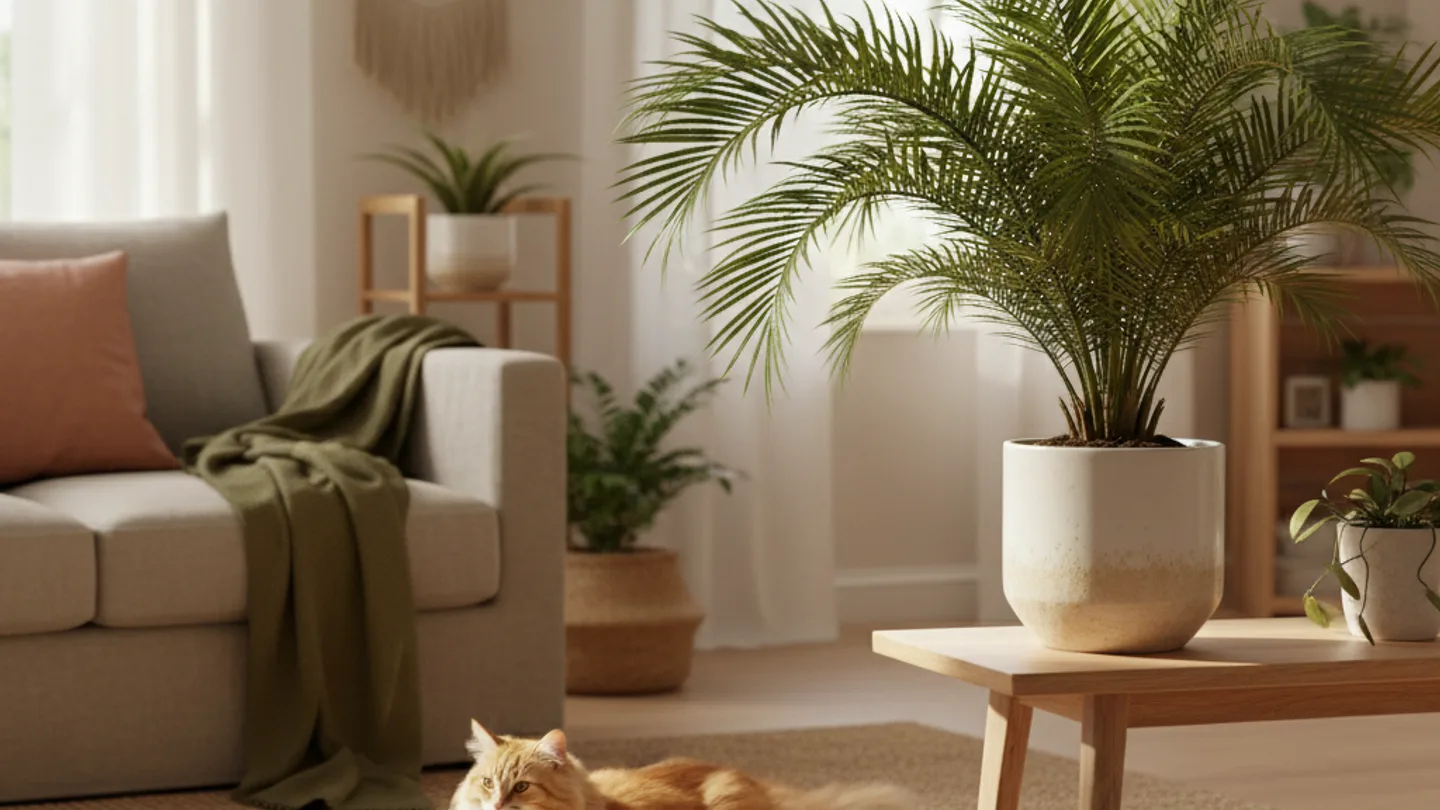
Each of these plants gives you the tropical, palm-like look of a sago palm without the risk. The parlor palm suits small apartments and lower light. The areca and majesty palms fill a bright corner. The ponytail palm is forgiving if you sometimes forget to water.
Generally considered non-toxic means these plants are not known to poison cats or dogs. Any plant can still cause mild stomach upset if a pet eats a large amount, so place plants thoughtfully and contact your vet if your pet shows symptoms after chewing on greenery.
Common questions about sago palm and pets
Is sago palm toxic to dogs?
Yes, severely. Sago palm is one of the most dangerous common plants for dogs. The toxin cycasin can cause liver failure and death, and the seeds are the most toxic part. Any ingestion is an emergency vet visit.
Is sago palm toxic to cats?
Yes, severely. Cats are poisoned by the same toxin, cycasin, and even chewing a leaf can cause serious illness. Treat any exposure as an emergency and call your vet right away.
What part of the sago palm is most dangerous?
The seeds contain the highest concentration of cycasin, but the leaves, trunk and roots are all toxic. There is no safe part of this plant for pets.
My dog ate sago palm but seems fine. What should I do?
Call your vet or a pet poison control line immediately. Symptoms and liver damage can be delayed, and early treatment greatly improves the chances of recovery. Do not wait for signs of illness.
Can I keep a sago palm if I put it out of reach?
We advise against it. Seeds can fall, leaves can be within jumping range for cats, and the risk of a fatal mistake is too high. Choose a pet-safe palm alternative instead.
Are there palms that are safe for cats and dogs?
Yes. Parlor palm, areca palm, ponytail palm and majesty palm are all generally considered non-toxic to cats and dogs and give a similar tropical look.
Build a home that is green and pet-safe
You do not have to choose between beautiful plants and safe pets. Explore our guides for clear verdicts and safe swaps for every room and light level.