Are Dahlias Toxic to Cats and Dogs?
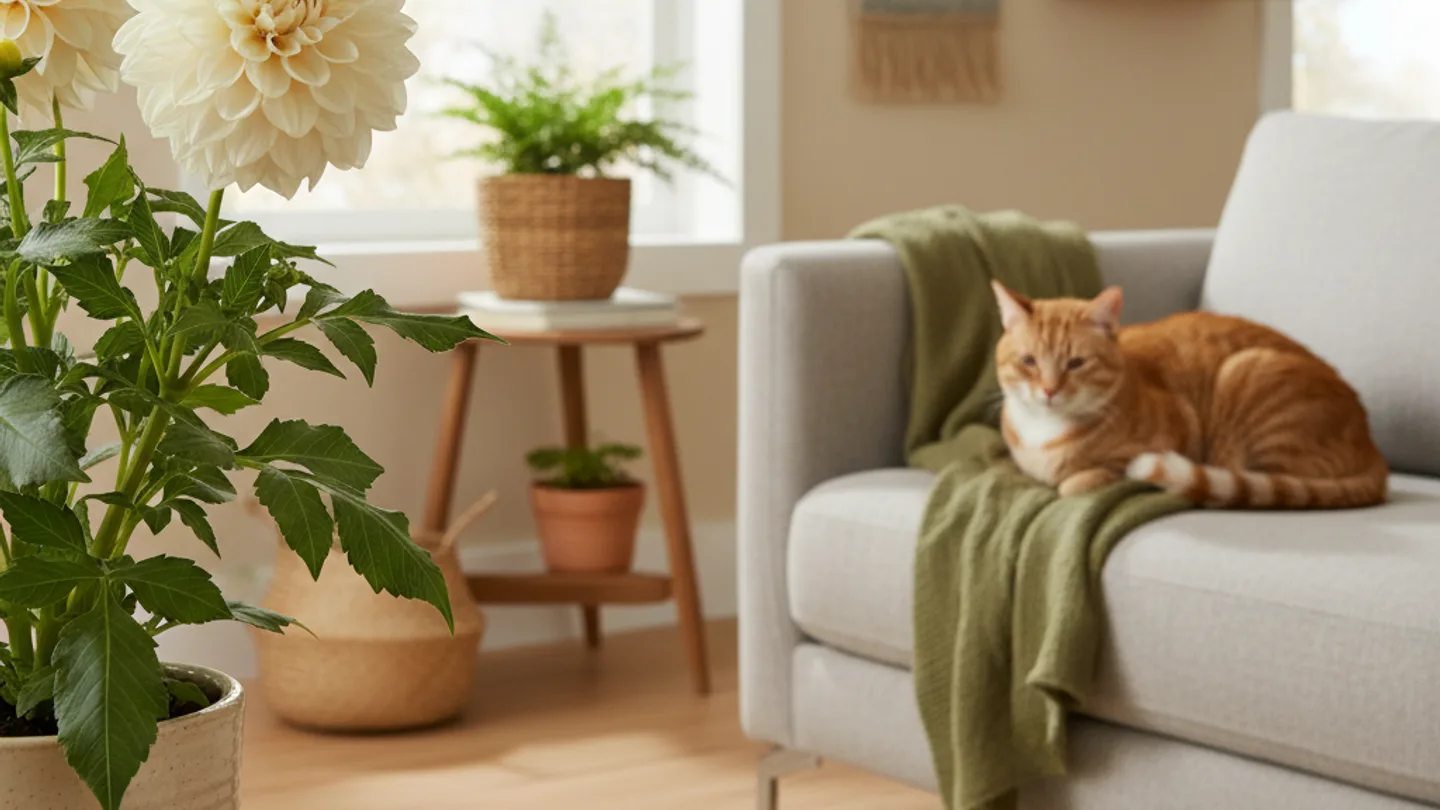
Dahlias are mildly toxic to both cats and dogs. Eating the plant can cause an upset stomach, and skin contact can lead to irritation.
That sounds worrying, but the realistic risk is low. Most pets take one bite and walk away. Serious poisoning from dahlias is rare.
Here is what actually happens, why tubers matter more than flowers, and which safe late-summer blooms can take their place.
Key takeaways
- Dahlias are mildly toxic to cats and dogs, not highly poisonous.
- Symptoms are usually mild stomach upset: drooling, vomiting or diarrhea.
- Skin contact can cause mild irritation in some pets.
- The tubers are the most toxic part, which matters for dogs that dig.
- Bouquets count too: keep cut dahlias out of reach indoors.
- Safe late-summer swaps include zinnias, marigolds and sunflowers.
What happens if your pet eats a dahlia
Most cases involve a pet nibbling a leaf or petal. The typical response is mild gastrointestinal upset, meaning your pet may drool, vomit once or twice, or have soft stool.
The exact toxin in dahlias is not fully identified. What matters for you is the effect: irritation of the mouth and digestive tract, usually short-lived.
Skin contact can also cause mild dermatitis, an itchy or red patch of skin. This is more likely in pets that push through dense dahlia beds.
Symptoms usually pass on their own within a day. If vomiting or diarrhea is heavy, lasts longer than 24 hours, or your pet seems lethargic or refuses food, call your vet. Always call sooner for puppies, kittens, senior pets or pets with existing health issues.
Tubers and digging dogs: the real risk
The tuber is the underground storage root of the dahlia. It is the most concentrated part of the plant, so eating tubers is more likely to cause stronger stomach upset than a quick nibble of a leaf.
This matters most in two moments of the year. In spring, when you plant fresh tubers. And in late fall, when gardeners in cold climates dig tubers up to store them indoors for winter.
Dogs that dig are the obvious concern. But stored tubers are an overlooked one: a tuber left on a garage floor or in an open box can look like a chew toy to a bored dog.
Practical fixes are simple. Fence off the dahlia bed, plant tubers when your dog is inside, and store lifted tubers in a closed container on a shelf.

Cut flowers and bouquets count too
Dahlias are a classic cutting-garden flower and a favorite in late-summer bouquets. If you bring them indoors, the same mild toxicity applies.
Cats are the bigger concern here. Many cats will chew on bouquet leaves or knock a vase over to play with the stems.
Put vases on a high shelf or in a room your pets cannot access. Pick up fallen petals quickly, since a dropped flower head at floor level is an easy target for a curious cat or dog.
How worried should you actually be?
Honestly: not very. Dahlias sit in the mild category. Compare that with truly dangerous plants, where even small amounts can cause serious harm, and the difference is clear.
Mild does not mean zero. It means the most likely outcome is a short, unpleasant stomach upset, not an emergency.
The sensible approach is to prevent access where you can, watch your pet after any nibble, and call your vet if symptoms are more than mild or last beyond a day.
| Flower | Why it works as a dahlia swap | Pet safety |
|---|---|---|
| Zinnia | Bold, ball-shaped blooms in the same rich colors, loves full sun | Generally considered non-toxic to cats and dogs |
| Marigold | Warm orange and gold tones, easy in beds and pots | Generally considered non-toxic, may cause mild stomach upset if eaten in quantity |
| Sunflower | Big cheerful flower heads for late summer | Generally considered non-toxic to cats and dogs |
| Snapdragon | Vertical color for bouquets and borders | Generally considered non-toxic to cats and dogs |
| Aster | Daisy-like blooms that flower into fall | Generally considered non-toxic to cats and dogs |
Common questions about dahlias and pets
Are dahlias toxic to dogs?
Yes, mildly. Eating dahlia leaves, flowers or tubers can cause vomiting, diarrhea and drooling in dogs. The tubers are the most toxic part, so dogs that dig need the closest watching. Most cases are mild, but call your vet if symptoms are heavy or last more than a day.
Are dahlias toxic to cats?
Yes, mildly. Cats that chew dahlia foliage or petals can get mouth irritation, drooling, vomiting or diarrhea. Skin contact can also cause mild irritation. Keep bouquets and garden beds out of reach where possible.
My dog dug up and ate a dahlia tuber. What now?
Remove any remaining tuber pieces and watch your dog closely for the next 24 hours. Mild vomiting or soft stool is the most common outcome. Call your vet if vomiting is repeated, your dog seems lethargic, or symptoms last beyond a day.
Are dahlias safe to keep in a vase with cats at home?
Cut dahlias carry the same mild toxicity as garden plants. If your cat ignores plants, a high shelf may be enough. If your cat chews everything, choose a pet-safe bouquet flower like zinnias or snapdragons instead.
What are good pet-safe alternatives to dahlias?
Zinnias, sunflowers, marigolds, snapdragons and asters all give strong late-summer color and are generally considered non-toxic to cats and dogs. They fit similar sunny spots and work well in cutting gardens and bouquets.
When should I call the vet after dahlia exposure?
Call your vet if vomiting or diarrhea is repeated or lasts more than 24 hours, if your pet refuses food or water, seems lethargic, or is very young, old or already unwell. When in doubt, a quick call is always reasonable.