Boston Fern Care in a Home with Cats and Dogs
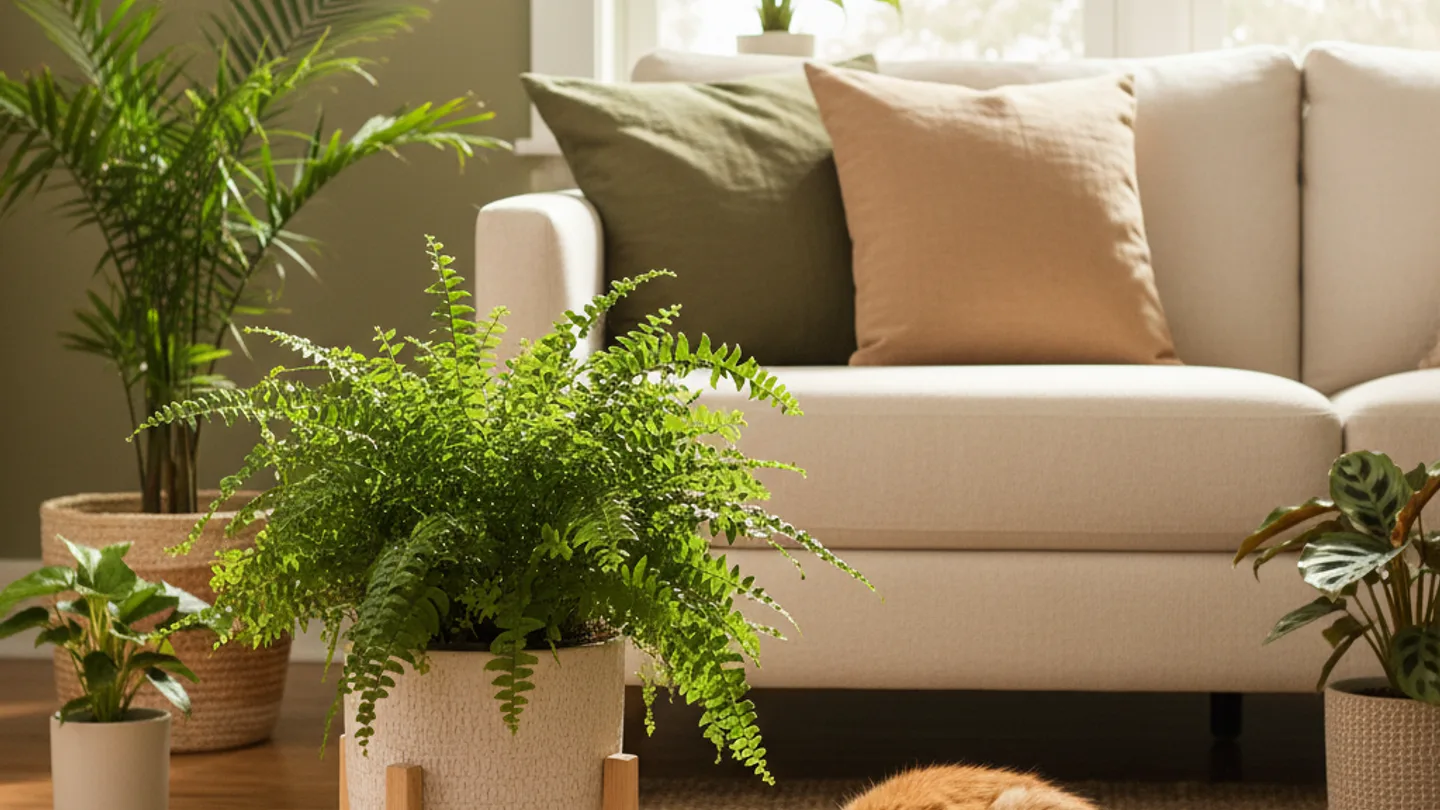
Good news first: Boston ferns are generally considered non-toxic to both cats and dogs. If your cat nibbles a frond or your dog sniffs around the pot, the plant itself is not the problem.
The real challenge with Boston fern care is the plant itself. It loves humidity, dislikes dry air and sheds little leaflets when it is unhappy. This guide covers what your fern needs to thrive in a real apartment or house, and one important warning about a look-alike plant that is toxic.
Boston fern care at a glance
- Boston ferns are generally considered non-toxic to cats and dogs.
- Do not confuse them with asparagus fern, which is toxic to both cats and dogs.
- They want bright, indirect light, never harsh direct sun.
- Keep the soil consistently moist, not soggy and never bone dry.
- They need higher humidity than most living rooms offer, so plan for misting, a pebble tray or a humidifier.
- Some shedding of small leaflets is normal, especially in dry air.
Is the Boston fern safe for cats and dogs?
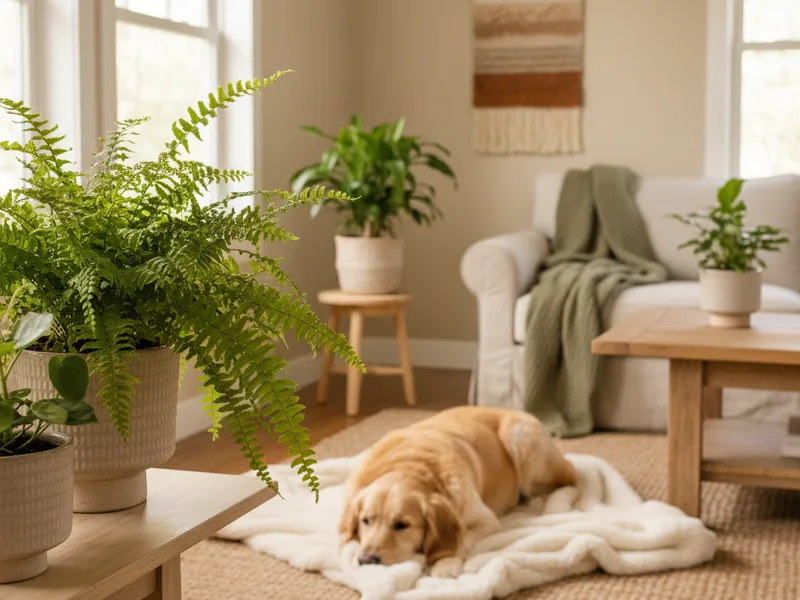
Yes. The Boston fern (Nephrolepis exaltata) is widely listed as non-toxic to cats and dogs. That makes it one of the best choices if you want a full, lush plant in a home with pets.
Non-toxic does not mean consequence-free. Eating a lot of any plant material can still give a pet an upset stomach, some vomiting or soft stools. That is a digestive reaction, not poisoning. If symptoms are strong, keep coming back or worry you, call your vet.
If your cat treats the hanging fronds like a toy, that is more of a mess problem than a health problem. A sturdy hook or a high shelf keeps the plant intact and the floor cleaner.
Do not confuse it with the asparagus fern
This is the one real safety issue in this guide. The asparagus fern looks similar at a glance: fine, feathery green foliage in a pot or hanging basket. It is not a true fern, and it is toxic to both cats and dogs.
Asparagus fern can cause vomiting, diarrhea and stomach pain if eaten. Repeated skin contact can also irritate some pets and people. Check the label before you buy. A true Boston fern is sold as Nephrolepis exaltata or Boston fern. Anything labeled Asparagus setaceus, Asparagus densiflorus or simply asparagus fern should stay out of reach, or out of your home entirely.
If your pet has eaten asparagus fern and shows symptoms like drooling, vomiting or diarrhea, contact your vet.
| Point of comparison | Boston fern | Asparagus fern |
|---|---|---|
| Botanical name | Nephrolepis exaltata | Asparagus setaceus or Asparagus densiflorus |
| Toxic to cats and dogs | No, generally considered non-toxic | Yes, toxic to both |
| Foliage | Long, arching fronds with leaflets | Very fine, feathery or needle-like sprays |
| Berries | Does not produce berries | Can produce small berries that are also toxic |
| Verdict for pet homes | Safe choice with normal care | Avoid, or keep fully out of reach |
Light: bright, but never harsh
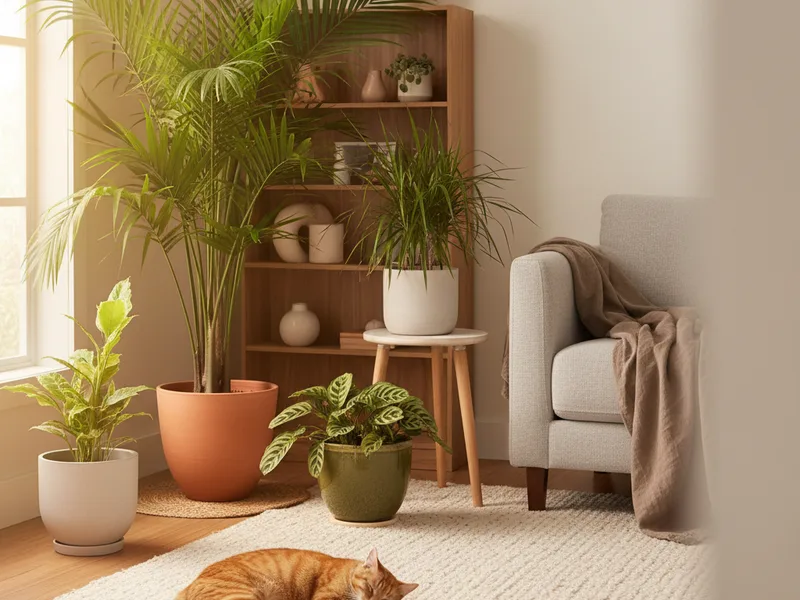
Boston ferns want bright, indirect light. Think of the light a few feet back from an east or north-facing window, or a spot near a south or west window filtered by a sheer curtain.
Direct afternoon sun scorches the fronds. Deep shade makes the plant thin and pale. In a typical apartment, the best spot is often a bright bathroom or a living room corner that gets good daylight without a sunbeam landing on the leaves.
If your fern sits near a window your cat also loves, make sure the surface is stable. A wobbling plant on a narrow sill is a mess waiting to happen.
Watering and humidity, step by step
Check the soil with your finger
Press a finger about an inch into the soil. If the top feels just barely dry, it is time to water. Never let the whole pot dry out, but do not let it sit in water either.
Water thoroughly, then drain
Water until it runs from the drainage holes, then empty the saucer. Soggy roots rot, and dry roots make the fronds crisp and brown.
Raise the humidity
Boston ferns like humidity above what most homes have, especially in winter with the heat on. Mist the fronds regularly, set the pot on a pebble tray with water below the pebble line, or run a small humidifier nearby.
Pick a naturally humid room if you can
A bright bathroom or kitchen often keeps a Boston fern happier than a dry bedroom. Grouping it with other plants also helps hold moisture in the air around it.
Shedding control in a pet home
Boston ferns drop tiny leaflets, especially when the air is dry, the soil dries out or the plant gets moved. A small amount of shedding is normal and not a sign of a dying plant.
To keep it under control, keep moisture consistent, keep humidity up and trim brown or thinning fronds at the base with clean scissors. Fallen leaflets are not toxic, but they are tempting for cats to bat around and annoying to vacuum, so a quick sweep every few days helps.
Feed lightly during spring and summer with a diluted houseplant fertilizer about once a month, and repot in spring if the roots fill the pot. Keep fertilizer products stored where pets cannot reach them.
Common questions about Boston ferns and pets
Are Boston ferns toxic to cats or dogs?
No. Boston ferns are generally considered non-toxic to both cats and dogs. Eating a large amount can still cause a mild upset stomach, so contact your vet if your pet shows ongoing symptoms.
What happens if my cat eats a lot of Boston fern?
Most likely nothing serious. You might see some vomiting or soft stool from the plant fiber itself. If vomiting continues, your pet seems unwell or you are unsure which plant was eaten, call your vet.
Is asparagus fern the same as Boston fern?
No, and this matters. Asparagus fern is a different plant and it is toxic to cats and dogs, causing vomiting, diarrhea and stomach pain. Always check the plant label for the botanical name.
Why is my Boston fern shedding so much?
The usual causes are dry air, inconsistent watering or a recent move. Keep the soil evenly moist, raise the humidity and remove dead fronds at the base. Light shedding is normal.
Can I hang my Boston fern out of my cat's reach?
Yes, and it is a smart move. Hanging baskets suit the plant's arching shape and keep fronds away from playful cats. Use a secure hook, because a falling fern is harmless to your pet but rough on the plant.