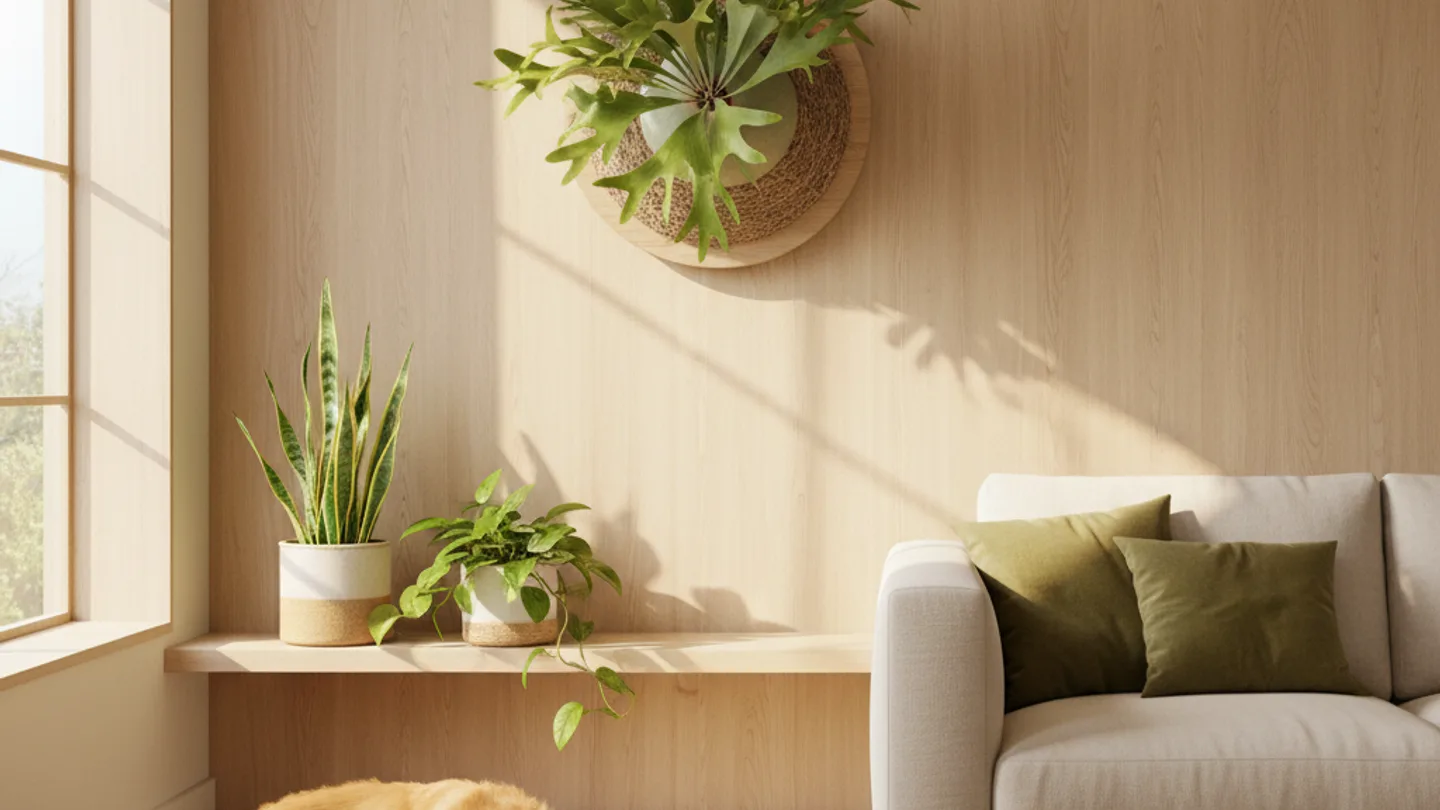
Staghorn Fern Care: A Mounted, Pet-Safe Wall Piece
Good news first: staghorn ferns are generally considered non-toxic to cats and dogs. If your cat takes a curious nibble or your dog sniffs a fallen frond, this is not a plant that should send you to the emergency vet.
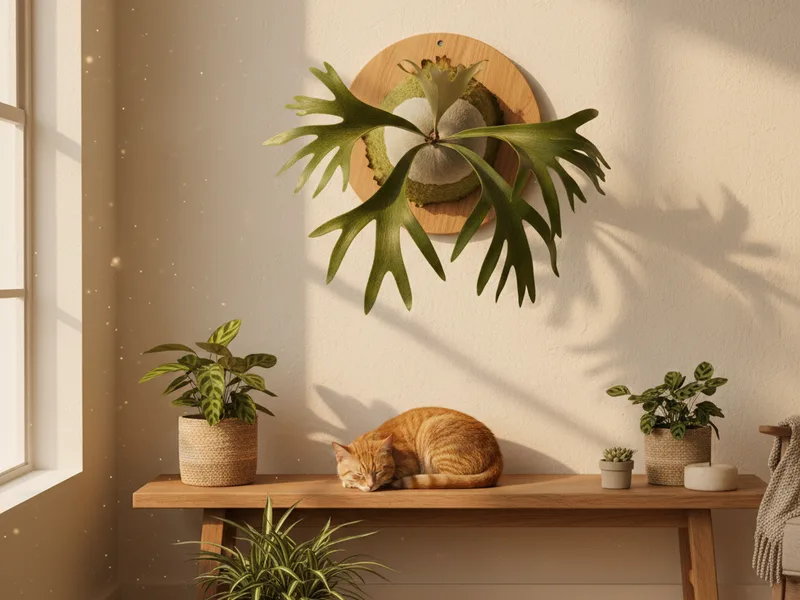
That makes the staghorn fern one of the few statement plants that works in a home with pets. Better still, its natural way of growing, mounted on a board on the wall, keeps it out of reach by design.
This guide covers staghorn fern care in real homes: how to mount one, how to soak it, how much light it needs, and what to watch for as it settles in.
The short version
- Staghorn ferns are generally considered non-toxic to cats and dogs.
- Mounting on a board keeps the plant off the floor and away from chewers.
- Water by soaking the whole board roughly once a week, then let it drip dry.
- Bright, indirect light is the goal. Think near an east or south window with a sheer curtain.
- Brown, papery shield fronds at the base are normal. Do not remove them.
- If your pet eats any plant and shows symptoms like vomiting or drooling, call your vet.
The verdict
Is the staghorn fern toxic to cats or dogs?
No. Staghorn ferns (Platycerium species) are generally considered non-toxic to both cats and dogs.
That is a rare combination: a dramatic, sculptural plant that does not come with a toxicity warning. Compare that with popular lookalikes in the statement-plant category, like monstera, which is toxic to both cats and dogs.
Non-toxic does not mean snack-worthy. Any plant material can cause a mild stomach upset if your pet eats a lot of it. If your pet chews a frond and then vomits, drools or seems off, contact your vet to be safe.
The good news is that a mounted staghorn fern hangs on the wall, where most pets cannot reach it anyway.
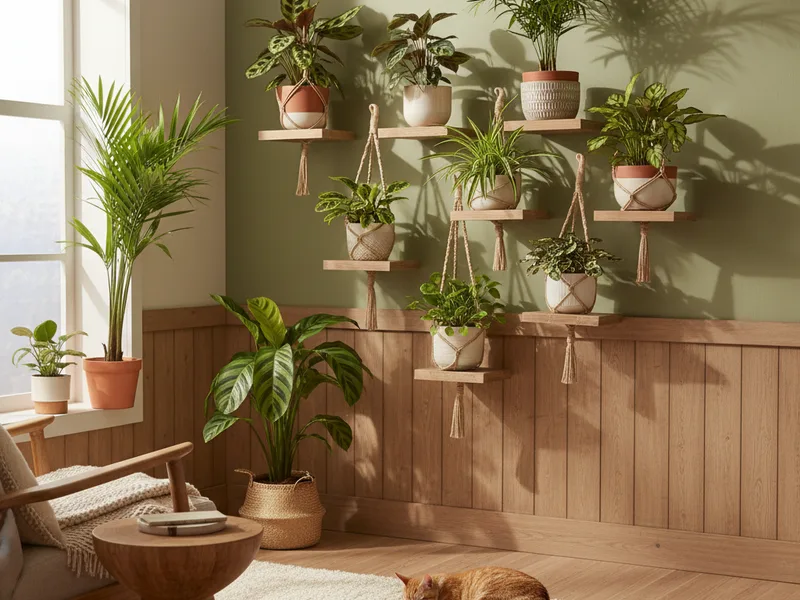
Wall mounting: pet safety built into the design
In the wild, staghorn ferns grow on trees. They are epiphytes, which means they live on other plants instead of in soil. Their roots anchor to bark, and they catch water and nutrients from rain and falling debris.
That is why they are sold on wooden boards or in hanging baskets rather than in regular pots. Mounting is not a styling trend. It is how the plant actually wants to live.
For pet owners, this is a happy accident. A board on the wall sits four or five feet off the ground, far above dog height and above where most cats bother to climb. The plant stays safe from chewing, digging and knocked-over pots, and your pet stays safe from a mouthful of soggy potting mix that was never meant to be eaten.
One practical note: hang the board securely. A mature staghorn fern gets heavy, especially after watering. Use a proper wall anchor or a stud, not a small nail.
Getting set up
How to mount a staghorn fern on a board
Pick your board and hardware
Use a cedar or hardwood board a few inches wider than the plant's base. Attach a sturdy hanging bracket or picture wire to the back before you start.
Add a bed of moss
Soak sphagnum moss in water, squeeze it out, and form a thick mound in the center of the board. This is the cushion your fern's roots will grip.
Position the plant
Set the fern on the moss with the round, papery shield fronds flat against the board. The antler-like fronds should point up and out.
Tuck moss around the root ball
Pack more damp moss around the edges of the root ball so it is snug and mostly covered.
Secure with fishing line
Wrap clear fishing line or wire around the moss and the shield fronds, stapling or hooking it to the board as you go. Crisscross until the plant feels firm. Over time the shield fronds grow over the line and hide it.
Hang and water in
Hang the board, then give the moss a thorough first soak. Keep the plant in bright, indirect light while it adjusts.
Watering
The soaking routine that keeps a mounted fern alive
Mounted staghorn ferns cannot be watered like a potted plant. There is no pot of soil to hold moisture. Instead, you mimic rain.
Once a week is a good starting point. Take the board down, carry it to a sink, tub or shower, and soak the moss and root area thoroughly. Let water run through for a minute or two so the whole root ball is wet.
Then let it drip dry before it goes back on the wall. Hanging it back while it still drips will mark your wall and can rot the board over time.
Adjust with the seasons. In a warm, bright room in summer, your fern may want a soak every 5 to 7 days. In winter, every 10 to 14 days is often enough. The test is the moss: if it feels dry and the antler fronds look slightly limp, it is time to soak.
In dry, heated homes, a light misting between soaks helps, but misting alone is not watering. The root ball still needs its weekly soak.
How much light a staghorn fern actually needs
Bright, indirect light is the sweet spot. In a real apartment or house, that means a wall near an east-facing window, or a few feet back from a south or west window with a sheer curtain.
A staghorn fern will survive in medium light, but it grows slowly and its fronds stay small. In deep shade it will decline over time. On the other hand, hours of harsh direct sun can scorch the fronds.
Bathrooms with windows are excellent spots: bright light plus natural humidity. Kitchens work too. A dark hallway does not, no matter how good the plant looks there on day one.
Watch the plant. Pale, slow growth usually means it wants more light. Crispy brown patches on the antler fronds usually mean too much direct sun or too little water.
Normal quirks
What a healthy staghorn fern is supposed to look like
Two things worry new owners, and both are normal.
First, the brown, papery layers at the base. Those are the shield fronds. They start green, then dry out and turn brown as new ones grow over them. They protect the roots and hold the plant to the board. Do not peel them off.
Second, the silvery, fuzzy coating on the antler fronds. It looks like dust or a pest problem, but it is a natural layer that helps the plant hold moisture. Avoid wiping it off, and try not to handle the fronds more than you need to.
A healthy fern puts out a new shield frond and new antlers during the growing season. If yours does that, your care routine is working.
Common questions
Is the staghorn fern safe for cats and dogs?
Yes, staghorn ferns are generally considered non-toxic to both cats and dogs. Large amounts of any plant can still cause a mild stomach upset, so contact your vet if your pet eats some and shows symptoms.
Can I grow a staghorn fern in a normal pot?
You can, but it is harder to keep happy. Staghorn ferns are epiphytes that naturally grow on trees, so a board or open basket with chunky, fast-draining material suits them far better than regular potting soil, which stays too wet around their roots.
How often should I soak my mounted staghorn fern?
About once a week is a good starting point. In warm, bright summer conditions, every 5 to 7 days. In winter, stretch it to every 10 to 14 days. Let the moss and the weight of the board tell you: light and dry means soak.
Will my cat leave a mounted staghorn fern alone?
Most cats ignore a plant hanging at eye level or higher, especially compared with trailing plants on shelves. If your cat is a dedicated climber, hang the fern away from furniture that could serve as a launch pad.
Why are the tips of the antler fronds turning brown?
The usual causes are too little water, very dry air, or too much direct sun. Check your soaking routine first, move the plant slightly away from harsh light, and mist between soaks if your home is dry.
Should I remove the brown fronds at the base?
No. Those are the shield fronds, and they are doing a job: protecting the roots and anchoring the plant. New green shields grow over the old brown ones. Removing them can damage the plant.