Bird’s Nest Fern Care: A Sculptural, Pet-Safe Fern
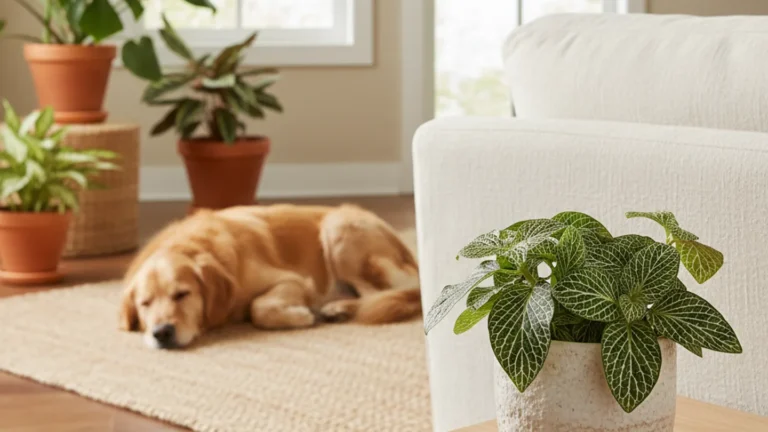
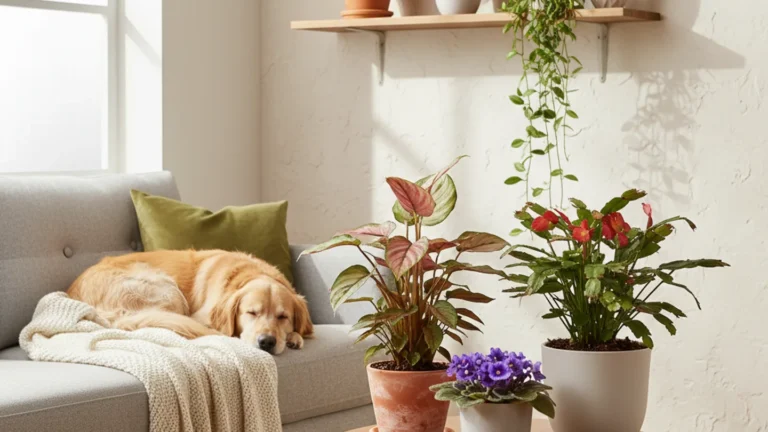
Good news first: the bird's nest fern (Asplenium nidus) is generally considered non-toxic to cats and dogs. If your cat takes a curious nibble, this fern is not on the danger list.
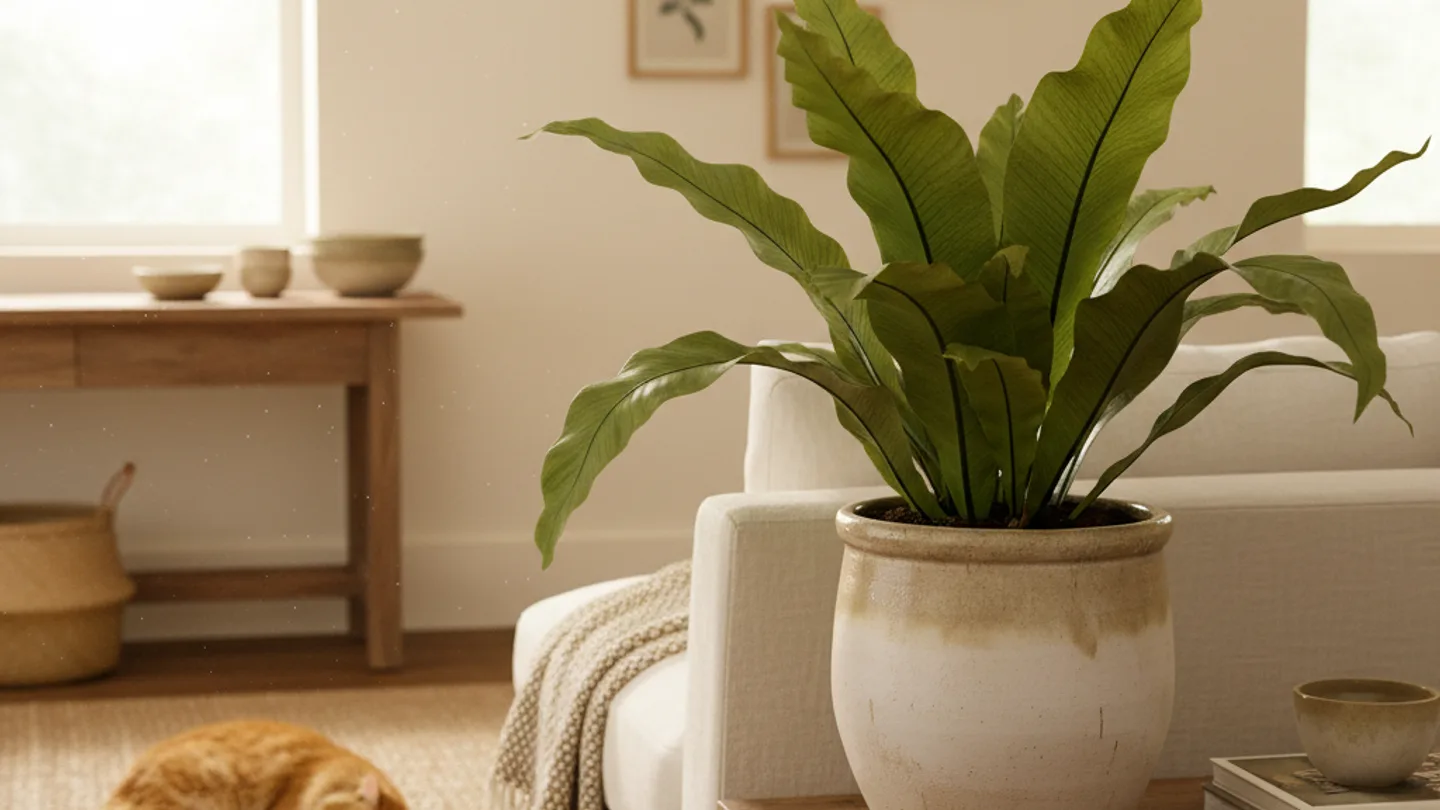
It is also a genuinely handsome plant. Wide, wavy leaves grow from a central rosette, giving it a sculptural look that works on shelves, plant stands and bathroom counters.
This guide covers birds nest fern care in real homes: light, watering, humidity and what to expect when a cat gives those rippled leaves an inspection.
Bird's nest fern at a glance
- Generally considered non-toxic to cats and dogs, so it fits pet households well.
- Thrives in medium, indirect light. Direct sun scorches the leaves.
- Water the soil around the crown, never into it. Water in the crown can cause rot.
- Likes humidity, which makes bathrooms and kitchens good spots.
- The sturdy, wavy leaves handle the occasional cat inspection better than most ferns.
Is the bird's nest fern safe for cats and dogs?
Yes. The bird's nest fern is generally considered non-toxic to both cats and dogs. It is one of the safer ferns you can bring into a pet household.
That said, no plant is completely risk-free. Eating a large amount of any plant material can give a pet an upset stomach, so you may see mild vomiting or diarrhea after a big snack.
If your pet shows symptoms that last more than a few hours, or seems unwell in any way, contact your vet. Better a quick call than a worried night.
Light: medium and indirect
Bird's nest ferns grow on trees in tropical forests, sheltered by the canopy above. In your home, that translates to medium, indirect light.
A few feet from an east or north facing window is ideal. They also do well further into a bright room, which makes them useful for spots where sun lovers would sulk.
Avoid harsh direct sun, especially afternoon sun through a south or west window. It bleaches and crisps the leaves. Too little light shows up as slow growth and pale, leggy fronds, so nudge the plant closer to the window if that happens.
Watering: around the crown, not into it
This is the one care rule that really matters for birds nest fern care. The leaves grow in a rosette from a central point called the crown. Water that collects in that funnel sits there and can rot the heart of the plant.
So water the soil around the base of the leaves, not into the middle. Pour slowly at the pot's edge until water drains from the bottom, then empty the saucer.
Let the top inch of soil dry out between waterings. The soil should stay lightly moist, never soggy and never bone dry. In most apartments that means watering about once a week in summer and less often in winter.
Yellowing leaves at the base often point to overwatering. Crispy brown edges usually mean the plant dried out too long or the air is too dry.
Humidity and temperature
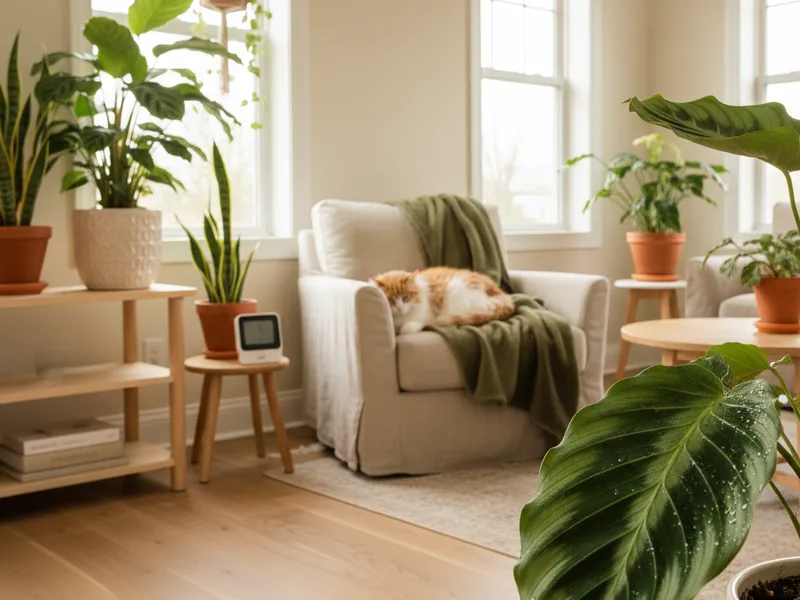
As a tropical fern, this plant appreciates humidity. Average home air is often on the dry side, especially in winter when heating runs.
The good news: the bird's nest fern is tougher than many ferns. Its thick, waxy fronds lose less moisture than the delicate fronds of a maidenhair fern, so it copes reasonably well in normal rooms.
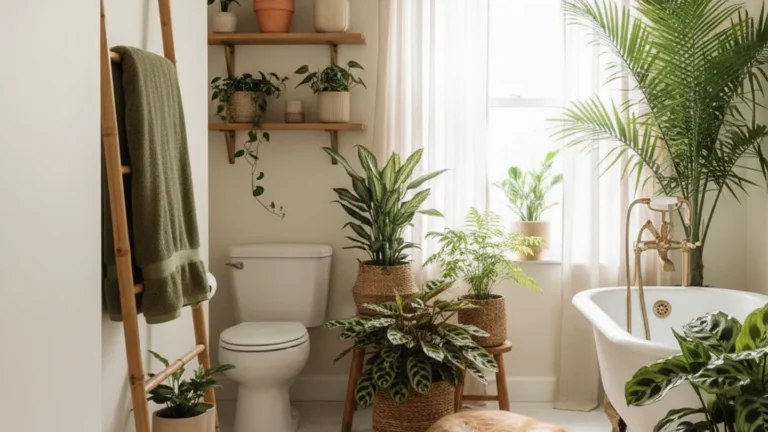
Still, it will look its best with a little extra moisture in the air. Easy options: group it with other plants, set the pot on a tray of pebbles with water below the pebble line, or place it in a bright bathroom or kitchen.
Keep it between roughly 60 and 80 degrees Fahrenheit, away from cold drafts and heating vents.
Living with cats: the wavy leaf advantage
The rippled leaves of a bird's nest fern look like green ribbons, and some cats find that irresistible. Expect the occasional pat, chew or full inspection.
Here is the reassuring part: the leaves are thick and leathery, not delicate. A curious cat batting at a frond usually leaves no damage at all. This fern handles feline attention far better than thin-leaved ferns or soft succulents.
If your cat is a persistent chewer, place the fern on a plant stand or shelf. The plant stays prettier, and your cat's stomach stays calmer. Even non-toxic plants can cause mild tummy upset when eaten in quantity.
Potting, soil and feeding
Use a loose, well-draining potting mix. A standard houseplant mix with some added perlite or orchid bark works well. The roots like air as much as moisture.
Choose a pot with drainage holes. Bird's nest ferns like to be slightly snug in their pots, so only repot when roots fill the container, usually every two to three years.
Feed lightly. A diluted balanced houseplant fertilizer once a month in spring and summer is plenty. Skip feeding in fall and winter, and never pour fertilizer into the crown.
Common questions about bird's nest ferns
Is the bird's nest fern toxic to cats or dogs?
No. It is generally considered non-toxic to both cats and dogs. Large amounts of any plant can still cause a mild upset stomach, so call your vet if symptoms appear or last.
Why are the leaf tips turning brown?
Brown, crispy tips usually mean dry air, too little water or too much direct sun. Check the soil moisture first, then move the plant out of harsh light and add some humidity.
Can I mist my bird's nest fern?
You can mist lightly around the leaves, but avoid letting water pool in the crown. A pebble tray or a humid spot is a more reliable way to raise humidity.
How big does a bird's nest fern get indoors?
Indoors it typically stays compact, often one to two feet across. Growth is slow to moderate in medium light, which makes it easy to live with in smaller spaces.
Why is the center of my fern turning soft and dark?
That is usually crown rot from water sitting in the middle of the rosette. Water the soil at the edge of the pot instead, and keep the crown dry.