Areca Palm Care: A Big, Pet-Safe Statement Palm
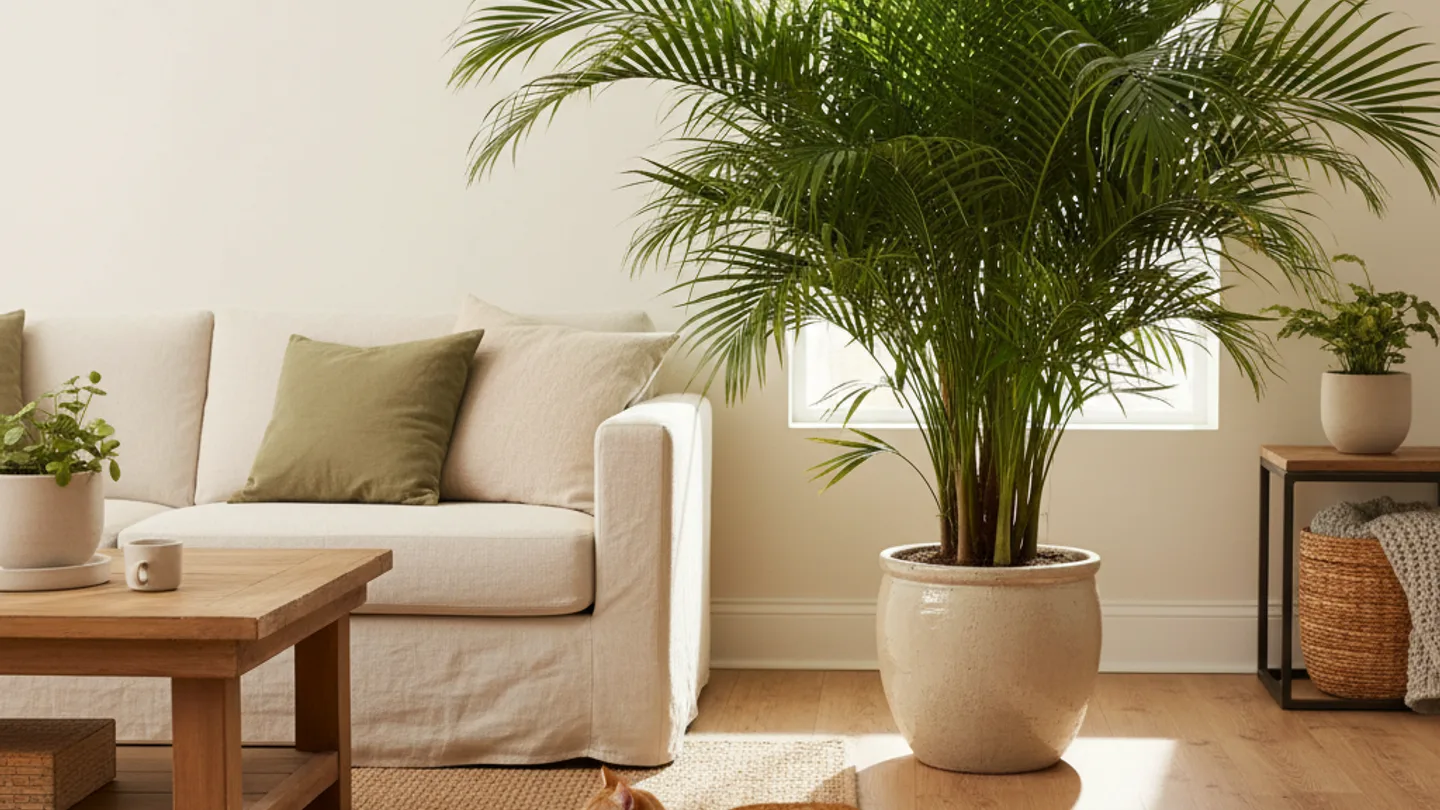
Good news first: the areca palm (Dypsis lutescens) is non-toxic to cats and dogs. If your cat chews a frond or your dog sniffs the pot, this plant will not poison them. That makes it one of the safest ways to get that lush, tropical look indoors.
Many popular tropical statement plants, like the Monstera, are toxic to pets. The areca palm gives you the same airy, jungle feel without the risk. Here is how to keep it healthy in a real home, not a greenhouse.
Key takeaways
- Areca palms are non-toxic to both cats and dogs, so they are a safe route to the tropical look.
- Bright, indirect light is ideal. Direct afternoon sun can scorch the fronds.
- Water when the top inch of soil feels dry. Let the pot drain, and never let roots sit in water.
- Brown leaf tips usually point to dry air, tap water minerals or irregular watering.
- Repot every two to three years, only one pot size up.
- Even non-toxic plants can cause mild stomach upset if a pet eats a lot. Call your vet if symptoms appear.
Why the areca palm works for pet owners
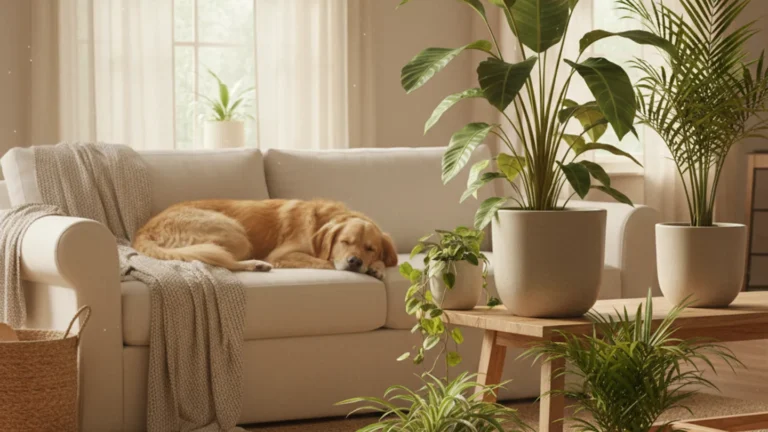
The areca palm is one of the few large indoor palms that is generally considered non-toxic for cats and dogs. It grows tall and full, with soft, arching fronds that fill a corner without feeling heavy.
If you have pets that like to chew leaves, this is a much safer pick than a Monstera, a fiddle leaf fig or a sago palm. Note that the sago palm is not a true palm and is highly toxic, so always check the plant's actual name before you buy.
Non-toxic does not mean edible. Any plant material can irritate a pet's stomach if eaten in quantity, so it is still smart to place the pot where casual chewing is less tempting.
Light: bright but indirect
Areca palms want bright, indirect light. A spot near an east or west facing window is ideal. They also do well a few feet back from a south facing window with a sheer curtain.
Harsh, direct afternoon sun can scorch the fronds and leave pale, bleached patches. Too little light leads to slow growth and sparse, leggy stems.
In a darker apartment, the palm will survive, but expect slower growth. Rotate the pot every week or two so all sides get light and the plant grows evenly.
Watering: find the rhythm
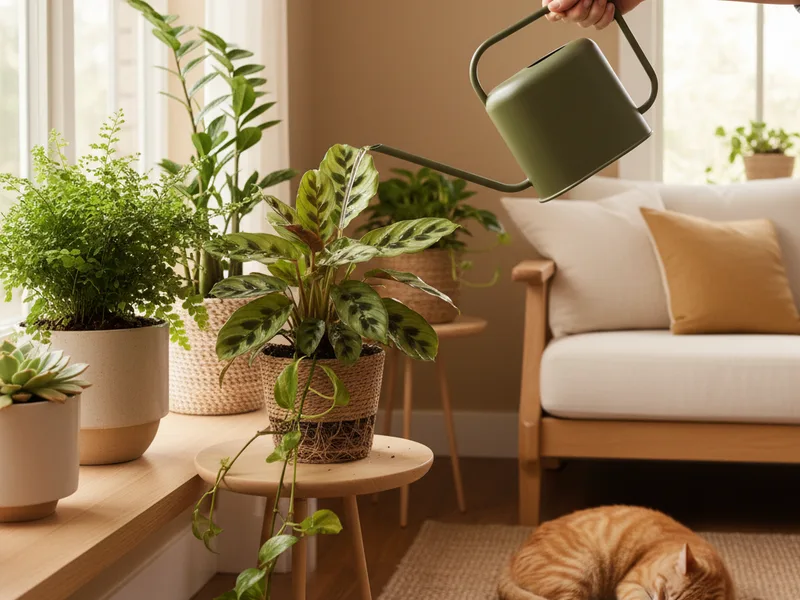
The simple rule: water when the top inch of soil feels dry to the touch. In most homes that works out to about once a week in spring and summer, and less often in fall and winter.
Water thoroughly until it runs out of the drainage holes, then empty the saucer. Roots that sit in water rot quickly, and root rot is one of the most common reasons these palms fail.
Areca palms can also be sensitive to the minerals and fluoride in tap water, which shows up as brown tips. If your tap water is heavily treated, try filtered water or let tap water sit out overnight before watering.
Browning fronds: what your palm is telling you
Brown tips are the most common complaint with areca palms, and they are almost always about environment, not disease.
Dry air is the usual suspect, especially in winter when heating is running. Grouping plants together, using a humidifier or placing a tray of water near the plant all help raise humidity.
Other causes include inconsistent watering, mineral buildup from tap water, and a plant that has outgrown its pot. Trim fully brown fronds at the base with clean scissors. Leave fronds that are only partly brown, since they still feed the plant.
Repotting and feeding
Areca palms like being slightly snug in their pots, so do not rush repotting. Every two to three years is usually enough, or when you see roots circling the bottom of the pot or pushing out of the drainage holes.
Move up only one pot size, about two inches wider, and use a well-draining potting mix. A mix with added perlite or bark keeps roots happy.
Feed lightly during the growing season, spring through early fall, with a diluted liquid houseplant fertilizer about once a month. Skip feeding in winter when growth slows.
Common questions about areca palms
Is the areca palm toxic to cats or dogs?
No. The areca palm is generally considered non-toxic to both cats and dogs. If your pet eats a large amount of any plant, mild stomach upset is possible, so call your vet if you notice vomiting, drooling or other symptoms.
Why are the tips of my areca palm turning brown?
Most often it is dry air, tap water minerals or irregular watering. Raise humidity, use filtered water if your tap water is heavily treated, and water when the top inch of soil dries out.
How often should I water an areca palm?
When the top inch of soil feels dry, usually about once a week in the growing season and less in winter. Always let excess water drain away and empty the saucer.
Can an areca palm grow in low light?
It will tolerate lower light but grows slowly and can get leggy. For a full, healthy plant, give it bright, indirect light near a window.
How big does an areca palm get indoors?
Indoors, most areca palms reach about 6 to 7 feet tall over time, which makes them a true statement plant for a bright corner.
Is the areca palm the same as a sago palm?
No, and the difference matters. The areca palm is non-toxic, while the sago palm is highly toxic to pets. Always check the plant's botanical name before bringing it home.