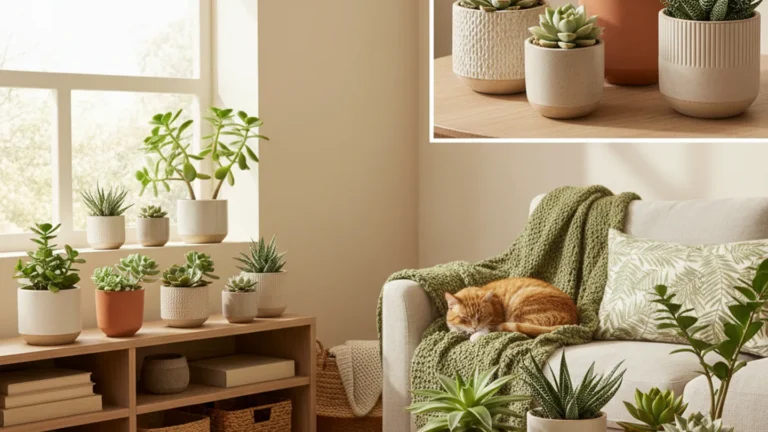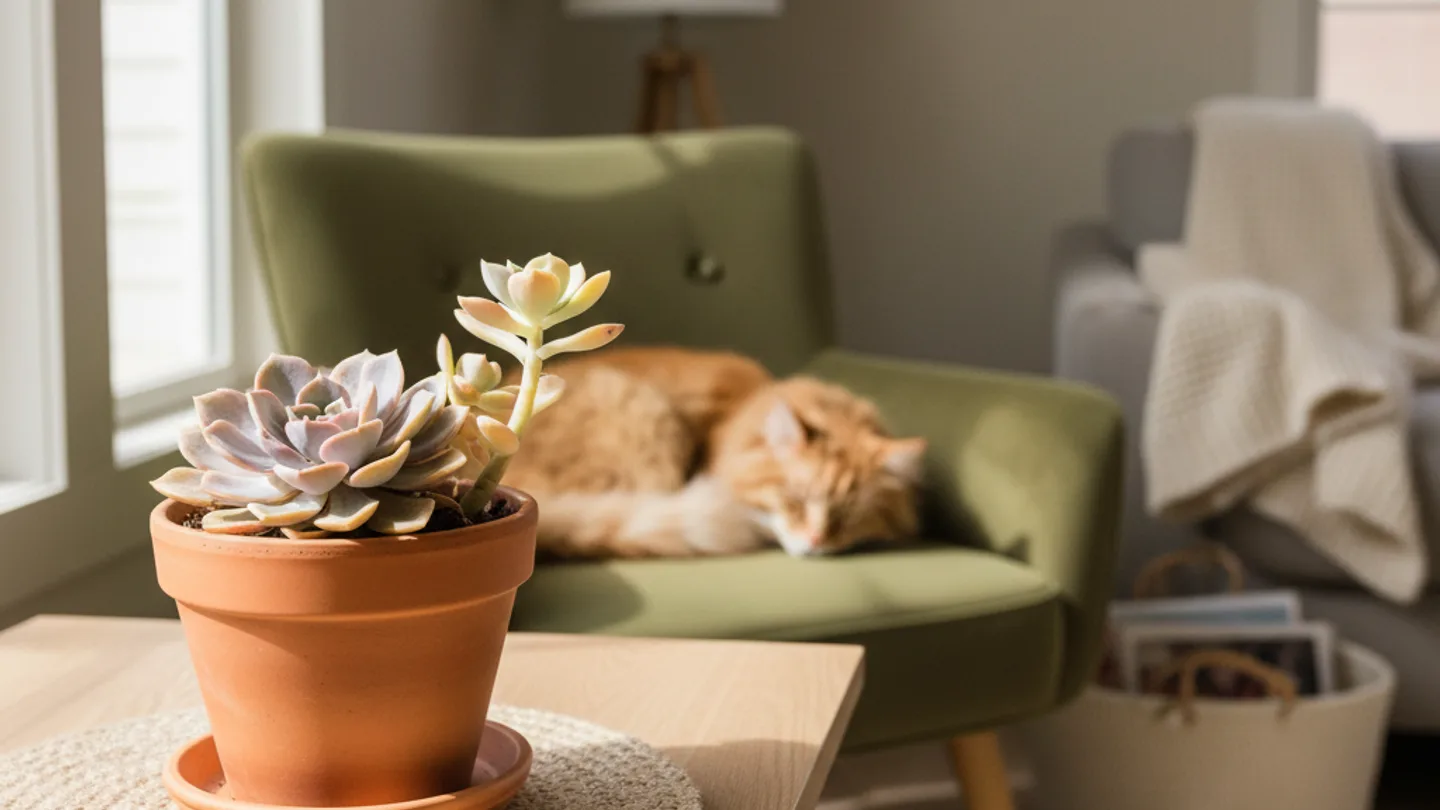
Echeveria Care: Pretty Pastel Succulents That Are Pet-Safe
Good news first: echeverias are generally considered non-toxic to both cats and dogs. If your cat nibbles a leaf or your dog knocks the pot over, these rosette succulents are one of the safer choices you can bring home.
That said, no plant is completely harmless. Eating any plant material can cause mild stomach upset, so call your vet if your pet shows symptoms after chewing on one.
Here is how to keep an echeveria healthy in a real home, with full sun, infrequent watering, and simple fixes for stretched growth.
Echeveria care at a glance
- Echeverias are generally considered non-toxic to cats and dogs.
- They want full sun, at least several hours of direct light each day.
- Water infrequently. Let the soil dry out completely between waterings.
- Stretched, pale growth means the plant needs more light.
- Always check plant labels. Succulent mixes often include toxic species like jade or euphorbia.
Are echeverias toxic to cats and dogs?
Echeverias are generally considered non-toxic to cats and dogs. They are one of the most pet-friendly succulents you can buy, which is great news because their pastel rosettes are everywhere on Instagram and in garden centers.
Even so, keep an eye on your pet. Any plant can cause a bit of vomiting or diarrhea if eaten in quantity, and soil or fertilizer can also irritate a curious stomach. If symptoms appear, contact your vet.
One important caution: succulent arrangements often mix species. A bowl labeled 'succulent mix' may contain jade plant or euphorbia, both of which are toxic to pets. Read every label before you buy, and when in doubt, choose a pot with a single named echeveria.
Light: full sun keeps the rosettes tight
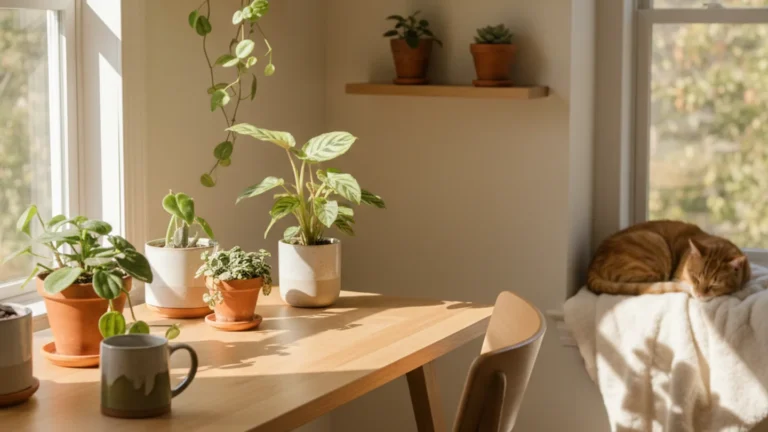
Echeverias are sun lovers. Aim for at least four to six hours of direct light a day, such as a south- or west-facing windowsill.
Not enough light shows up fast. The rosette opens up, the stem stretches toward the window, and the leaves lose their compact shape and soft color. This is called etiolation, which simply means the plant is stretching to find more light.
In a darker apartment, a small grow light a few inches above the plant can make the difference between a tight pastel rosette and a leggy one.
How to water an echeveria
Check the soil
Push a finger an inch into the soil. Only water when it feels completely dry.
Water deeply
Soak the soil until water runs out of the drainage hole. Avoid getting water in the rosette, where it can cause rot.
Let it drain
Empty the saucer. Echeverias hate sitting in wet soil, and soggy roots are the fastest way to lose one.
Wait and repeat
In most homes this means watering every two to four weeks, less in winter. The soil drying out is your signal, not the calendar.
Fixing stretched growth
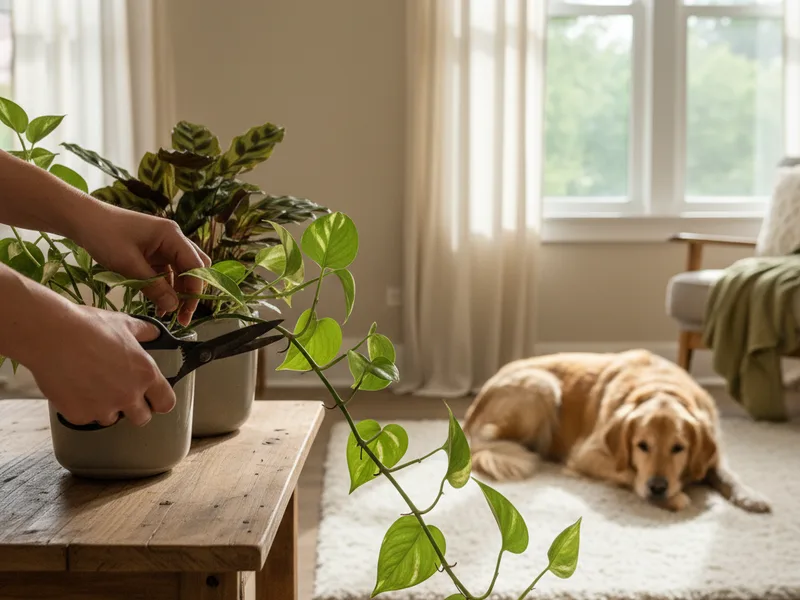
If your echeveria has already stretched, more light will stop new growth from stretching further, but the leggy stem will not shrink back.
The simple fix is to cut off the rosette top with clean scissors, let the cut end dry for a day or two, and replant it in fresh, dry succulent soil. It will root and grow into a new compact plant. The old stem often produces baby rosettes you can keep too.
Move the new plant straight into your brightest spot so it grows tight from the start.
Buying with pets in mind
When you shop, look for pots labeled with the word Echeveria. Single-species pots are the safest choice for a pet household.
Be careful with mixed succulent bowls and gift arrangements. They often include jade plant, string of pearls, aloe, or euphorbia, which are not pet-safe. If a label is unclear, skip it or check each plant before it comes home.
Compared with a plant like monstera, which is toxic to both cats and dogs, echeveria is one of the easiest ways to add color to a sunny sill without worrying about your pets.
Common questions about echeveria care
Is echeveria safe for cats?
Echeverias are generally considered non-toxic to cats. A curious nibble is unlikely to cause harm, but any plant can cause mild stomach upset, so contact your vet if your cat vomits or seems unwell after eating one.
Is echeveria safe for dogs?
Yes, echeverias are generally considered non-toxic to dogs as well. The same rule applies: watch for mild digestive upset and call your vet if symptoms appear.
Why is my echeveria getting tall and leggy?
It needs more light. Stretched, pale growth is the plant reaching for the sun. Move it to your brightest window or add a grow light, and trim and replant the rosette top if you want a compact shape again.
How often should I water my echeveria?
Only when the soil is completely dry, usually every two to four weeks indoors and less in winter. Overwatering is the most common way echeverias die.
Are all succulents pet-safe like echeveria?
No. Many popular succulents, including jade plant, string of pearls, aloe, and euphorbia, are toxic to cats and dogs. That is why it pays to check labels on mixed arrangements before buying.